
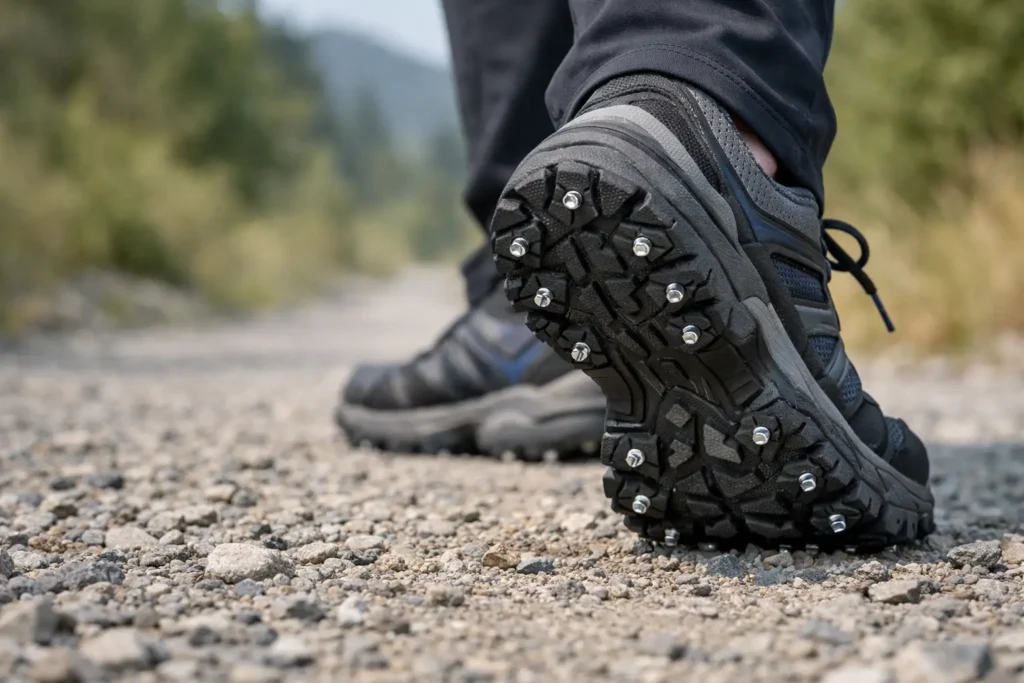
Loose gravel is where decent footwear starts to show its limits. One step feels stable, the next rolls underfoot, and suddenly your pace changes, your posture tightens, and every stride gets cautious. That is exactly why more runners, walkers, hikers, and outdoor workers start looking at shoe spikes for gravel roads. The goal is not just more grip. It is more control, less wasted energy, and steadier movement on a surface that never gives you the same footing twice.
Why gravel roads are harder on footing than they look
Gravel seems simple. It is just crushed rock spread over a road or path. But underfoot, it behaves like a moving layer. Small stones slide, larger pieces tilt, and the surface changes with moisture, grade, tire traffic, and wear. Dry gravel can feel marbly and fast-moving. Wet gravel can pack down in one section and stay loose in the next.
That inconsistency is what makes gravel roads tricky. You are not dealing with one traction problem. You are dealing with several at once – loose top layers, uneven compaction, side-to-side foot movement, and sudden transitions between gravel, dirt, hardpack, mud, or ice. Standard shoe outsoles can handle some of that, but not always with confidence.
For runners, that often shows up as shortened stride length and extra tension through the calves and hips. For hikers and walkers, it can mean unstable descents and ankle fatigue. For outdoor workers, it can turn a normal route into a daily slipping hazard, especially when gravel is mixed with frost, mud, or slush.
What shoe spikes for gravel roads actually do
Good traction spikes do not magically glue you to the ground. What they do is improve bite into unstable surfaces so your foot is less likely to skate, twist, or wash out. On gravel, that added bite can help on push-off, braking, cornering, and uneven side slopes.
The big difference is how the spikes interact with the sole and with your stride. Bulky over-shoe traction devices often add weight, shift underfoot, and create a disconnected feel. You can get grip, but you may also get awkward foot strike, extra fatigue, and a clunky gait. That trade-off matters if you are covering real miles or working in that gear for hours.
Screw-in traction systems solve that problem in a more integrated way. Because the spikes attach directly to the sole, the shoe keeps its natural flex and feel. You are not stepping on a harness, chain, or rubber frame. You are still moving in your own footwear, just with more bite where it counts.
When spikes help on gravel roads – and when they do not
This is where honesty matters. Not every gravel road requires spikes, and not every spike pattern is ideal for every use.
If you are on well-packed fine gravel with a quality trail shoe, aggressive lugs may be enough. If the road is steep, freshly spread, wet, rutted, or mixed with loose stone over hard base, spikes can make a clear difference. They are especially useful when the surface shifts under pressure or when your route includes frequent terrain changes.
For mixed conditions, spikes become even more valuable. A lot of gravel-road miles are not pure gravel. They include slick dirt shoulders, shaded icy patches, muddy turnouts, wet wooden bridges, and compacted snow in winter. That is where installable spikes earn their keep. You are not gearing up for one narrow condition. You are building more reliable traction into the shoe for the surfaces people actually face.
There is still a trade-off. On smooth indoor floors or finished surfaces, exposed spikes are not the right tool. And if you only walk a short, flat gravel driveway once in a while, you may not need them at all. But if gravel roads are part of your regular training, work, or daily footing, better traction is not overkill. It is practical.
What to look for in the best shoe spikes for gravel roads
The best setup starts with secure attachment. If spikes shift, loosen, or sit awkwardly in the sole, performance drops fast. You want a system that stays put under repeated impact and does not make the shoe feel unstable.
Low-profile design matters too. Gravel already creates uneven contact points. A bulky traction device adds more stack, more movement, and more fatigue. A lighter, direct-to-sole design preserves a more natural stride, which is especially important for runners and anyone covering distance.
Durability is another big one. Gravel is abrasive. Cheap hardware wears down fast, especially if you move between rock, pavement, and frozen ground. Strong materials and smart spike shape matter because traction that disappears after a few outings is not really traction.
Placement matters just as much as material. The forefoot usually needs bite for push-off and control, while the heel often needs it for braking and descents. Too few contact points and the benefit is limited. Too many in the wrong places and the shoe can feel harsh or inefficient. The right pattern should support how the foot actually lands and moves.
Running in shoe spikes for gravel roads
Runners tend to notice bad traction immediately. When gravel starts slipping underfoot, pace gets choppy and confidence drops. You stop driving forward and start protecting against the next slide. That costs energy.
Well-placed spikes can restore a cleaner, stronger stride on loose roads, especially on hills and corners. The benefit is not only speed. It is stability through the full gait cycle. You get more confidence on toe-off, more control on descents, and less hesitation when the surface changes from packed to loose.
That said, runners should avoid overdoing traction. A heavy, aggressive setup can feel harsh if most of the route includes pavement or very firm ground. This is where direct-install spikes have an edge. They add grip without the floppy, overbuilt feel of strap-on devices, and they do not interfere with the natural movement of a performance shoe nearly as much.
Walking, hiking, and working on gravel roads
For walkers and hikers, gravel creates a different problem. It is less about pace and more about steady footing over time. Repeated micro-slips can wear you down, especially on uneven grades or long rural roads. Your feet work harder to stabilize, which can lead to fatigue up the chain – ankles, knees, hips, lower back.
Spikes help by reducing that constant correction. The result is not dramatic in one step. It is noticeable over a mile, a shift, or a full day outside. You stay more upright, move more naturally, and spend less energy guarding against a slip.
Outdoor workers often get the biggest practical benefit. Gravel yards, utility roads, job sites, and winter access paths are rarely ideal underfoot. Add rain, frost, or mud and traction becomes a safety issue, not just a comfort issue. In those settings, dependable spikes are a performance tool and a risk-reduction tool at the same time.
Why direct-to-sole spikes stand out
This is where the difference becomes obvious. Traditional over-shoe cleats can work, but they usually feel like an add-on because they are one. They can shift, stretch, collect debris, and change the way the shoe lands. On gravel roads, where stable contact matters, that movement underfoot is exactly what you do not want.
A direct-to-sole system feels more like part of the shoe. That means better ground feel, less bulk, and fewer distractions while moving. It also means the traction is there when you need it, rather than sitting in a pocket until conditions get bad enough to stop and gear up.
That practical advantage is a big reason people move away from chains, coils, and improvised screw shoes. They want traction that works hard without making the shoe awkward. ICESPIKE was built around that idea – real bite, low bulk, and dependable footing across changing terrain.
Choosing the right setup for your use
If your miles are mostly loose rural roads with some mixed terrain, you want a balanced spike pattern that supports both traction and stride. If your route is steep, wet, or winter-covered, more aggressive coverage may make sense. If you move in and out of buildings all day, removable or selective placement becomes more important.
Your base shoe still matters. A worn-out outsole, soft unstable midsole, or poor fit cannot be fully rescued by spikes. Start with a solid shoe for your activity, then add traction to match the surface. The best result comes from the combination, not from spikes alone.
Gravel roads have a way of exposing weak gear and weak footing fast. The right traction setup changes that. You move with more confidence, waste less energy, and stop treating every loose patch like a hazard waiting to happen. If gravel is part of your real world, better grip is not a luxury. It is a smarter way to move.