
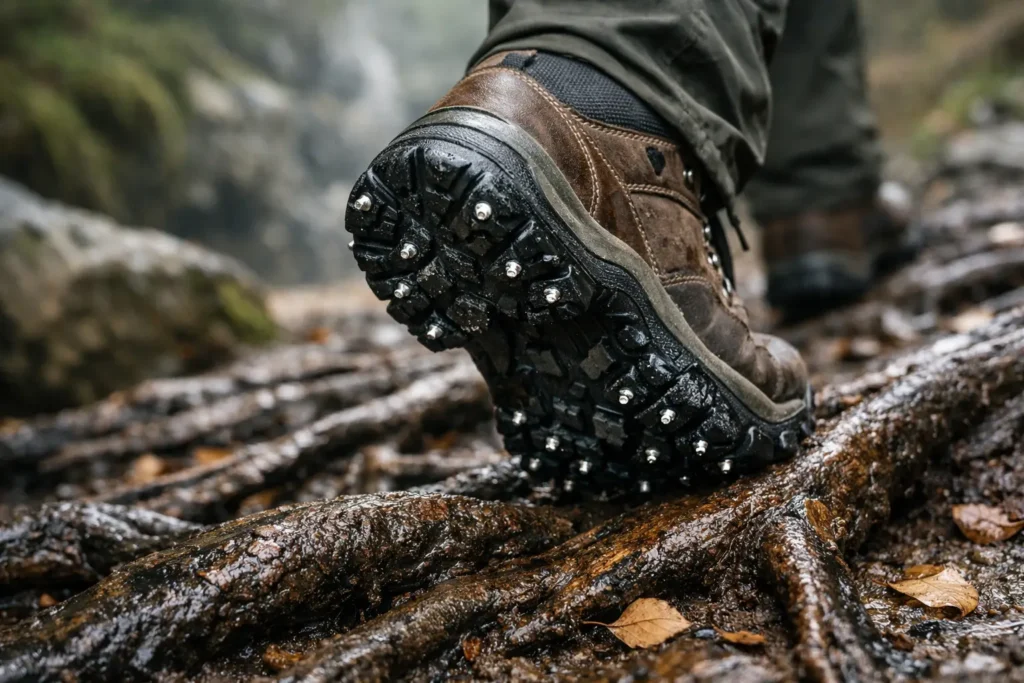
A wet root can stop a strong hike cold. One bad step, a little side roll, and suddenly the trail is running you instead of the other way around. If you are looking for the best traction for slippery roots, the answer is not just “more grip.” It is the right kind of grip for a surface that is hard, rounded, slick, and often surrounded by mud, leaves, or loose dirt.
Roots are tricky because they do not behave like mud, gravel, or ice. They sit above the trail, they shed water, and they can be polished smooth by constant foot traffic. That means the best setup has to bite fast, stay stable through the full stride, and avoid that awkward, bulky feel that throws off balance when terrain changes every few feet.
What makes slippery roots so hard to grip
Trail roots punish the wrong outsole. Rubber that feels fine on dry dirt can skate when it lands on a wet, angled root. Deep lugs help in soft ground, but they do less on a hard, slick surface where there is nothing soft to dig into. That is why hikers, runners, and outdoor workers often feel secure one step and shaky the next.
The shape of roots adds another problem. They are rarely flat. Your foot may land on a rounded ridge, then roll slightly as your weight moves forward. If your traction system sits too high, shifts underfoot, or changes your natural stride, that unstable moment gets worse. You do not just need aggressive grip. You need low-profile grip that stays connected to your shoe and lets you move naturally.
Best traction for slippery roots depends on the surface mix
If the entire trail were wet wood, the answer would be simple. But most real trails are mixed. You move from packed dirt to rock, then onto roots, then through leaves, then back to mud. That matters because some traction options perform well in one zone and become a liability in the next.
Soft, sticky rubber can help on dry and damp roots, especially when the tread makes broad contact. But on truly slick roots, especially in cold or muddy conditions, rubber alone can run out of bite. Traditional strap-on cleats add traction, but they often feel clumsy on mixed ground. Chains, coils, and harnesses can shift, collect debris, and create an unnatural platform under the foot. That can mean more fatigue and less confidence, not more.
Installable spikes or cleats that attach directly to the sole offer a different advantage. Because the traction is integrated into the footwear instead of hanging under it, the shoe keeps a more natural flex and lower profile. On roots, that matters. You want sharp contact points that can engage the slick surface without making every other part of the trail feel awkward.
Why low-profile traction works better on roots
Bulky traction devices often solve one problem by creating another. They may add bite, but they can also lift the foot farther off the ground, alter gait, and make each transition feel less precise. On a root-crossed trail, precision is everything.
Low-profile, direct-to-sole traction gives you a more planted feel. The shoe stays closer to the terrain, and the grip points stay where your foot needs them instead of moving around inside a rubber harness. That translates to cleaner foot placement, better balance, and less wasted energy over miles of uneven ground.
For runners, this is even more important. A heavy over-shoe traction device can slap, bounce, or catch. For hikers and workers, it can create pressure points and foot fatigue. The best traction system is the one you trust enough to forget about while you move.
What to look for in the best traction for slippery roots
Start with attachment. If a traction device can shift on the shoe, it can shift when you land on a root. That is exactly when you need it most. A secure, direct attachment is more dependable than a removable system that stretches over the outsole.
Next is profile. Lower is usually better on roots because it keeps your stride more natural and reduces that perched feeling. You want grip that adds control, not bulk.
Material and point design matter too. Rounded metal elements and coils may help on ice, but roots often demand sharper, more precise contact. The goal is not to float over the surface. It is to create bite on a slick, hard edge.
Durability is another real-world factor. Trails are not just roots. You will hit dirt, gravel, occasional pavement, and maybe frozen sections depending on the season. The best system has to handle mixed use without wearing out fast or forcing you to constantly take it on and off.
Where many traction options fall short
Standard trail shoes with aggressive lugs are a good start, but they are not always enough on soaked roots. The tread pattern may look fierce, yet still slide when the surface is smooth and wet.
Strap-on cleats help in specific conditions, especially snowpack and glare ice, but they are often overbuilt for rooty trails. They can shift, feel heavy, and interfere with natural foot movement. If you have ever caught a strap on brush or felt your footing change because the device moved slightly off-center, you know the problem.
DIY screw shoes get attention because they are cheap and simple, but they are inconsistent. Screw choice, placement, length, and durability all matter, and a poor setup can damage footwear or produce uneven traction. That is not the kind of gamble most people want on a slick descent.
The practical choice for runners, hikers, and workers
For mixed terrain that includes slippery roots, integrated screw-in traction has a strong case. It combines bite with a close-to-shoe feel, which is exactly what unstable trail surfaces demand. Instead of strapping an extra device onto the shoe, you upgrade the shoe itself.
That approach is especially useful for people who move across different environments in one outing. Trail runners need efficient turnover and stable foot placement. Hikers need confidence on climbs, descents, and creek-side sections. Outdoor workers need dependable grip that does not become a nuisance halfway through the day. In all three cases, a lightweight, installed traction system keeps mobility high while cutting slip risk.
ICESPIKE was built around that idea – real traction without the bulk, wobble, and gait disruption of strap-on systems. The benefit is straightforward: more control where the ground gets slick, and less interference everywhere else.
How to use traction better on root-heavy trails
Even the best gear works better with smart movement. Shorter steps help when roots are wet and angled. They keep your center of gravity more stable and reduce the chance of overstriding onto a slick surface. Planting your foot with intention also matters. A careless heel strike on a rounded root is asking for a slide.
It helps to scan two or three steps ahead. If you can choose dirt beside a root instead of the root itself, do it. But when the trail funnels you onto exposed roots, trust comes from footwear that grips fast and stays predictable.
This is also where fit matters. Loose shoes let the foot move inside the upper, which cuts control. Secure lockdown through the midfoot and heel gives traction a better chance to do its job.
When conditions change, traction should not become a hassle
A lot of people accept a trade-off that they should not have to accept. They assume better grip means heavier footwear, awkward transitions, or something they need to remove the second they hit a parking lot or dry section. That is old thinking.
The best traction for slippery roots should still feel usable when the trail changes. That is why integrated, lightweight systems stand out. They are not just about surviving one slick obstacle. They are about maintaining confidence over the full route without turning every step into a reminder that you are wearing extra hardware.
There is no magic outsole that wins every condition. Wet roots, soft mud, sharp rock, and packed snow all ask for slightly different things. But if your goal is secure footing on root-heavy terrain, prioritize direct attachment, low-profile design, sharp bite, and natural movement. That combination does more than improve grip. It helps you stay relaxed, efficient, and upright when the trail gets greasy.
And that is the real win. Better traction is not about feeling tougher. It is about moving with confidence when the ground gives you every reason not to.