
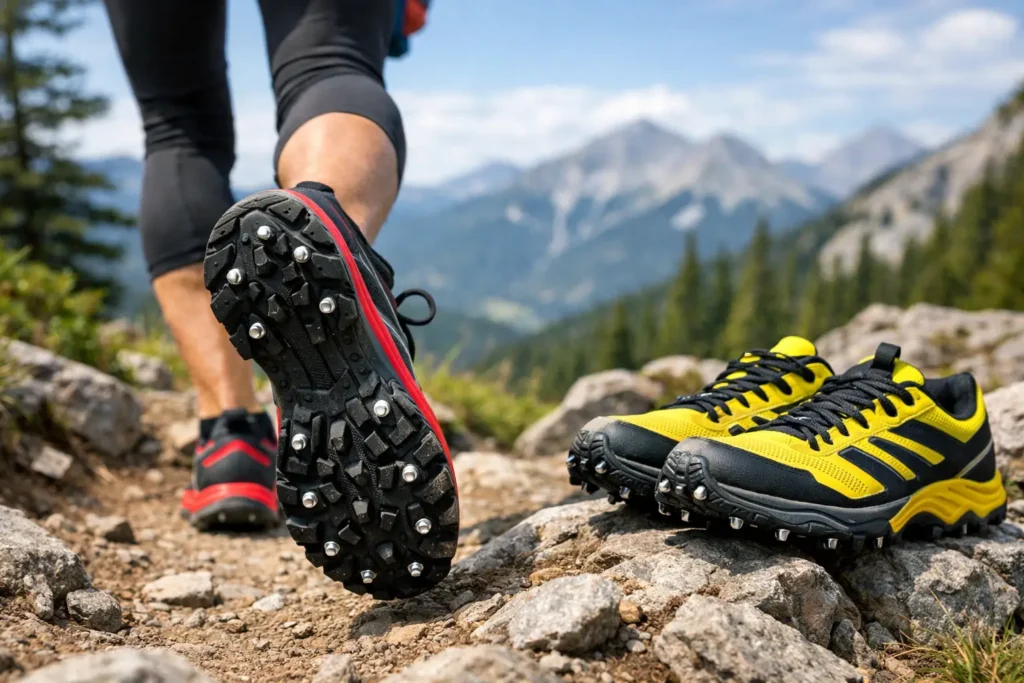
A hard-packed trail can turn slick fast. One shaded corner holds ice, the next stretch is mud, then you hit roots, gravel, and frozen ruts. That is exactly where trail running spikes earn their keep – or prove they are more trouble than they are worth.
If you run outside through winter, shoulder season, or wet backcountry conditions, traction is not a luxury add-on. It is part of staying upright, keeping your stride natural, and finishing a run without wasting energy fighting the ground. The problem is that not all traction systems behave the same once you leave the parking lot and hit mixed terrain.
Why trail running spikes matter on real terrain
A lot of runners think about traction only when they see snow or ice. That is too late. Loss of footing usually happens in transition zones – thin ice over rock, wet roots under leaves, loose dirt on a climb, greasy mud on the descent. You do not need a full winter route for traction to matter. You need one bad patch at the wrong moment.
Good trail running spikes give you bite where trail shoes alone start to skate. They help on climbs, but they matter just as much on off-camber sections and technical descents where a small slip can twist a knee, jam a toe, or send you into the brush. Confidence changes pace. When your footing feels secure, you stop running cautiously and start running efficiently.
That said, more aggressive traction is not always better. Huge metal add-ons can feel powerful on pure ice, then clumsy and tiring on dirt or rock. The best setup depends on where you actually run, not the harshest condition you might see once a month.
The problem with bulky traction systems
Many runners have tried strap-on cleats, chain systems, or overshoe traction frames. They can work in a narrow set of conditions, but they often create a new problem while solving the old one.
First, bulk changes how your shoe rides. When traction sits underfoot as an external layer, it can make your stride feel high, stiff, and disconnected from the ground. That matters on technical terrain where foot placement is everything. Second, many removable systems shift, slap, or loosen over time. That is annoying on a walk. On a run, it is a constant distraction.
There is also the fatigue factor. Heavy traction adds up over miles. If your gear makes every step feel awkward, your lower legs pay for it. That can mean reduced efficiency, less stability late in the run, and a gait that never quite feels right.
This is why many experienced runners move away from over-shoe systems and toward lower-profile options. Less interference usually means better control.
What good trail running spikes should do
The best traction setup feels integrated, not strapped on as an afterthought. You want grip without losing your natural movement. That sounds simple, but it narrows the field fast.
A strong traction system should bite into slick surfaces without making hard ground miserable. It should stay put, resist wear, and avoid creating pressure points underfoot. It should also work across changing conditions. Most trail runners are not moving over one perfect surface for an hour. They are dealing with ice patches, soft shoulders, gravel, exposed rock, and sections of bare trail in the same outing.
That is where low-profile, direct-to-sole traction stands out. Instead of hanging under the shoe, screw-in spikes become part of the outsole. The result is a more stable feel, less shifting, and less of that clunky, overbuilt sensation runners hate. You get traction where you need it while keeping the shoe flexible and familiar.
Trail running spikes vs. improvised screw shoes
Some runners try the hardware-store route and drive sheet metal screws into old shoes. It is cheap, fast, and tempting. It also comes with real trade-offs.
Improvised screw shoes can work for short-term grip, especially on ice, but they are rarely optimized for durability, comfort, or outsole retention. Screw length, head shape, and placement all matter. Get them wrong and you can reduce traction, wear them down quickly, or create a harsh feel underfoot. In the worst case, the setup damages the shoe or compromises comfort enough that the run becomes a grind.
Purpose-built screw-in traction is a different category. It is designed for outsole attachment, repeatable placement, and performance under movement, not just a quick backyard fix. That difference matters when the pace picks up and the terrain gets unpredictable.
Where trail running spikes help most
Not every runner needs spikes on every run. But there are conditions where they make a major difference.
Frozen trails with intermittent ice are a clear example. So are muddy routes with steep climbs where footing disappears under load. Wet roots and slick wooden bridges can also become problem spots, especially in low light or cold weather when reaction time drops. Early spring thaw is another big one. The ground looks runnable until each step starts sliding in a different direction.
Runners who train before sunrise, after work, or through winter weather usually benefit most because surface conditions are harder to read. The less predictable the trail, the more valuable reliable traction becomes.
There is a practical safety angle here too. Better footing reduces the small slips that drain energy and the big slips that end a run. For many runners, that is the real win. More secure footing means fewer interruptions, less hesitation, and lower risk on the terrain they already love.
How to choose the right setup
Start with terrain, not marketing. If most of your routes are snow-packed and consistently icy, you may need a more aggressive winter-specific solution. But if your runs mix dirt, rock, mud, roots, and occasional ice, a lightweight spike system is often the smarter choice.
Next, think about feel. Some runners want maximum bite and do not mind a firmer underfoot sensation. Others care most about preserving gait and ground contact. There is no universal winner here. It depends on whether your priority is all-out traction on extreme surfaces or balanced performance across mixed terrain.
Installation matters too. A system that mounts securely to the sole usually outperforms one that wraps around the shoe, especially when speed and stability matter. Less movement in the traction system means less movement in your foot, and that means more control.
Durability is another filter. Trail gear gets abused. If spikes wear down immediately on gravel or pop loose after a few runs, the initial grip does not matter much. You need traction that survives real use, not just ideal conditions.
Why runners are moving toward lower-profile traction
There is a reason integrated, lightweight traction keeps gaining ground with serious trail users. It solves the main complaint runners have had for years: traditional cleats often feel like too much gear for the job.
A low-profile spike setup keeps the shoe closer to its original ride. That means better proprioception, less bulk, and a more natural turnover. It also makes transitions easier. When the route changes from slick to firm to loose, your traction is still working without making the shoe feel overbuilt.
That balance is what makes systems like ICESPIKE so practical. You get real bite without the chains, harnesses, and extra weight that can wreck a run. For athletes, hikers, and everyday winter users alike, that direct-to-sole approach simply makes more sense when freedom of movement matters.
The trade-off nobody should ignore
Spikes are not magic. On bare pavement or long road approaches, they can be unnecessary and sometimes uncomfortable depending on the setup. On highly technical rock, some runners still prefer plain rubber lugs for surface feel. And if your local trails stay dry most of the year, spikes may be a seasonal tool, not a daily one.
That is the honest answer. The right traction system is the one that matches your terrain often enough to be worth using. But when conditions are cold, slick, loose, or changing by the mile, good spikes stop being optional gear and start becoming performance equipment.
Secure footing changes everything. You run stronger when you are not bracing for the next slip.