
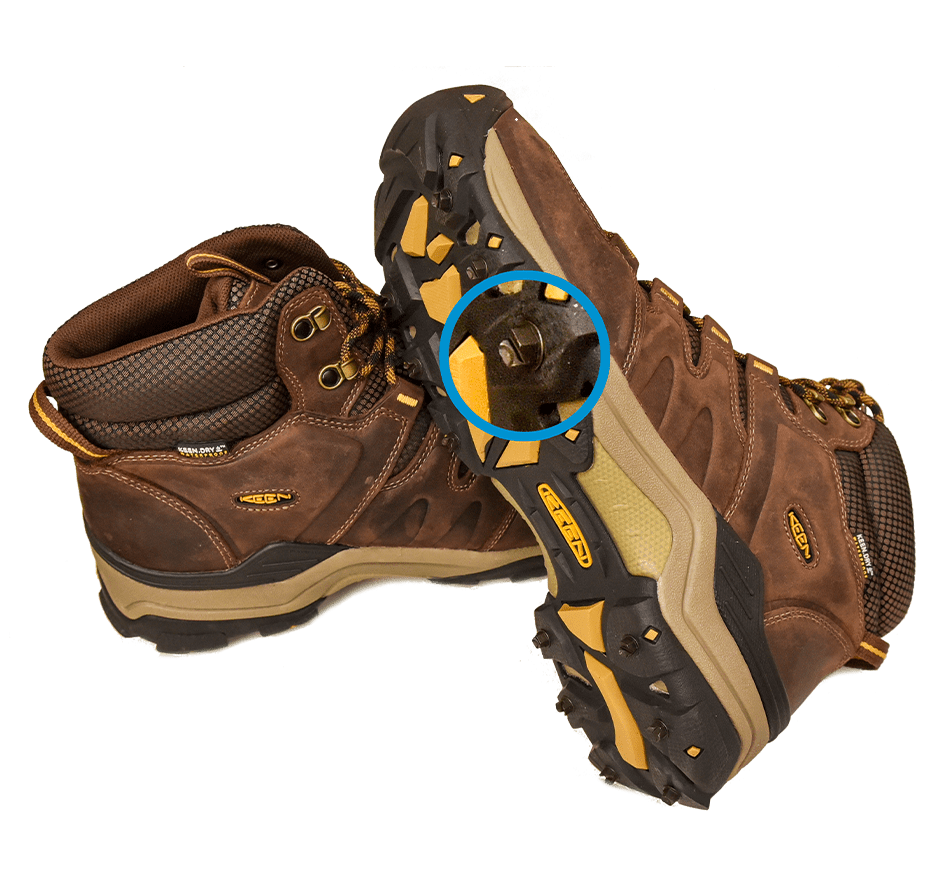
One bad step on refrozen slush, a slick loading dock, or an icy trail can change the whole day fast. That is exactly why screw in spikes for boots have become a serious upgrade for people who need real traction without the bulk and wobble of over-the-shoe gear.
For runners, hikers, outdoor workers, anglers, and anyone walking through winter on purpose, traction has to do more than just exist. It has to stay put, feel natural underfoot, and keep working when the route changes from ice to snow to bare pavement to mud. That is where screw-in systems stand apart. They turn your actual footwear into a more capable tool instead of asking you to strap on something extra and hope it stays in place.
Why screw in spikes for boots feel different
The biggest advantage is not just grip. It is how that grip is delivered. Strap-on traction devices sit on top of your footwear and rely on rubber harnesses, chains, or coils to hold everything together. That can work, but it often comes with movement, added weight, pressure points, and a clunky stride.
Screw in spikes for boots are installed directly into the sole. That creates a lower-profile, more integrated connection between the spike and the boot. The result is a more stable feel and less of that awkward underfoot shift that makes some traction devices feel like a temporary fix instead of real equipment.
That matters more than most people expect. If your traction system changes the way you walk or run, you tire out faster. Your footing gets less predictable. On uneven ground, that can be the difference between moving confidently and constantly second-guessing every step.
Where they work best
Boot spikes earn their keep in places where footing changes by the hour. Frozen driveways in the morning become slush by noon. Trails alternate between packed snow, exposed rock, and slick roots. Job sites mix ice, mud, gravel, and hard surfaces in the same shift.
That is why direct-to-sole traction appeals to such a wide range of users. Hikers want secure footing on steep, icy sections without hauling around a heavy add-on. Workers need dependable grip that does not slip off midway through the day. Seniors and daily walkers want more confidence underfoot without feeling like they are wearing specialty gear just to get the mail.
The key point is versatility. Good screw-in spikes are not just for pure ice. They are for mixed terrain, where bulkier traction systems often feel overbuilt in one moment and awkward in the next.
The trade-off: permanent-ready vs removable convenience
There is no perfect traction option for every person and every surface. Screw-in systems do have a trade-off, and it is worth being honest about it.
Because the spikes install into the sole, you need footwear with enough sole material to hold them properly. They are not a match for every dress shoe or ultra-thin casual sole. And while many systems are removable, they still ask for a little more commitment than simply stretching a rubber harness over your boot.
But that extra commitment is exactly why many people prefer them. You get a cleaner fit, less shifting, and a more dependable connection to the ground. For anyone who spends real time outside in winter or on unstable terrain, that usually feels less like a drawback and more like the point.
Screw in spikes for boots vs strap-on cleats
This is where the difference gets practical fast. Strap-on cleats are common because they are familiar. You can pull them on when conditions get ugly and pull them off when you head inside. But they also come with the same recurring complaints: they stretch out, roll underfoot, break, snag, pack with snow, or change your gait enough that you feel them every step.
Screw-in spikes take a different approach. Instead of wrapping traction around the boot, they make traction part of the boot. That usually means less bulk, less bounce, and less energy wasted compensating for unstable gear.
For runners, that can mean a smoother stride and better confidence on winter roads and trails. For workers, it can mean fewer distractions and fewer adjustments during a long shift. For everyday wearers, it can simply mean the boot still feels like their boot, just with more bite when the surface turns slick.
That does not make strap-on cleats useless. If you need something to share between multiple pairs of shoes or something purely occasional, they still have a place. But if traction is part of your routine, integrated spikes are often the stronger long-term solution.
What to look for in a screw-in traction system
Not all screw spikes are equal. Some improvised options are little more than hardware-store screws driven into old shoes. That may sound clever, but it is a rough solution with rough results. The wrong screw shape, length, or placement can wear poorly, feel unstable, or fail when you need it most.
A purpose-built system is different. The spike design matters. The material matters. The head profile matters. Placement matters just as much, because traction has to work with the way the foot loads and releases through each step.
Look for a system built specifically for footwear traction, not a random fastener repurposed for winter. You want spikes engineered to grip slick terrain while staying low-profile enough to preserve a natural stride. Durability matters too. If the spikes wear down quickly or loosen easily, the whole benefit disappears.
This is also where a specialized brand earns its keep. A company like ICESPIKE is not just selling metal pieces. It is selling a traction system designed around movement, stability, and real outdoor use.
Installation matters more than people think
A good traction product still needs correct installation. That does not mean the process has to be complicated, but it does mean placement should be deliberate.
The front of the foot and heel do different jobs. Toe-off, braking, downhill control, and side-to-side stability all depend on where traction sits under the boot. Too few spikes and you may not get enough contact. Too many in the wrong spots and you can create an uneven feel.
Boot type also matters. A work boot with a thick lug sole offers a different platform than a lighter hiking boot. The goal is always the same: stable grip without compromising comfort or natural movement.
That is one of the biggest reasons purpose-built screw-in systems beat homemade solutions. They are designed with actual footwear use in mind, not guesswork.
Who benefits most from screw-in boot spikes
If you only encounter ice twice a year, you may not need this setup. But if winter traction is a recurring problem, screw-in spikes can be a serious quality-of-life upgrade.
Runners benefit from lower bulk and a more natural gait. Hikers gain better bite on frozen trails and mixed terrain. Outdoor workers get all-day traction that does not shift or peel off. Anglers and hunters get more confidence around wet, cold, unstable surfaces. Seniors and safety-conscious families get something just as valuable: fewer slip risks during normal daily movement.
The common thread is simple. These are for people who want traction they can trust without feeling weighed down by it.
Are they worth it?
If your current traction setup feels bulky, unstable, or annoying enough that you leave it at home, that is your answer. The best traction system is the one you will actually use when the ground turns dangerous.
Screw in spikes for boots are worth it for people who need dependable grip, want to preserve a natural stride, and are tired of removable devices that shift, stretch, or quit halfway through the season. They are not the right answer for every shoe or every user. But for serious winter footing and mixed-terrain confidence, they solve problems that temporary traction often creates.
The right boot should help you move with authority, not caution. When the surface gets slick, that difference is not small. It is everything.