
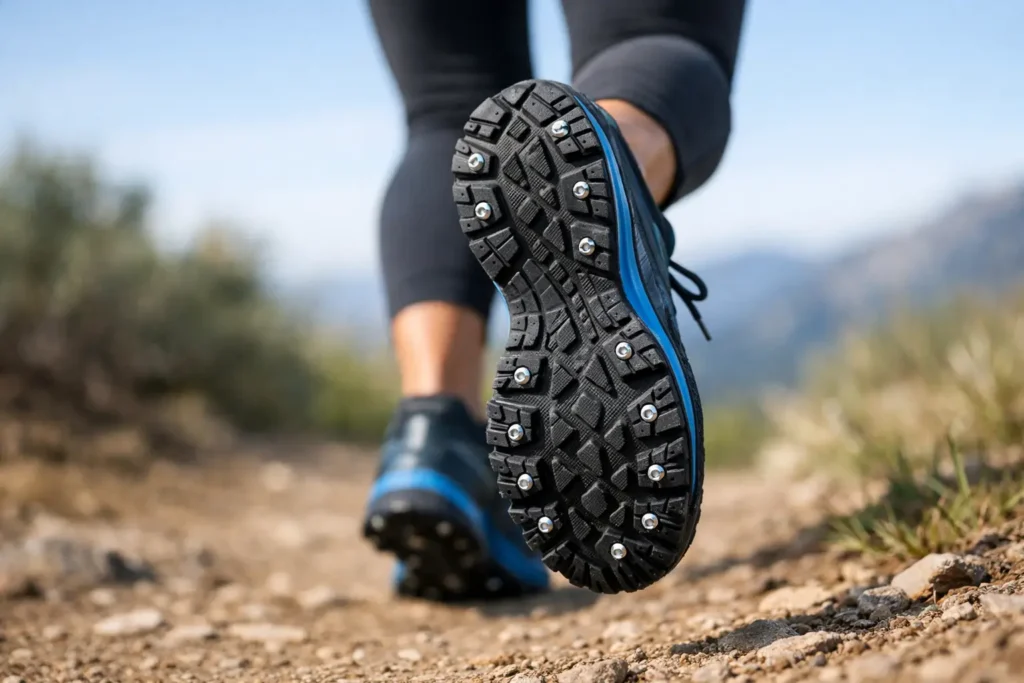
A thin sheet of black ice can turn a familiar walk to the truck into a hard fall. A frozen trail can make a confident runner shorten every step. A muddy jobsite can force an outdoor worker to move cautiously when the work still needs to get done. Traction spikes are built for those moments – when the surface changes, but your need for secure footing does not.
The right traction system should add bite where you need it without making your footwear feel like a different piece of gear. That matters whether you are walking the dog before sunrise, running packed snow, hauling equipment across a frozen lot, or hiking through the freeze-thaw mess that makes winter trails unpredictable.
What Traction Spikes Actually Do
Traction spikes create concentrated points of contact between your footwear and unstable ground. Instead of relying only on the rubber tread of a shoe or boot, the spikes penetrate or bite into surfaces that rubber alone struggles to hold: ice, packed snow, slick mud, loose gravel, wet roots, and frozen ground.
That extra purchase changes how you move. You can place your foot with more confidence, maintain a more natural stride, and spend less energy bracing for a slip. For runners, that means less hesitation on icy stretches. For workers, it means more stable footing during repetitive movement. For older adults, it can mean a safer trip from the driveway to the mailbox.
There is a limit, of course. No traction device makes reckless movement safe, and no spike is a substitute for slowing down on steep glare ice, avoiding hazardous terrain, or paying attention to changing conditions. Good traction gives you a stronger margin of control. It does not erase the need for smart decisions.
Why Built-In Traction Beats Bulky Add-Ons
Many people first encounter winter traction through strap-on cleats. They can help in a pinch, but their drawbacks show up quickly when terrain gets mixed. Chains, coils, and rubber harnesses can shift underfoot, collect snow and mud, feel heavy, and alter the way your shoe flexes. They also take time to put on, take off, and carry.
Installable traction spikes take a different approach. They attach directly to the sole, placing grip where your foot needs it while keeping the upper of the shoe or boot free. The result is a lower-profile system that moves with the footwear rather than wrapping around it.
That integrated feel is more than a comfort preference. When traction gear feels awkward, people are more likely to take it off, leave it in the car, or avoid using it for short trips. A lightweight, direct-to-sole setup is ready when the parking lot is slick, the trail turns icy, or the ground under a work boot becomes unstable halfway through the day.
Choosing Traction Spikes for How You Move
The best spike pattern is not identical for every person or every shoe. Your use case, outsole thickness, terrain, and tolerance for permanent-ready hardware all matter. A trail runner moving quickly across packed snow needs a different balance than someone walking carefully across icy sidewalks each morning.
For runners and trail runners
Running traction needs to feel planted without turning a flexible running shoe into a stiff platform. Look for a low-profile setup designed to preserve natural flex and keep weight down. Strategic placement around high-contact areas of the sole helps support push-off, landing, and control on turns.
Runners also need to think about surface transitions. If your route moves from snow-covered paths to bare pavement, overly aggressive traction can feel harsh and wear faster. The goal is dependable grip for winter conditions, not a heavy boot-like ride.
For hikers, hunters, and anglers
Backcountry footing is rarely one surface for long. You may cross frozen dirt, wet rock, loose leaves, mud, roots, and hard-packed snow in a single outing. Durable spikes installed in a sturdy hiking boot can provide the consistent bite that loose strap-on systems often fail to deliver on uneven ground.
For anglers and hunters, quiet, balanced movement matters too. A secure foot placement lets you focus on the terrain ahead instead of testing every step. Use caution on smooth indoor floors, finished decks, and other surfaces where metal spikes may damage the material or reduce comfort.
For outdoor workers
Winter does not pause deliveries, maintenance, construction, landscaping, or property work. Workers need traction that stays put through long shifts, repeated climbs in and out of vehicles, and changing ground conditions. A direct-to-sole system makes sense for boots that are already part of the daily uniform.
Durability is the priority here, along with placement. Spikes should support the parts of the sole that take the most load without interfering with the boot’s existing tread. If work regularly moves indoors, assess whether removable spikes are the better option for your environment and employer requirements.
For everyday walking and family safety
You do not need to be an athlete to benefit from serious traction. Ice is especially dangerous because it appears in ordinary places: shaded sidewalks, apartment steps, sloped driveways, parking lots, and paths to the trash bin. For a parent shopping for an older adult, easy use and stable gait often matter more than aggressive trail performance.
Choose footwear with a solid outsole and enough tread depth to support installation. Then match the number and placement of spikes to typical use. A few well-positioned contact points can make everyday winter shoes far more capable without the clumsy feel of an over-shoe harness.
Installation Is Where Performance Starts
A traction spike is only as dependable as its installation. Before adding anything to a shoe or boot, inspect the outsole. It should have enough material thickness for the selected spike and should not be cracked, severely worn, or separated from the upper. Avoid placing spikes through hollow air pockets, thin toe sections, or areas with visible damage.
Clean the sole first so you can see the tread clearly. Plan placement around the natural contact zones rather than guessing. Most footwear benefits from coverage at the heel and forefoot, but the exact pattern depends on the sole shape, the type of spike, and how the shoe is used. Follow the product-specific installation directions closely.
A proper install should feel secure and balanced. After installation, walk carefully on an appropriate outdoor surface to check for pressure points, wobble, or an uneven sensation. Recheck the spikes after early use, especially if the footwear sees deep mud, hard ice, or frequent mileage.
ICESPIKE systems are designed for this direct-to-sole approach, giving users a lightweight, removable traction option that can support everything from winter running to hard-working outdoor boots.
Get More Life From Your Spikes and Footwear
Traction gear works hard, so inspect it regularly. Look for worn points, loosening hardware, missing spikes, and outsole damage. Replace components when needed rather than waiting for a failure on a slick surface.
Be deliberate about where you walk. Spikes are at their best on outdoor terrain where bite matters. Metal contact on tile, hardwood, polished concrete, and other smooth indoor surfaces may be slippery, uncomfortable, or damaging. If your day includes frequent indoor transitions, choose a setup that is easy to remove or carry an alternate pair of shoes.
Also pay attention to footwear life. A well-built boot or shoe with a stable sole is a better traction platform than a worn-out pair whose tread is already gone. Spikes improve grip, but they cannot repair a collapsing heel, cracked sole, or shoe that no longer supports your foot.
Secure Footing Gives You More Range
Traction is not about making winter feel less like winter. It is about refusing to let one icy patch dictate how far you walk, how confidently you work, or whether you take the trail at all. The right spikes stay out of the way until the ground demands more from your footwear.
Set up your shoes or boots before the first hard freeze, test them on the terrain you actually use, and keep checking their condition through the season. When the surface gets slick, reliable footing is one piece of gear you will be glad you did not leave behind.