Our Website if down for construction for awhile. Not a good time of year but needed to be done. If you need product or help in the mean time please call us at 877-677-3567 Thanks for you understanding.
A glazed driveway, a frozen trail crossing, and a muddy jobsite all demand traction, but they do not demand the same setup. Knowing how to choose screw in cleats means matching the spike, your footwear, and the surface underfoot instead of hoping one generic traction device will handle everything.
Screw-in cleats are built for people who want serious grip without changing how their shoes or boots feel. Installed directly into the sole, they stay where they belong. There are no chains swinging beneath your feet, no stretchy harnesses shifting out of place, and no bulky platform fighting your natural stride.
Start With the Terrain You Actually Cover
The right cleat begins with an honest look at where you walk, work, run, or hike most often. A short trip from the car to the mailbox has different traction demands than a winter trail run or a full shift outdoors.
For hard glare ice, packed snow, and frozen sidewalks, prioritize sharp, durable points that can bite through the slick top layer. This is where secure footing matters most. A quality screw-in spike delivers direct contact with the surface, helping reduce the sudden slide that can turn an ordinary walk into an injury.
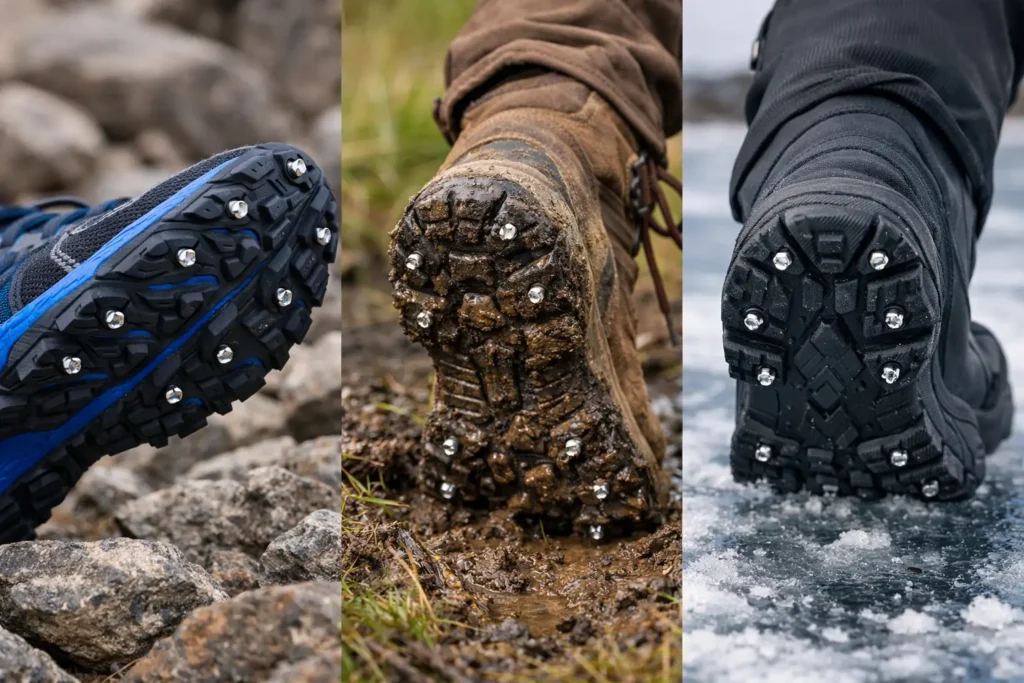
For mixed terrain – snow, mud, gravel, frozen dirt, wet roots, and bare ground – choose a traction setup that gives you grip without making the shoe awkward between slippery sections. Outdoor workers, hikers, hunters, and trail runners often move through changing conditions in the same outing. They need cleats that stay secure, feel light, and do not throw off their gait when the trail turns from ice to dirt.
For mostly indoor-to-outdoor use, think about frequency. If you regularly move onto tile, hardwood, concrete, or finished floors, removable spikes are practical. Screw-in traction gives you the advantage of choosing when your footwear is in traction mode, rather than being stuck with a bulky over-shoe device all day.
Choose Footwear With Enough Sole to Hold a Spike
The best cleat cannot perform if it is installed in a thin or worn-out sole. Start with shoes or boots that have a substantial rubber outsole and enough material for the screw to seat securely. Hiking boots, work boots, trail-running shoes, winter boots, and many sturdy casual shoes are strong candidates.
Inspect the sole before you install anything. Look for thick tread blocks, solid rubber zones, and areas that are not already cracked or excessively worn. Avoid installing spikes into air pockets, very thin foam, hollow lugs, or sections where the sole meets the upper. A cleat needs a stable foundation to stay put under repeated impact.
Footwear type also affects how many cleats make sense.
Heavy work boots can typically support more traction points because their soles are broad and rigid. Lightweight running shoes need a more disciplined setup. The goal is not to cover every inch of the outsole. It is to create reliable bite at the points where your foot naturally loads the ground.
If a shoe is nearing the end of its life, replace the shoe first. Installing spikes into a failing sole is not a safety upgrade. It is a shortcut that can cost you traction when you need it most.
Match Spike Placement to Your Movement
Placement separates effective screw-in cleats from a random DIY screw job. Your heel and forefoot do different work, so your spike pattern should support both.
The heel is where many slips begin, especially while walking downhill, stepping off a curb, or landing on a slick surface. Cleats placed in the heel area help the foot catch instead of skating forward. The forefoot is critical for push-off, climbing, and maintaining control when your weight moves ahead of you.
For walking and everyday winter use, distribute traction across the heel and ball of the foot. Keep spikes away from the very edge of the sole, where they are more exposed to twisting forces and may provide less stable contact.
For runners and fast hikers, focus on the zones that carry the most force during landing and toe-off. A balanced layout supports a more natural stride than piling all traction under one section of the shoe. You want confident contact without creating an uneven, clunky feeling underfoot.
For work boots, add traction where your job creates the greatest risk. Someone carrying materials across icy pavement may need strong heel and forefoot coverage. An angler scrambling across wet banks, rocks, and boat ramps may prioritize a wider spread for stability on uneven surfaces. The right pattern depends on how you move, not just what the weather forecast says.
Consider Spike Length and Profile
More aggressive is not always better. Spike size should match the surfaces you encounter most. Longer, sharper points can provide stronger penetration on ice and packed snow, but they may feel more noticeable on hard surfaces. Smaller, lower-profile spikes can be a smart choice for people moving through varied conditions, especially when comfort and a natural gait are high priorities.
Think of it as a trade-off between maximum bite and all-around versatility. If your route is consistently icy, choose traction designed to dig in. If you transition constantly between frozen ground, gravel, dirt, and pavement, a lower-profile setup may deliver the control you need with less disruption to your stride.
Material matters, too. Look for durable metal construction that resists wear and holds its edge through real use. Cheap screws can dull, bend, loosen, or corrode quickly. That is not a minor inconvenience when the traction point is the part standing between you and a hard fall.
Count on Coverage, Not Excess
A common mistake is assuming more spikes automatically mean more safety. Too many poorly placed screws can make footwear uncomfortable, reduce flexibility, and create unnecessary wear. Too few can leave the shoe skating across the very surface you intended to conquer.
The right number depends on shoe size, sole shape, activity, and terrain. A compact casual shoe may need a simpler arrangement than a large work boot. A runner may prefer a lighter, strategically placed pattern, while someone walking daily on steep ice may want broader contact coverage.
Start with the manufacturer’s placement guidance for your chosen traction system. This takes the guesswork out of spacing, edge clearance, and pressure zones. Purpose-built systems such as ICESPIKE are designed around direct-to-sole installation, helping users get powerful traction without the bulk and instability of strap-on cleats.
Do Not Ignore Comfort and Gait
Traction should make you feel more capable, not make every step feel strange. After installation, walk on a safe surface and pay attention to your stride. Your foot should land naturally. You should not feel a pronounced wobble, pressure point, or imbalance.
This matters even more for seniors and anyone recovering from an injury. A heavy, shifting traction device can create its own stability problems. Lightweight screw-in cleats keep the traction close to the sole, so the shoe remains familiar and movement stays more natural.
For runners, comfort is performance. A setup that feels fine for a slow walk may be distracting at pace. Test your footwear gradually before committing to a long run, steep hike, or demanding workday. Secure grip should reduce hesitation, not give you a new reason to think about every footfall.
Check Installation and Maintenance Before You Need Them
Install cleats in clean, dry soles and make sure every screw is fully seated according to the product instructions. A spike that is crooked, loose, or installed too close to the edge can compromise the entire setup. Take a minute to inspect your footwear before heading into difficult conditions.
Over time, check for wear, damage, and looseness. Ice, rock, pavement, and rough trails are hard on every traction system. Replace worn spikes before they lose their bite. If you remove your cleats for a season or switch footwear, store them somewhere dry and easy to find before the next freeze.
The best screw-in cleats are the ones that fit your real routine: the dog walk before sunrise, the icy stairs at work, the steep trail after fresh snow, or the muddy approach to your favorite fishing spot. Choose for the ground beneath your feet, install with purpose, and step out with traction you can trust.