
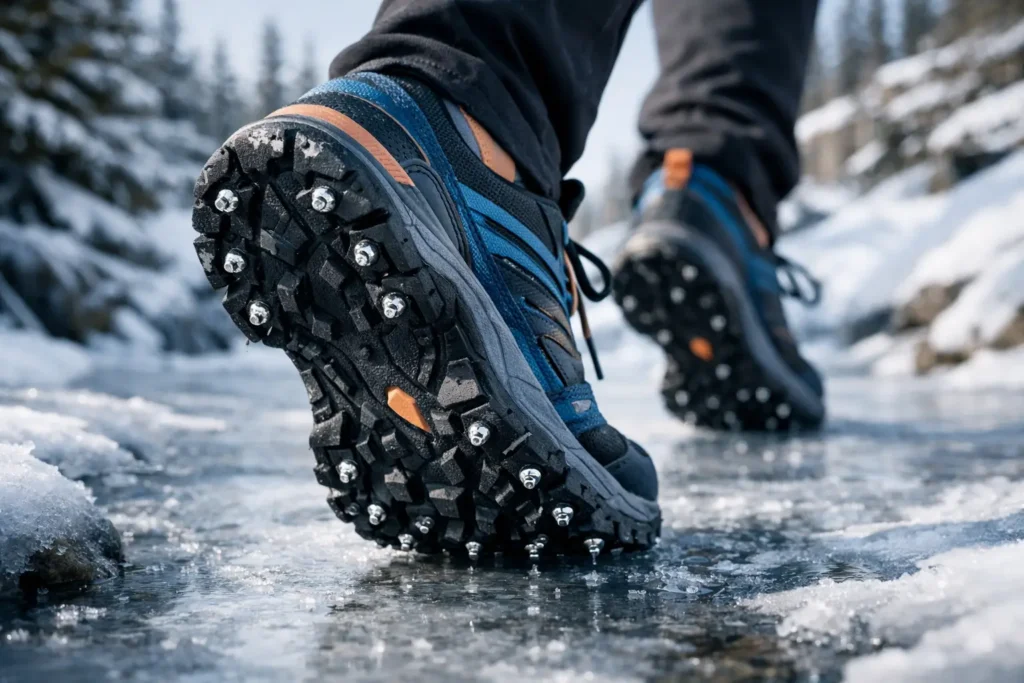
That first step onto frozen trail tells you everything. If your shoe skates sideways on hardpack, polished ice, or a shaded bridge deck, the problem is not your fitness – it is your traction. The best trail running shoes for ice are not just aggressive trail shoes with winter marketing. They are shoes that stay stable under load, keep your stride natural, and give you enough bite to move with confidence when the ground turns slick.
A lot of runners learn this the hard way. Deep lugs feel great in mud and loose dirt, then turn nearly useless on glare ice. Soft midsoles can feel comfortable for easy miles, then get vague and unstable when footing gets sketchy. And bulky add-on traction can solve one problem while creating another by changing your gait, adding weight, and shifting underfoot. If you run or walk outside all winter, ice changes the equation. You need traction that works in the real world, not just on a product page.
What makes trail running shoes for ice actually work
The first thing to understand is that no standard rubber outsole is magic on pure ice. Some compounds stay softer in cold temperatures, and that helps. Some lug patterns shed slush better, and that helps too. But when the surface is smooth, frozen, and hard, rubber alone hits a limit.
That is why the best setup usually starts with a stable trail shoe, then adds mechanical traction when conditions demand it. A good winter trail shoe should have a secure heel, a midfoot that does not slop around, and a platform that feels planted instead of tippy. On uneven frozen ground, stability matters as much as grip. If your foot moves inside the shoe, or if the shoe rolls too easily, even decent traction can feel unreliable.
Cold-weather flexibility matters too. Some shoes get stiff and harsh when temperatures drop. Others stay predictable. You want a shoe that still lets you run naturally, especially if you are covering mixed terrain with stretches of pavement, packed snow, gravel, and ice in one outing.
The outsole matters – but not in the way most people think
Runners often shop by lug depth first. That makes sense for sloppy trails, but ice is a different problem. Tall, widely spaced lugs are designed to claw through soft ground. On frozen surfaces, they can reduce contact and make a shoe feel less stable.
For winter use, a lower-profile, well-supported outsole can be better than a monster tread if you are dealing with packed snow, frozen dirt, and intermittent ice. You still want enough texture to handle trail transitions, but the real goal is a predictable platform. A shoe that corners well on mixed winter surfaces is often more useful than one that looks aggressive in the hand.
Rubber compound still plays a role. Softer compounds usually hold onto cold surfaces better than hard, durable road rubber. But there is a trade-off. Sticky rubber can wear faster on exposed rock and pavement. If your routes are mostly mixed, you may accept a little less pure softness for better durability and more consistent feel.
Fit becomes more important when the trail freezes
Loose shoes get punished in winter. The moment your foot slides forward on a descent or shifts laterally on cambered ice, your confidence drops. A good fit for icy conditions should lock the heel, hold the midfoot securely, and leave enough room in the forefoot for circulation and thicker socks if you use them.
Too-tight shoes are a problem too. Compression can make feet colder, and cold feet react slower. That matters when you are trying to stay balanced on technical ground. A winter trail shoe should feel secure, not strangling.
This is also where many runners make the wrong call on waterproofing. Waterproof shoes can be excellent for slush, shallow puddles, and wet snow. But they can also trap heat and moisture if you run hard. If your winters are cold and dry, a breathable shoe with the right socks may be more comfortable. If your trails are sloppy, partially melted, and refreezing, weather protection starts to earn its keep.
Why standard trail shoes still struggle on glare ice
Here is the blunt truth: even a very good trail shoe can lose badly on smooth ice. That is not a failure of the category. It is physics. Rubber grips through friction. Ice strips that down fast, especially when a thin film of water sits on top.
This is where runners start experimenting with strap-on cleats, DIY screw shoes, or just slowing to a shuffle. Each option has trade-offs. Strap-on devices can add solid bite, but they often feel bulky, shift during movement, and interfere with a smooth stride. DIY sheet-metal screws are cheap and common, but they can be inconsistent, wear out quickly, and change ride quality in ways that are hard to control.
If you want trail running shoes for ice that still feel like running shoes, the best answer is usually integrated, low-profile traction that works with the shoe instead of hanging off it. That is the difference between getting through a frozen run and actually moving with confidence.
The best setup is often a system, not a single shoe
This is the piece many shoppers miss. There may not be one perfect winter shoe for every condition, because winter terrain is rarely consistent. You might start on plowed pavement, hit packed snow in the woods, cross icy boardwalks, and finish on sloppy gravel roads. A shoe that works beautifully in one section can feel nervous in the next.
That is why a traction system approach makes sense. Start with a trail shoe that fits well, stays stable, and matches your usual mileage. Then upgrade traction at the sole when true ice is part of the route. That gives you more control over how the shoe performs without forcing you into an awkward over-shoe device.
For runners and winter walkers who want bite without bulk, installable traction has a clear advantage. It stays closer to the shoe, preserves a more natural gait, and cuts down on the shifting and dead weight that often come with chains, coils, and harness-style cleats. ICESPIKE was built around that exact problem – more grip, less interference.
How to choose the right shoe before adding traction
Start with the shoe you would trust on cold, uneven ground even without ice. Look for a stable base, secure fit, and an outsole layout that does not feel tall and squirmy. If the midsole is extremely soft or heavily rockered, test carefully. Those features can be comfortable, but some runners feel less planted on frozen off-camber trails.
Think about your real terrain, not your worst-case fantasy. If you spend most of your time on rolling singletrack with occasional icy patches, you want versatility first. If your runs are routinely covered in frozen ruts, hardpack, and slick creek crossings, prioritize stability and traction compatibility over speed-focused feel.
Durability matters more in winter than many people expect. Cold temperatures, road grit, salt residue, and repeated freeze-thaw cycles can beat up uppers and outsoles fast. A shoe that feels great for two weeks and then breaks down is not a winter solution. You want dependable structure and a sole that can handle repeat contact with rough, abrasive surfaces.
Common mistakes when buying trail running shoes for ice
One mistake is buying the most aggressive lugged shoe available and assuming it will handle ice. It might be excellent in snow and loose terrain, but glare ice is another category.
Another is sizing up too much for thick socks. Extra volume can make the shoe less precise and less stable. Winter traction starts with foot control.
The third is relying on removable traction that is so cumbersome you stop using it. The best traction device is the one you will actually wear when the trail turns dangerous. If your gear is heavy, awkward, or annoying to put on, it tends to stay in the car or at home.
And finally, many people underestimate fatigue. Heavy traction systems and unstable shoes do not just feel clunky. Over time, they can change how you move, make you work harder, and wear down confidence. On winter surfaces, secure footing is not just about avoiding a fall. It is also about staying efficient mile after mile.
What to expect from a high-confidence winter setup
A strong winter setup should let you move normally, not cautiously tiptoe through every shaded section. You should feel traction where it counts, stable landings on uneven surfaces, and less mental drain from constantly second-guessing each footstrike.
That does not mean you run recklessly. Ice always demands respect. Sharp turns, steep descents, and hidden frozen patches can still catch anyone off guard. But the right shoe and traction combination changes the experience. Instead of feeling like you are surviving the run, you feel in control of it.
For most people, the smartest move is not chasing a mythical ice-perfect shoe. It is choosing a solid, well-fitting trail runner and pairing it with traction that is light, durable, and built to stay put. That is how you keep your stride, keep your confidence, and keep moving when winter tries to shut the trail down.
The trail does not need to be dry to be runnable. It just needs to stop winning the battle under your feet.