
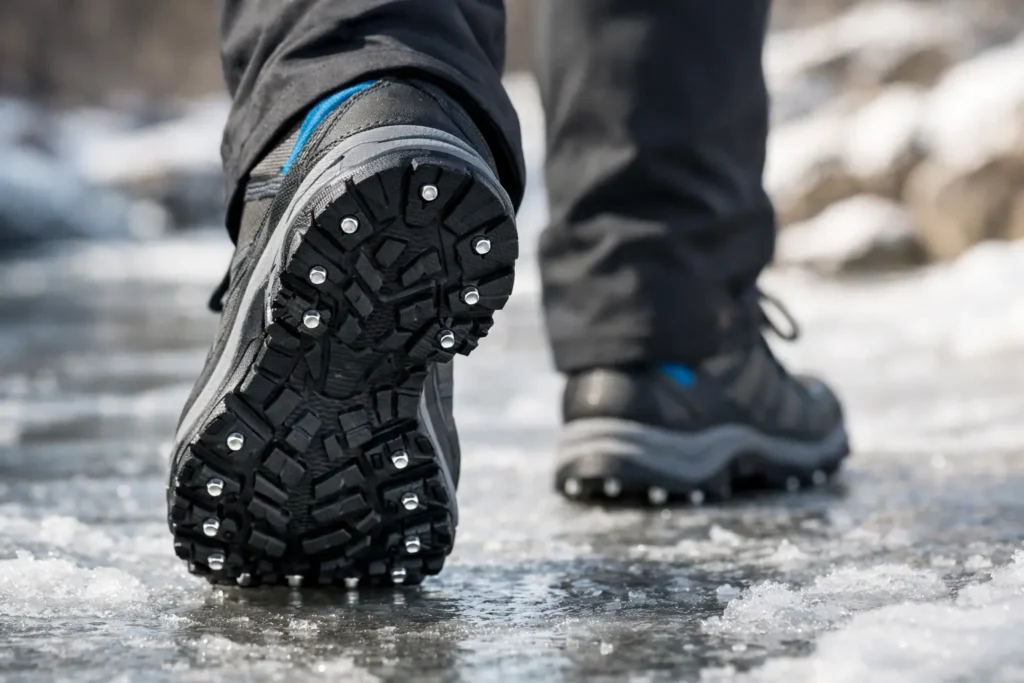
The problem with winter traction is not finding something sharp enough to bite into ice. It is finding something you will actually keep wearing. Most lightweight ice cleats for walking promise safety, then pile on straps, rubber harnesses, chains, and bulk that change the way your feet move. That is where people start adjusting their stride, walking stiff, and getting tired faster than they should.
If you walk the dog before sunrise, cross icy parking lots at work, cover neighborhood sidewalks after a freeze, or stay active on winter trails, weight matters. So does how the traction system sits on your shoe. A cleat that feels like an add-on can help in one moment and become a nuisance in the next. A cleat that feels built into the shoe is a different story. It keeps your step more natural, your footing more secure, and your mind off your gear.
What makes lightweight ice cleats for walking better
Lightweight matters for one simple reason – every extra ounce at your feet adds up. A traction device can look compact in your hand and still feel clumsy after twenty minutes of walking. When weight is paired with a loose fit or a thick harness underfoot, it can interfere with your gait and make each step feel less stable, not more.
That is why the best lightweight traction solutions are not just lighter on a scale. They are lighter in motion. They do not flap, shift, or create pressure points. They do not force you to pick your feet up higher or shorten your stride. Good winter traction should help you walk like yourself, just with more bite underfoot.
This is where traditional over-shoe cleats often come up short. Many rely on stretchy rubber frames, metal coils, chains, or plate systems that wrap around the shoe. They can work in the right conditions, but they also add bulk and create a disconnected feel. You notice them with every step. On mixed terrain, that annoyance gets old fast.
Why bulky strap-on cleats wear people out
Most people do not think about fatigue when they shop for traction. They think about slipping. But fatigue and slipping are connected. When your traction gear is heavy or awkward, your walking pattern changes. You may tense up, land more carefully than usual, or alter your stride to avoid catching a cleat edge on concrete. Over time, that extra effort can make winter walking feel less safe and less sustainable.
For older adults, that can mean less confidence leaving the house after a storm. For workers moving between pavement, packed snow, and icy patches, it can mean foot fatigue by midday. For runners and hikers using walking recovery days in winter, it can mean gear that feels too disruptive for everyday use.
There is also the issue of convenience. Strap-on systems are often treated like something you put on only when the conditions are bad enough. That sounds reasonable until you hit a route with alternating bare pavement, slush, and frozen sections. Taking traction on and off gets old in a hurry. Many people either stop using them or wear them in situations where they are less comfortable and less effective.
The real trade-off: aggressive grip versus natural movement
A lot of winter gear marketing acts like there is no trade-off. There is. The most aggressive traction setup is not always the best one for walking. If a cleat is too bulky, too tall, or too rigid for your normal stride, you may gain bite on pure ice but lose comfort and rhythm everywhere else.
That does not mean you should settle for weak traction. It means the best setup balances grip with movement. For walking, especially on mixed surfaces, lower-profile traction often feels better than oversized hardware hanging off the sole. You want reliable contact with the ground, not a platform that makes every sidewalk seam feel awkward.
This is one reason direct-to-sole traction stands out. Instead of wrapping a device over the shoe, the traction point is installed where it needs to work – in the sole itself. That changes the feel immediately. The system becomes part of the footwear instead of something riding on top of it.
A smarter approach to lightweight ice cleats for walking
If your goal is safer, easier winter walking, integrated traction is hard to ignore. Screw-in cleats designed for footwear soles solve several problems at once. They cut out the bulky harness. They reduce shifting. They preserve a more natural foot strike. And they stay with the shoe, which makes them far more practical for frequent use.
That last part matters. A traction system only helps if it is there when you need it. When cleats are installed directly into your walking shoes, hiking boots, or work boots, you do not have to remember to pack them, stretch them over frozen rubber, or stop at the trailhead to wrestle with straps. You lace up and go.
For people who have tried improvised screw shoes, there is an important difference here too. Random hardware from a garage bin may add some bite, but it is not the same as purpose-built traction. Properly designed cleats are shaped and hardened for the job. They are built to grip unstable surfaces while holding up to real use, not just a quick winter hack.
That is where a system like ICESPIKE fits naturally. It delivers sharp, durable traction in a low-profile format that does not burden the shoe with extra bulk. The result is stronger footing without the clumsy feel of over-shoe devices, which is exactly what walkers, workers, and winter athletes need when the ground keeps changing under them.
Who benefits most from lightweight walking traction
Not every winter user needs the same setup, but lightweight traction solves a common problem across several groups. Daily walkers want security without making errands feel like a gear mission. Seniors often need extra confidence more than extra complexity. Outdoor workers need dependable grip that stays put and does not slow them down. Hikers and runners want winter traction that supports movement instead of disrupting it.
Even within those groups, the right choice depends on where and how you walk. If you spend most of your time on glare ice, you may want a more aggressive pattern under key contact points. If your route includes sidewalks, packed snow, gravel, and icy corners, a lighter, more integrated setup is usually more comfortable and versatile. The best cleat is the one you can wear consistently without fighting it.
What to look for before you buy
Start with fit to your actual footwear, not just your shoe size. Traction works best when it matches the sole shape and use case. A walking shoe, insulated winter boot, and work boot all move differently. The cleat system should support that footwear, not overpower it.
Next, pay attention to profile. Lower-profile traction usually walks better on mixed terrain because it keeps you closer to your normal gait. Then look at security. If a cleat can slide, twist, or pop off, it is already a compromise. Finally, think about wear patterns. Some systems are great on untouched snow but miserable on cleared pavement. Others handle transitions better and make more sense for real daily use.
It is also worth being honest about how often you will use them. If winter traction comes out twice a year, almost anything may seem good enough. If you walk outside every day, comfort and convenience become performance features. That is when lightweight design stops being a nice extra and becomes the whole point.
Safety is not just about grip
Grip is the headline, but confidence is the outcome. When you trust your footing, you walk more normally. You stay relaxed. You spend less mental energy scanning every patch of sidewalk like it is a hazard. That matters for injury prevention because hesitant, unnatural movement can create problems of its own.
Good traction should make winter walking feel less dramatic, not more. It should support the way you already move and reduce the friction between you and your routine. That is why low-bulk, direct traction has such a practical advantage. It does the job without turning every trip outside into a production.
If you are tired of winter gear that feels like a compromise, start with the simplest question possible: will this help me walk naturally and stay secure at the same time? If the answer is yes, you are looking at traction worth wearing – and that is what keeps people moving when the ground turns slick.