
That first sideways slip on a frozen driveway tells you everything you need to know about bad traction. When you start comparing microspikes vs shoe studs, the real question is not which one looks tougher. It is which one keeps you moving naturally, grips when conditions change, and stays out of your way when the day is longer than the forecast promised.
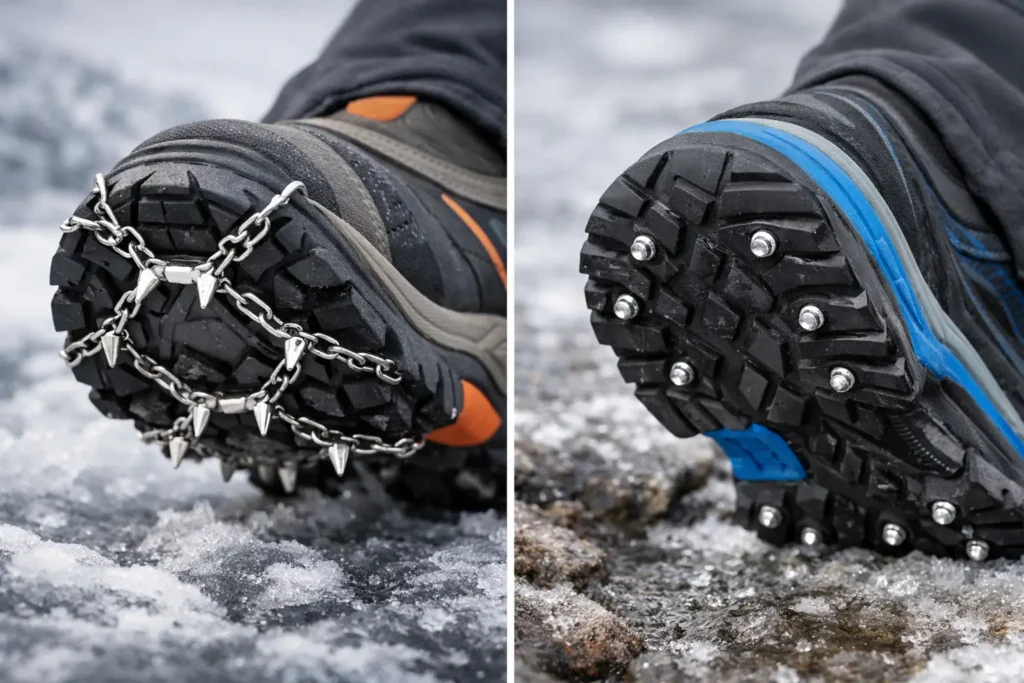
Both options are built to add bite on slick ground, but they solve the problem in very different ways. Microspikes are usually removable harness-style devices that stretch over your shoes or boots and use chains, plates, or spikes underfoot. Shoe studs mount directly into the sole, creating traction that feels more like part of the footwear itself. That difference matters more than most people realize.
Microspikes vs shoe studs on real terrain
On paper, microspikes look aggressive. They often have larger points, visible chain systems, and a serious winter profile. In deep snow, steep frozen trails, or short stretches of pure ice, that extra hardware can help. If you are heading into consistently harsh conditions and wearing dedicated winter boots, microspikes can be a solid tool.
But most people do not move through one surface all day. They go from icy sidewalks to packed snow, from frozen trailheads to exposed rock, from slush to hard pavement, from jobsite gravel to slick wood steps. That is where shoe studs start pulling away.
Because studs sit in the outsole instead of hanging under it, they create a lower-profile, more stable connection to the ground. You are not balancing on an accessory wrapped around your shoe. You are moving on footwear that has been upgraded for traction. The result is usually a more predictable stride, less shifting underfoot, and better confidence on mixed terrain.
That matters for runners trying to hold pace, hikers covering uneven winter trails, workers spending hours on their feet, and older adults who need stable, no-fuss grip. Big traction is only useful if it still feels controlled.
Why gait and comfort matter more than people think
A lot of traction comparisons stop at grip. That is only half the story.
If your traction device changes the way you walk, it can create fatigue fast. Bulky harnesses, chain systems, and underfoot plates can alter foot strike and make your stride feel stiff or awkward. You may not notice it in the first five minutes. You will notice it after a few miles, a full shift, or repeated winter walks.
Shoe studs have a major advantage here. Since they install directly into the sole, they preserve the shape and flex of the shoe far better than an over-shoe device. Your footwear still feels like your footwear. That means a more natural gait, less bulk, and less of that clunky high-step feeling people often get with removable traction.
For runners, this is a big deal. Rhythm matters. If traction interrupts turnover or changes how the foot rolls through contact, performance drops and strain goes up. For workers and walkers, comfort matters just as much. Stable traction should reduce stress, not add a new kind of fatigue.
There is also the issue of movement inside the system. Microspikes can shift, especially if fit is not perfect or conditions are changing. Any movement between shoe and traction device reduces precision. Studs avoid that problem because they are fixed where the traction belongs – in the sole.
Where microspikes still make sense
This is not a case where one product solves every situation for every user.
Microspikes still have a place, especially for people who want a removable traction option for occasional use. If you hike in steep, consistently icy terrain and only need traction in select conditions, being able to pull a device on and off may fit your routine. They can also make sense if you do not want to modify your footwear at all.
There is a trade-off, though. Removability adds convenience in one sense, but it also adds hassle. You have to carry them, stop to install them, stop again to remove them, and deal with wet, snowy gear after use. If you are constantly transitioning between surfaces, that routine gets old fast.
And on hard surfaces like bare pavement, entry mats, concrete floors, or indoor spaces, many people either remove microspikes repeatedly or keep walking awkwardly in them when they should not. That is not ideal for safety, speed, or comfort.
Where shoe studs win
Shoe studs are built for people who want traction without turning every outing into a gear change.
Because they are compact and integrated, they work especially well for mixed winter movement. Think neighborhood walks with icy patches, winter running on roads and paths, hiking where terrain shifts every quarter mile, or outdoor work that moves between snow, ice, mud, gravel, and packed ground. In those situations, lower-profile traction usually feels faster, cleaner, and more dependable.
They also tend to be easier to live with over time. There is no harness to stretch out, no chain assembly to tangle, and no bulky system to stash in a pack or truck. Good studs are durable, lightweight, and ready whenever your footwear is ready.
That built-in readiness is a real advantage. People are more likely to use traction consistently when it is already on the shoe. And consistent traction is what prevents surprise slips.
Durability, fit, and failure points
Traction is only useful if it holds up.
Microspikes rely on multiple components working together – rubber harnesses, welded chains, metal plates, links, and spike assemblies. The more parts involved, the more possible failure points you have. Cold temperatures can stiffen materials, repeated stretching can wear harnesses, and poor fit can accelerate breakdown.
Shoe studs are simpler. A direct-to-sole design cuts out a lot of that complexity. When installed correctly in compatible footwear, they stay put and deliver repeatable traction without the looseness that can come with removable systems.
Fit is another major factor. Microspikes need to match the shape and volume of the shoe or boot. Too loose and they shift. Too tight and they are a fight to install. Shoe studs sidestep much of that issue because they are not trying to wrap around the entire shoe. They become part of it.
That is one reason serious users often prefer an installed traction solution when they know slick conditions are part of the season, not a rare surprise.
Choosing by use case, not marketing hype
If you are deciding between microspikes vs shoe studs, start with how you actually move.
If your day means steep mountain trails, long frozen climbs, and conditions where aggressive removable traction is needed for a specific outing, microspikes may be the right tool. They are specialized gear, and that can be a strength.
If your day means regular exposure to winter hazards across changing surfaces, shoe studs usually make more sense. They are lighter, more natural underfoot, and better suited to people who want reliable traction without bulk. That includes runners, hikers, outdoor workers, anglers, seniors, and anyone tired of awkward strap-on devices changing the way they move.
This is where a purpose-built stud system stands apart from improvised screw shoes too. Random hardware-store screws can add bite, but they often lack consistency, durability, and smart placement. A real traction system is designed around grip, stability, and wear, not guesswork.
That is why brands like ICESPIKE focus on direct-to-sole traction that preserves natural movement while adding serious bite where it counts. The goal is not just more metal underfoot. The goal is stronger grip with less interference.
The better question to ask
Instead of asking which product looks more aggressive, ask which one you will actually trust when the ground changes under you.
Good traction should make you feel planted, not overbuilt. It should support your stride, not fight it. It should be tough enough for winter, but clean and efficient enough for real life. For many people, that points toward shoe studs. Not because they are flashy, but because they work where most slips actually happen – on mixed terrain, during everyday movement, when you need secure footing without the clunk.
The best traction setup is the one that keeps you confident enough to keep going, whether that means finishing the run, getting through the shift, or making sure the walk to the mailbox is uneventful for all the right reasons.