
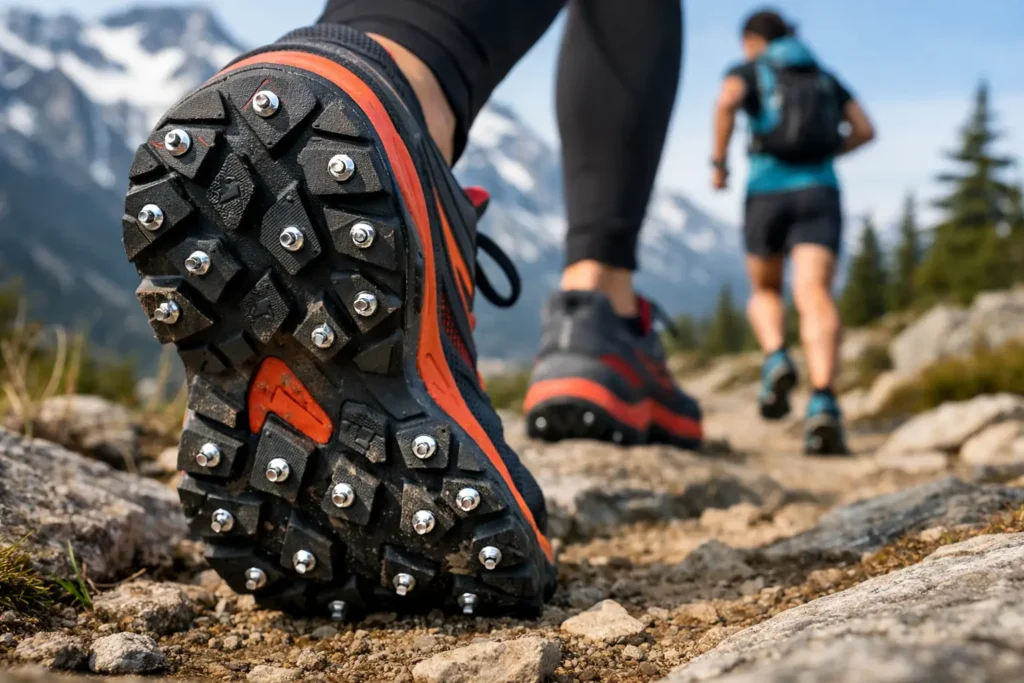
The trail looks runnable until the first off-camber patch of ice sends your foot sideways. That is where the search for the best traction devices for trail runners gets real fast. Good traction gear does more than add bite – it keeps your stride natural, cuts down on wasted energy, and gives you the confidence to keep moving when the ground turns slick, loose, frozen, or unpredictable.
For trail runners, traction is never one-size-fits-all. A device that feels solid on packed snow may feel clunky on mixed singletrack. A setup that claws into glare ice might be too aggressive for rock, dirt, and pavement transitions. The right choice depends on where you run, how fast you move, and how much compromise you are willing to accept in weight, comfort, and ground feel.
What makes the best traction devices for trail runners?
Trail runners need grip without wrecking efficiency. That means the best options are not automatically the most aggressive ones. If a device changes your foot strike, bounces under load, or makes your shoe feel unstable on uneven terrain, it can cost more than it saves.
The best traction devices for trail runners usually get four things right. They hold securely to the shoe, they add meaningful grip on the terrain you actually run, they keep weight and bulk under control, and they preserve as much natural gait as possible. That last point matters more than many runners expect. If your traction system makes every step feel delayed or awkward, fatigue builds early and your form starts to slip.
This is also where trail running differs from casual winter walking. A walker may tolerate a heavier over-shoe system because pace is slower and footing is more deliberate. A runner needs traction that reacts instantly, stays quiet underfoot, and does not turn technical movement into a stomping exercise.
The main categories of traction devices
Screw-in spikes
For many runners, screw-in spikes are the strongest answer when conditions are mixed and movement matters. These small metal studs install directly into the outsole lugs, creating an integrated traction setup instead of a harness wrapped around the shoe. That matters on trails where you are shifting between frozen dirt, hardpack, roots, shallow snow, and occasional ice.
The big advantage is feel. Because the spikes become part of the sole, the shoe usually runs more naturally than it does with strap-on systems. There is less bulk, less slop, and less chance of the device rolling or shifting when you corner, climb, or descend. Weight stays low, and that lighter package helps on longer runs where every ounce starts to show up in your stride.
There are trade-offs. Screw-in spikes work best with shoes that have enough outsole material to hold them securely, and not every runner wants to modify a shoe. They also are not ideal if you need something you can quickly move from one pair to another. But for runners who care most about secure traction with minimal gait disruption, this category is hard to beat. It is why direct-to-sole systems, including options like ICESPIKE, stand out for serious users who want more grip without the clumsy feel of old-school add-ons.
Strap-on elastomer cleats
These are the familiar slip-over devices with rubber harnesses and metal studs or coils underneath. Their biggest strength is convenience. You can carry them in a pocket or vest, pull them on when the trail gets ugly, and remove them when conditions improve.
That flexibility is useful, especially for shoulder-season runs with inconsistent footing. But there is a cost. Strap-on systems can shift, especially on aggressive terrain or at faster paces. Some feel unstable when the shoe twists on uneven ground. Others create a high, disconnected platform under the foot that changes stride mechanics more than runners expect.
For hiking or short winter runs, they can work well. For technical trail running, they often feel like a compromise. The bulk and movement underfoot can turn a nimble shoe into something much less precise.
Chain-style microspikes
Microspikes with chains and deeper points are built for tougher winter footing. If your route is dominated by steep frozen trails, sustained ice, or hard-packed mountain snow, they can provide serious security. They bite harder than lighter running-oriented systems and inspire confidence when slipping is not an option.
The downside is obvious the second you try to run smoothly in them. They are heavier, more rigid, and more intrusive than lighter traction options. On mixed surfaces, they can feel overbuilt. On rock or pavement, they can be noisy and awkward. For some winter mountain routes, that is a fair trade. For everyday trail running, it often is not.
Coil-based traction devices
Coil designs wrap metal wire under the sole to create friction on snow and light ice. They are simple and often affordable, but they are rarely the best choice for runners who need dependable bite on technical trails. Coils can skate on harder ice and tend to offer less precise grip than actual spikes or studs.
They are better suited to walking and casual use than aggressive trail running. If your routes include steep grades, sharp turns, or variable surfaces, coil systems usually leave too much performance on the table.
How to choose for your terrain, not someone else’s
The biggest mistake runners make is buying for worst-case conditions when they mostly run mixed terrain. If you spend 80 percent of your miles on frozen dirt, patchy snow, and slick roots, a heavy ice-first device may slow you down more than it helps. On the other hand, if your trails are consistently glazed over, lightweight studs may not give enough bite.
Think in terms of your most common footing. Mixed winter singletrack favors lightweight, low-profile systems that preserve movement. Pure ice and steep snow call for more aggressive points. Mud is its own problem entirely. Some metal traction devices help in sticky, sloppy terrain, but aggressive outsole lugs often matter just as much there as any add-on device.
Your route transitions matter too. If you move between trail, road shoulder, gravel, and boardwalk, the best setup is often the one you notice least. Constant surface changes punish bulky systems. Integrated spikes usually handle these shifts better because they stay close to the shoe and do not flap, bounce, or catch.
Fit, gait, and fatigue are performance issues
A traction device does not need to fall off to hurt your run. If it changes how your foot lands, that is enough. Small changes in stack feel, flex, and toe-off become a big deal over six or eight miles. Runners often blame winter fatigue on the terrain when the real culprit is awkward gear.
This is why low-bulk traction earns loyalty. A lighter, more integrated feel reduces the energy cost of every step. It also helps on technical descents where ground contact needs to be quick and precise. The more your shoe behaves like your shoe, the better your form holds up.
That does not mean aggressive systems are wrong. It means they should be used when the terrain truly demands them. If you only need maximum bite twice a month, it may not make sense to wear the heaviest option on every run.
Durability matters more than most runners think
Trail runners are hard on gear. Scraping rocks, clipping roots, and hitting frozen ground at speed will expose weak designs fast. Rubber harnesses stretch out. Chains can break. Connection points fail. Studs dull. A traction device that performs well on day one but loses security after a few outings is not a bargain.
Durability also affects trust. When the footing gets sketchy, you do not want to wonder whether your device is about to shift or snap. The best systems build confidence because they feel planted from the first mile to the last. For runners who train consistently through winter, that reliability is not a luxury. It is part of staying upright and staying out there.
So what are the best traction devices for trail runners?
If you want the short answer, screw-in spikes are often the best overall choice for trail runners who value natural movement, low weight, and dependable grip on mixed terrain. They offer the cleanest blend of traction and runnability. Strap-on cleats make sense for occasional use and fast on-off convenience. Chain-style microspikes are the better tool when trails are steep, frozen, and relentlessly icy. Coil devices are usually the least performance-oriented option and fit walkers better than runners.
The right answer still depends on conditions. There is no shame in owning more than one setup if your winter ranges from muddy trailheads to frozen mountain climbs. But if your goal is strong grip without the bulk, bounce, and gait interference that come with many over-shoe systems, direct-to-sole spikes deserve a hard look.
The best traction device is the one that lets you keep running like a runner, not shuffle like someone surviving the parking lot. When your footing stays secure and your stride stays yours, the trail opens back up.