
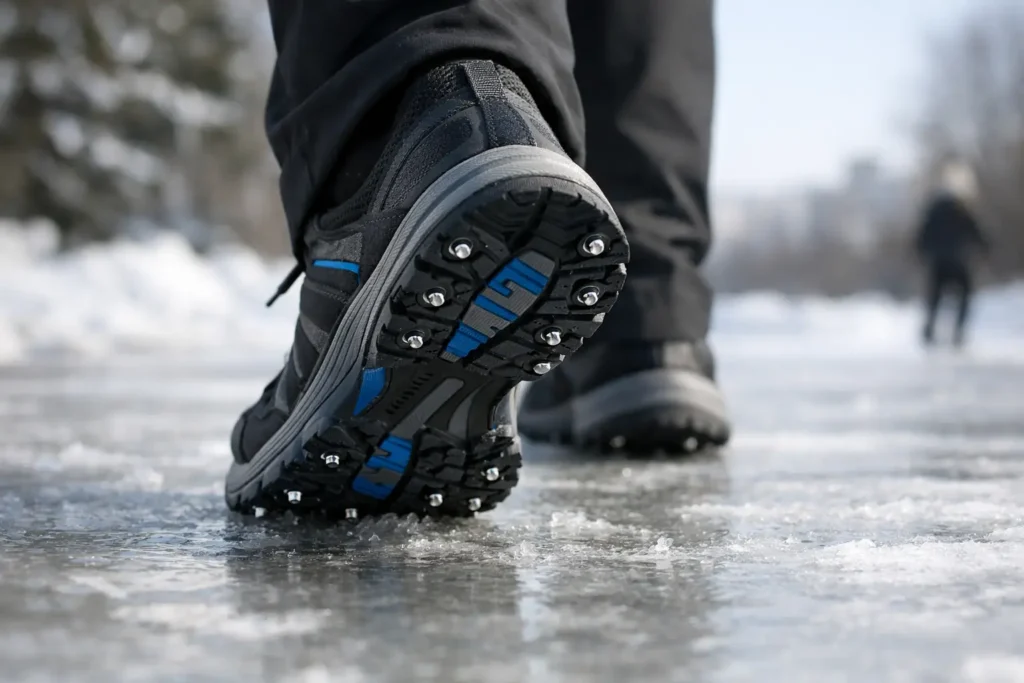
That first heel skid on a frozen driveway gets your attention fast. If you are wondering how to stop slipping on ice, the answer is not one magic trick. It is a combination of better traction, smarter movement, and not trusting winter surfaces just because they look harmless.
Ice is unforgiving because it removes the margin for error. A sidewalk can look wet and actually be black ice. A packed trail can feel stable for ten steps and then turn slick on the next patch of shade. The people who move well in winter are usually not taking bigger risks. They are controlling the variables they can – footwear, pace, route, and body position.
How to Stop Slipping on Ice Starts With Traction
The biggest mistake people make is trying to solve an ice problem with normal shoes. Good tread helps in snow and slush, but glare ice is a different fight. Rubber alone often cannot bite into a hard frozen surface, especially when the temperature hovers around thaw and refreeze cycles.
That is where traction hardware matters. If you spend real time outside in winter – walking the dog, running, working, hiking, or just getting across a frozen parking lot – you need grip that can actually engage the surface. Metal traction points create mechanical bite. That is very different from hoping a lug pattern will save you.
Not all traction systems feel the same, though. Bulky strap-on devices can help, but they also come with trade-offs. They can shift underfoot, feel awkward on mixed terrain, and change the way your foot lands. That matters more than people think. If your traction gear makes you walk stiff, heavy, or unnatural, fatigue creeps in and confidence drops.
A lower-profile traction setup that integrates with the sole tends to feel more stable and more natural. That is why many experienced winter runners, hikers, and outdoor workers move away from loose over-shoe systems when they want dependable grip without the clunky feel. ICESPIKE is built around that exact advantage – strong bite, less bulk, and better natural movement.
The Right Shoe Still Matters
Traction devices are only part of the picture. Your base footwear needs to be stable. A soft, worn-out sole can flex too much and reduce control. A shoe with a narrow, unstable platform can make slick conditions worse, not better.
Look for footwear that fits securely through the heel and midfoot. If your foot slides inside the shoe, your balance suffers before the sole even contacts the ground. For seniors and everyday walkers, this point is huge. For runners and workers, it is about efficiency as much as safety. Stable footing starts inside the shoe, then moves down to the outsole and traction points.
Change the Way You Walk on Ice
Even with great traction, movement matters. People slip because their center of mass drifts too far ahead or behind their base of support. In plain language, they overstride, rush, or lean where they should not.
Take shorter steps. Keep your feet more underneath you. Land flatter instead of striking hard with the heel. A slightly bent knee helps your body absorb movement and react faster if the surface gives way. Think controlled and compact, not long and hurried.
Your torso should stay stacked over your hips. If you lean back because you are afraid of falling, you actually make a backward fall more likely. If you lean too far forward and push off aggressively, you can lose the front foot. The goal is quiet movement. Less force into the ground, more control over each step.
Arm position helps too. Keeping your hands out of your pockets gives you a better chance to recover if you slide. It also improves balance in the moment. That small habit sounds basic, but on ice, basic habits prevent hard falls.
Why Rushing Makes Ice More Dangerous
Most winter falls happen during ordinary moments – walking to the mailbox, stepping out of a truck, crossing a shaded sidewalk, carrying groceries. The common thread is that people move like the surface is normal because they are focused on the task, not the footing.
Speed narrows your reaction window. The faster you move, the less time you have to correct when the ground changes from rough to slick. That does not mean you need to shuffle everywhere. It means matching your pace to the conditions, especially on slopes, transitions, and areas where snow has been compressed smooth.
Watch the Surfaces That Trick People
Some terrain deserves extra suspicion. Black ice is the obvious one, but it is not the only hazard. Refrozen footprints, polished steps, sloped driveways, painted crosswalks, frozen mud, wood bridges, dock surfaces, and compacted trail sections can all get slick fast.
Mixed terrain is often harder than pure ice because it changes your rhythm. You go from pavement to slush to frozen gravel to hardpack, and every transition asks something different from your footing. This is where lightweight traction really shines. You want grip that can handle variable surfaces without making you feel like you are walking on stilts.
If you are outdoors early or late in the day, assume shaded sections are worse than sunlit ones. If temperatures hover near freezing, assume thawed spots may refreeze by evening. If you cannot clearly read the surface, treat it like it is slick until proven otherwise. That mindset prevents a lot of bad decisions.
How to Stop Slipping on Ice at Work, on Runs, and Around Home
The right solution depends on how you move.
For runners, the challenge is preserving stride without losing bite. Heavy, awkward traction can wreck cadence and make every mile feel labored. You need grip that stays secure and lets the foot move naturally on packed snow, icy pavement, and messy shoulder conditions.
For hikers and hunters, the issue is varied terrain. Ice may only be part of the route. You may also hit rock, roots, mud, and crusted snow. A traction system that performs across surfaces without constant adjustment is the safer long-game choice.
For outdoor workers, durability and trust matter most. If your day includes loading docks, frozen lots, ladders, truck steps, and uneven ground, slipping is not an inconvenience. It is a real injury risk. You need traction that can handle repeated use and keep doing its job when the weather stays ugly for weeks.
For seniors and everyday walkers, confidence is often the deciding factor. People shorten their walks and avoid leaving home because they do not trust their footing. Better traction changes that. It gives back independence, which is every bit as valuable as performance.
What Does Not Work Well
Improvised fixes are common because people want a quick answer. Smooth-soled boots, old sneakers, and “careful walking” are not a plan. Neither is relying on a handrail that may be out of reach when you hit a slick patch.
Homemade screw shoes can add bite, but they can also be inconsistent. Screw length, placement, and durability all affect performance. Poor setups can feel uneven, wear unpredictably, or create discomfort underfoot. Cheap traction add-ons also tend to loosen, stretch, or fail when conditions get rough.
That does not mean every removable device is useless. Some work well in limited situations. But if you are dealing with winter footing regularly, convenience and consistency start to matter as much as raw grip. The less your traction shifts, bunches, or changes your gait, the more likely you are to wear it and trust it.
Build Better Winter Habits
Stopping slips is not only about what is under your feet. It is also about reducing avoidable risk. Give yourself more time. Use light when walking in the dark. Avoid carrying loads that block your view. Choose the cleared route even if it takes an extra minute. On stairs, plant the whole foot when possible instead of just the edge.
Condition matters too. Fatigue makes people sloppy. So does distraction. If you are texting, rushing, or trying to multitask across a frozen surface, you are gambling with poor odds. Winter rewards attention.
And if you do feel a slip start, resist the instinct to tense up hard. A rigid body is slower to recover. Stay loose enough to step, catch, or lower your center of gravity. Recovery is never guaranteed, but control improves your chances.
The safest people on ice are usually not the most athletic. They are the most prepared. Real traction, stable footwear, and disciplined movement beat wishful thinking every time. When winter turns the ground into a hazard, confidence comes from grip you can trust and steps you can own.