
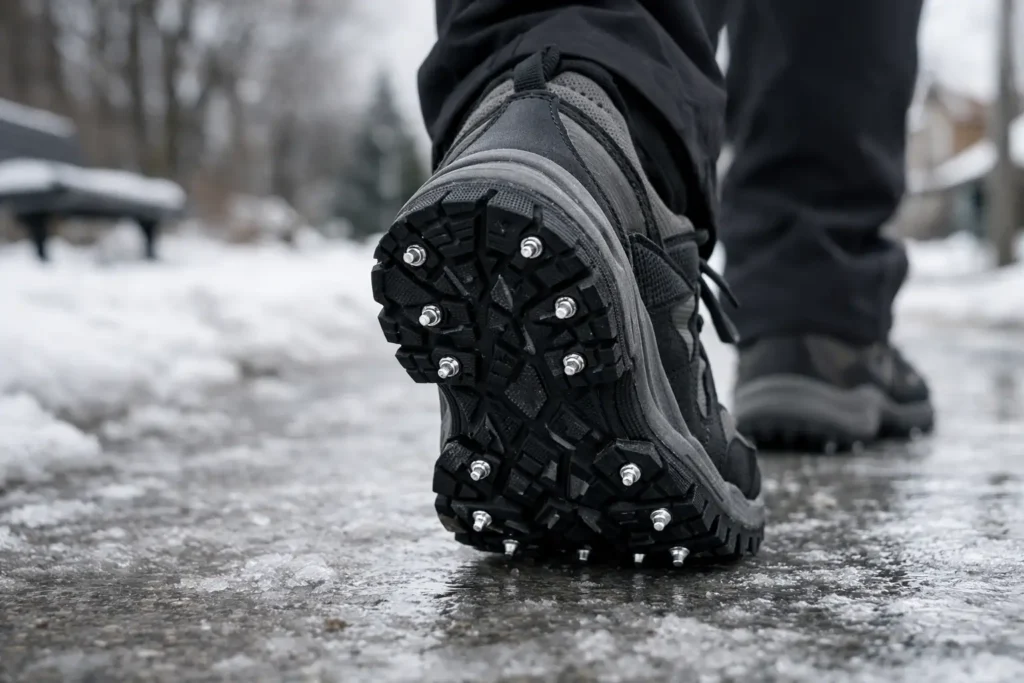
A sidewalk can look harmless right up until your heel hits a thin glaze of black ice. One step turns into a hard fall, a strained wrist, or weeks off your feet. The best shoe spikes for icy sidewalks are not necessarily the biggest or most aggressive option. They are the ones that bite into ice, stay secure underfoot, and let you walk with a natural, confident stride.
For a quick trip to the mailbox, a long dog walk, a winter run, or a full outdoor work shift, traction has to match the job. Bulky chain cleats can work in deep snow, but they are often awkward on pavement. Small slip-on grips are convenient, but they can shift, wear out, or leave key contact points unsupported. A direct-to-sole spike system solves a different problem: dependable traction that moves with your footwear instead of hanging off it.
What Makes the Best Shoe Spikes for Icy Sidewalks?
Sidewalk ice is usually mixed terrain. You may cross frozen slush, bare concrete, packed snow, wet tile at an entrance, gravel, and a sheet of clear ice in the same block. That means the right spike setup needs more than sharp points. It needs a low-profile design, secure attachment, and placement that supports how your foot actually lands.
The first requirement is grip. Carbide or hardened metal points create a concentrated biting edge that can penetrate slick ice better than rubber tread alone. The point does not need to be oversized to work. In fact, a smaller, well-positioned spike is often more practical for sidewalks because it gives traction without making every step feel stiff or unstable.
The second requirement is security. If a traction device rolls under the sole, slides out of position, or loosens around the toe, it is no longer helping when you need it most. Strap-on designs rely on rubber harnesses, chains, coils, or elastic to stay in place. That can be effective for occasional use, but it also introduces movement between your shoe and your traction device. Directly installed spikes eliminate much of that movement.
The third requirement is natural gait. Heavy traction gear can make you lift your feet differently, shorten your stride, and tire out faster. For active walkers, runners, and outdoor workers, that trade-off matters. A lightweight spike system installed flush to the sole preserves the feel of the shoe while adding bite where it counts.
Screw-In Spikes vs. Strap-On Cleats
Traditional strap-on cleats have their place. They are easy to take on and off, and they can be useful if you only encounter ice a few times each year. They also make sense when you need one device to fit several pairs of shoes. But sidewalk conditions expose their weaknesses quickly.
Chains and coils can feel clumsy on cleared pavement. Rubber harnesses may stiffen in cold weather, stretch over time, or shift during a long walk. Some over-shoe systems also collect snow and slush, creating bulk beneath the foot. When you step inside, they must come off before they damage floors or create a slip hazard on smooth surfaces.
Screw-in shoe spikes are a stronger choice for people who regularly move through winter conditions. They attach directly to the outsole, creating a more integrated traction setup. There is no harness to adjust and no chain network to swing under the foot. Properly installed, they stay where you put them and add far less bulk than many over-shoe devices.
That does not mean screw-in spikes are right for every shoe. They need an outsole with enough rubber depth to hold the spike securely. Thin dress-shoe soles, heavily worn-out running shoes, and footwear with exposed air pockets are poor candidates. For the right boot, trail shoe, work shoe, or casual winter shoe, though, direct installation delivers a tough, low-profile answer to recurring ice.
Choose Spikes for Your Actual Use
A person walking a salted neighborhood route needs a different setup than a trail runner crossing icy bridges or a delivery worker moving all day on frozen concrete. Start with how much ice you encounter and how often you wear the footwear.
For everyday sidewalk walking, use a modest number of low-profile spikes positioned at key contact zones. The goal is secure footing during heel strike and push-off, not a sole covered in hardware. This approach feels more natural on mixed pavement and reduces the harsh, elevated sensation that can come from aggressive traction devices.
For running, traction must be especially stable. A loose cleat can alter foot strike and become a distraction at speed. Runners usually benefit from lightweight spikes installed in both the heel and forefoot, where braking and propulsion happen. Avoid placing hardware where it will interfere with flexible grooves or create pressure beneath the foot.
Outdoor workers may need more coverage because they spend longer hours moving between snow, ice, dirt, gravel, and slick work areas. Durability becomes a bigger factor here. Tough screw-in spikes can remain useful across seasons, not just during a few winter storms. They also handle muddy paths, wet roots, loose gravel, and frozen ground with the same no-nonsense purpose: keep your feet planted.
For older adults or anyone buying for a parent, simplicity is part of safety. A device that sits unused in a closet does not prevent falls. A properly installed traction system on a favorite pair of walking shoes or winter boots is ready when the door opens. That consistency can make daily errands, dog walks, and driveway trips feel far less risky.
Spike Placement Matters More Than Most People Think
Even excellent spikes will underperform if they are placed randomly. Your foot does not contact the ground evenly, and traction should support the areas that take the most force.
Heel placement helps control the initial landing, especially when walking downhill or stepping onto a hidden icy patch. Forefoot placement helps with push-off and stability as your body moves over the shoe. The outer edges of the sole can also be useful contact zones because they support balance when the foot lands slightly angled.
Keep spikes away from very thin sole sections, deep flex channels, and areas directly below sensitive pressure points. Follow the installation guidance for the specific spike and footwear type. Before heading out, walk on a safe surface for a few minutes to make sure the shoe feels balanced and secure.
A practical setup process includes four checks:
- Inspect the outsole for thick, solid rubber and avoid damaged or overly worn areas.
- Place spikes in heel and forefoot contact zones rather than clustering them in one spot.
- Install each spike firmly so it sits secure and does not protrude through the shoe.
- Test the footwear on a dry outdoor surface before relying on it in icy conditions.
ICESPIKE is built around this direct-to-sole approach, giving users a lightweight traction upgrade that can stay with the shoes they trust most.
Know When to Remove or Avoid Spikes
No traction product makes ice risk-free. Slow down at curbs, use handrails when available, and take shorter steps on glazed surfaces. Spikes improve the shoe-to-ice connection, but they cannot fix poor visibility, rushing, or unstable snow hiding a hole beneath it.
You should also pay attention to surface changes. Metal spikes are designed for outdoor traction, not polished indoor flooring, hardwood, tile, or smooth finished concrete. Remove or avoid spiked footwear when you will spend significant time indoors. On dry pavement, a low-profile setup is generally more manageable than bulky cleats, but constant hard-surface wear can still affect comfort and accelerate wear over time.
For flights of stairs, ladders, and surfaces where the spike cannot bite, move deliberately. Ice traction works best when the point can engage the surface. Smooth metal, glossy tile, and certain indoor mats are not where aggressive traction belongs.
The Right Traction Lets You Keep Moving
The best winter gear does not make you think about it every step. It gives you the confidence to take the dog out before sunrise, finish a route after a freeze, get to work safely, or walk the neighborhood without studying every shaded patch of pavement.
Choose shoe spikes that match your footwear, your terrain, and the way you move. When traction is secure, lightweight, and placed where your foot needs it most, icy sidewalks become a condition to handle, not a reason to stay inside.