
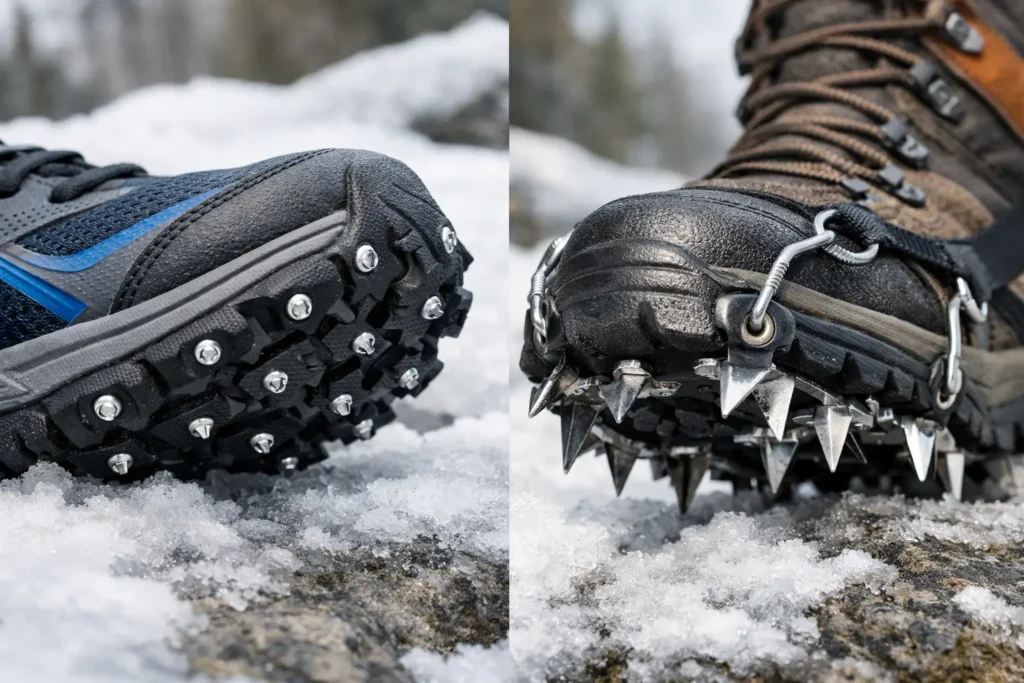
A frozen driveway, a glare-ice trail crossing, and a snow-packed jobsite can all make one question urgent: screw in spikes vs crampons – which one actually gives you the footing you need? The answer is not about choosing the most aggressive-looking gear. It is about matching your traction to your footwear, terrain, pace, and how often you need to move from slick ground to normal surfaces.
For everyday winter movement, trail running, hiking, outdoor work, and hunting, direct-to-sole screw-in spikes deliver serious bite without turning your shoes into bulky hardware. Crampons have a rightful place, but that place is usually steep, technical mountain terrain where a fall can become a slide and a boot needs full underfoot coverage.
Screw In Spikes vs Crampons: The Core Difference
Screw-in spikes are individual traction points installed directly into the lugs or solid areas of a shoe or boot outsole. They sit close to the sole, add very little weight, and become part of the footwear rather than a separate device wrapped around it. When the ground is icy, snowy, muddy, loose, or uneven, those low-profile points bite in and help you stay balanced through a natural stride.
Crampons are more substantial traction systems, typically built around a metal frame with large points under the foot. Many use toe and heel attachments, straps, or a boot-specific binding. They are designed to grip hard alpine ice, steep snow, glaciers, and mountaineering routes. Their strength is maximum penetration and stability in serious mountain conditions.
That difference matters. A crampon is not automatically better because it has more metal. On a dog walk, a run on packed snow, a shift spent moving between trucks and icy pavement, or a wooded hike with frequent changes in surface, a full crampon can feel like overkill. It may alter your gait, collect snow, and make hard surfaces awkward or uncomfortable.
When Screw-In Spikes Make More Sense
Screw-in spikes are built for people who need dependable traction but still need to move normally. They work especially well when the route changes every few steps: snow to exposed rock, frozen grass to gravel, ice to packed dirt, or a slick trail to a parking lot.
For runners and trail runners, that low profile is a major advantage. Heavy strap-on traction can slap, shift, or create a clunky feeling beneath the shoe. Direct-to-sole spikes keep the foot closer to its normal position and let the shoe flex as designed. You get grip where it counts without carrying a chain harness around your outsole.
Hikers benefit for the same reason. On rolling winter trails, frozen forest paths, and mixed terrain, the goal is confident footing over distance. A few well-placed carbide or steel traction points can reduce slips while preserving the comfort of the boots you already trust.
Outdoor workers also need traction that does not become a daily hassle. Strapping equipment on and off several times per shift wastes time, especially with gloves on. Installed spikes are ready when the ground turns slick. They can provide dependable grip around icy equipment yards, loading areas, walkways, rural properties, and winter worksites without the bulk of a crampon frame.
For seniors and anyone walking for everyday safety, lightweight traction matters just as much. A device that feels unstable, cumbersome, or difficult to put on is less likely to be used. A properly installed screw-in system gives familiar footwear more bite while keeping the walking experience close to normal.
When Crampons Are the Right Call
Crampons earn their place when terrain becomes steep, exposed, and truly technical. If you are climbing a frozen couloir, traveling across a glacier, ascending hard-packed mountain snow at a sustained angle, or using an ice axe and mountaineering boots, crampons are the appropriate tool.
Their larger points penetrate firm snow and ice deeply. Their full-foot layout supports precise edging and more secure travel where every foot placement matters. In these conditions, ordinary footwear with add-on spikes is not a substitute for mountaineering boots and properly fitted crampons.
The trade-off is that crampons are specialized. They require compatible boots, correct fit, and the skill to walk without catching points on clothing, gaiters, rocks, or your opposite leg. They can also be a poor choice on pavement, thin ice, bare rock, and other hard or mixed surfaces. The very features that make crampons powerful in the mountains can make them impractical for daily winter use.
Natural Gait Is a Safety Feature
Traction is not only about how hard a point bites. It is also about how your body moves while wearing it. If a traction device shifts under the shoe, feels excessively heavy, or raises your foot too far from the ground, it can change your stride. Over a long walk, run, or workday, that can mean more fatigue and less confidence.
Screw-in spikes keep traction close to the outsole. That low-profile setup helps preserve the shoe’s intended flex and feel. You can still sense the ground, react to changing terrain, and move with less of the awkward high-step gait common with bulky over-shoe devices.
Placement also matters. Traction needs to support the phases of your stride: initial contact, weight transfer, and push-off. A balanced layout across the heel and forefoot gives the outsole multiple points of engagement instead of concentrating all grip in one area. This is where a purpose-built system, such as ICESPIKE, stands apart from random hardware-store screws that can wear quickly, pull out, or create uneven pressure underfoot.
Choose by Terrain, Not by Season
Winter conditions are rarely one thing. A route that begins on icy pavement may continue over slush, gravel, frozen mud, roots, and bare ground. Choose traction based on the hardest conditions you expect to encounter and how frequently the surface changes.
Screw-in spikes are usually the stronger choice for:
- Icy sidewalks, driveways, and parking areas
- Winter running and trail running
- Hiking on packed snow, frozen trails, and mixed ground
- Outdoor work, chores, hunting, fishing, and property maintenance
- Mud, slick roots, wet grass, loose gravel, and shoulder-season trails
Crampons are usually the stronger choice for technical alpine travel, steep hard snow, glacier crossings, and ice climbing approaches that require mountaineering-specific equipment.
There is overlap in mild conditions, and personal preference matters. But using crampons for a neighborhood walk is like using a snowplow to clear a porch step. More aggressive equipment is not always more useful equipment.
Installation and Footwear Matter
Screw-in traction is only as good as the shoe or boot supporting it. Choose footwear with a durable outsole and enough rubber thickness in the installation areas. Deep-lug hiking boots, work boots, trail shoes, and many running shoes can be good candidates, but thin, worn, foam-exposed, or damaged soles are not.
Install spikes in the outsole, not through the upper or into areas where the sole is too thin. Keep them clear of air pockets, thin flex zones, and any exposed cushioning material. Follow the product-specific placement instructions, then inspect the spikes regularly for wear and tightness.
It also pays to be realistic about surfaces. No traction product makes polished indoor floors, smooth tile, or wet metal completely safe. Spikes can be slippery or damaging on some interior surfaces, so remove or avoid them where appropriate. Good traction improves your margin for error; it does not replace deliberate foot placement, slower pacing, and attention to changing conditions.
The Better Choice Is the One You Will Wear
The best traction system is the one that fits the way you actually move. If your winter includes work, exercise, errands, trails, and unpredictable footing, screw-in spikes offer a tough, lightweight answer that stays ready on the shoes or boots you already wear. If your objective is steep alpine ice, choose proper crampons and the technical footwear that goes with them.
Before the next freeze, look at your most-used pair of boots or shoes and the ground between your door and where you need to go. Reliable grip should feel like part of the plan, not another piece of gear you left in the truck.