
Our Website if down for construction for awhile. Not a good time of year but needed to be done. If you need product or help in the mean time please call us at 877-677-3567 Thanks for you understanding.
Our Website if down for construction for awhile. Not a good time of year but needed to be done. If you need product or help in the mean time please call us at 877-677-3567 Thanks for you understanding.
A warm boot can still slide like a skate on black ice. That is the hard truth behind the winter boots vs traction spikes decision. Insulation keeps your feet comfortable, waterproofing keeps slush out, and a deep tread helps in loose snow. But when a sidewalk, trail crossing, loading area, or driveway turns into smooth frozen glaze, warmth is not traction.
The right choice depends on where you walk, work, run, and hike. For some days, a quality winter boot is all you need. For repeated exposure to ice and unpredictable surfaces, dedicated traction can turn cautious, tiring steps into confident movement.
What Winter Boots Do Well
Winter boots earn their place for a reason. A good pair provides insulation, weather protection, ankle support, and a lugged outsole built to move snow, slush, and loose dirt. They are the practical foundation for cold-weather errands, snow shoveling, walking the dog, and standing outside for long periods.
The best winter boots also protect against wet feet, which matters more than many people realize. Once socks get wet, comfort drops fast and cold conditions become a safety issue. Boots with proper fit, room for warm socks, and a supportive sole reduce fatigue over a long day.
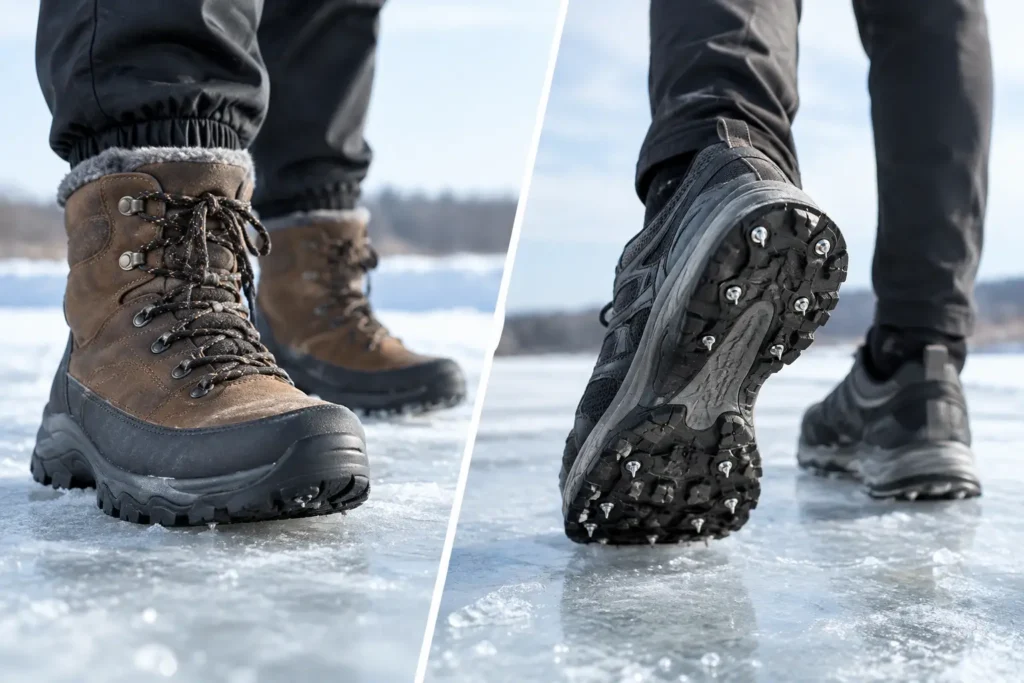
Their limitation is simple: rubber tread needs something to bite into. Packed snow gives it some texture. Mud, gravel, and soft ground do too. Clear ice does not. On hard, smooth ice, even aggressive-looking boot lugs can lose their grip because there is little surface material for the sole to grab.
That does not mean winter boots are ineffective. It means they are not a complete answer when ice is a regular part of the route. If you have ever shortened your stride, grabbed a handrail, or walked around the edge of a parking lot looking for a patch of snow to step on, you have felt that difference firsthand.
Winter Boots vs Traction Spikes: The Real Difference
Traction spikes address the exact surface where boots struggle most. Rather than relying only on rubber friction, spikes create mechanical contact with the ground. They bite into ice, crusted snow, frozen mud, and other unstable surfaces to help keep your foot from sliding forward, backward, or sideways.
That matters because a slip is rarely just a slip. For a runner, it can mean an awkward fall and a lost training block. For an outdoor worker, it can mean a serious job-site injury. For an older adult, one bad step can change daily independence. Reliable footing is performance gear, but it is also practical protection.
The strongest setup is often not winter boots or traction spikes. It is winter footwear chosen for warmth and support, upgraded with traction that fits the way you actually move. A hiker may use insulated hiking boots with installed spikes. A postal carrier or contractor may outfit work boots. A trail runner may add traction to familiar running shoes instead of switching into stiff, heavy footwear that changes their stride.
This approach separates two jobs that footwear needs to do in winter: protect your feet from the weather and keep them connected to the ground. One pair of boots can do both only up to a point.
Where boots alone make sense
Boots alone are often enough for fresh snow, lightly packed paths, dry cold conditions, and short trips on surfaces that are routinely cleared. They are also the better choice when you will spend most of the day indoors, driving, or walking across finished floors. Metal traction is built for unstable ground, not hardwood, tile, or polished concrete.
If your winter use is occasional and predictable, invest first in boots that fit correctly. A boot that is too loose can create heel lift and instability. A boot that is too tight can reduce warmth and make every step miserable. Good fit is still the first layer of safety.
Where traction spikes earn their keep
Spikes become the smarter call when your route includes refrozen meltwater, shaded sidewalks, steep driveways, lakeshore ice, hard-packed trails, icy steps, or mixed terrain that changes by the hour. They are especially useful when you cannot choose the conditions, such as early-morning dog walks, work shifts, winter runs, hunting access roads, and trips between a vehicle and a job site.
They also make sense for people who are tired of changing their gait to compensate for bad footing. The cautious shuffle is understandable, but it is inefficient and can create its own strain. Secure traction lets you walk more naturally, maintain better posture, and put attention back on the task in front of you.
Strap-On Cleats vs Installed Spikes
Not all traction systems feel the same underfoot. Traditional strap-on devices use a rubber harness with chains, coils, or metal studs underneath. They can provide useful short-term grip, especially when carried in a pack for a sudden icy section. But they also come with trade-offs.
A harness can shift, stretch, collect snow, or feel bulky beneath the foot. Chains and coils can alter the way a shoe flexes. On longer walks or runs, that extra movement under the sole may feel less stable than an integrated solution. They also need to be put on and removed repeatedly, which is inconvenient when conditions change several times during the day.
Installable screw-in spikes take a different path. They attach directly to the sole, creating a low-profile traction point that moves with the shoe or boot rather than hanging beneath it. When correctly installed in an appropriate sole, the result is a more natural-feeling step with far less bulk than an over-shoe harness.
That is why ICESPIKE systems appeal to people who need grip without turning every outing into a gear change. The goal is not to make footwear feel like mountaineering equipment. The goal is to add bite where it counts while preserving the comfort, flex, and familiar fit of the footwear you already trust.
Match Your Gear to the Ground, Not the Forecast
A forecast may say snow, but ground conditions tell the real story. Fresh snow can hide hard ice underneath. Afternoon thaw can become a slick sheet after sunset. A trail may start soft and snowy, then turn to exposed rock, frozen roots, and shaded ice around the next bend.
For mixed surfaces, low-profile installed traction can be a practical year-round option. Spikes are not only for snowy sidewalks. Depending on the terrain and footwear, they can add confidence on muddy slopes, loose gravel, slick roots, and hard-packed dirt. That versatility matters for workers, anglers, hikers, and runners who do not stop moving when the season changes.
There is still no single setup for every surface. If you are spending hours on bare pavement or indoor flooring, removable traction may be more appropriate. If you are crossing technical rock or entering buildings throughout the day, plan to remove or change footwear as needed. Smart traction is about using the right tool at the right time, not pretending one tool has no limits.
How to Choose the Right Setup
Start with the footwear you actually wear most. Your safest option is usually the one you will use consistently, not the specialized boot that stays in the closet. Consider these four questions before adding traction:
- How often do you encounter ice, refreeze, or slick packed snow?
- Do you need warmth and waterproofing, or do you already have footwear that handles the weather?
- Will you be walking, running, working, hiking, or standing for long periods?
- How often will you move between outdoor terrain and smooth indoor surfaces?
For everyday neighborhood walking, insulated boots plus spikes for icy days can be a strong combination. For winter running, traction installed on a familiar running shoe may protect the natural stride that makes training sustainable. For outdoor work, durable boots with integrated-style traction can reduce the daily hassle of straps, chains, and gear adjustments.
Before installing any screw-in traction product, inspect the sole. You need enough rubber thickness and appropriate lug areas to hold the spike securely without reaching the interior of the shoe. Avoid placing spikes where they interfere with thin sole sections, air pockets, or existing hardware. Proper placement matters because traction should support a balanced step, not create pressure points or uneven contact.
The best winter gear is the gear that gives you confidence before the first uncertain step. Keep the boots that keep you warm. Add purposeful traction when the ground gets serious, and let the conditions decide how aggressively you gear up.