
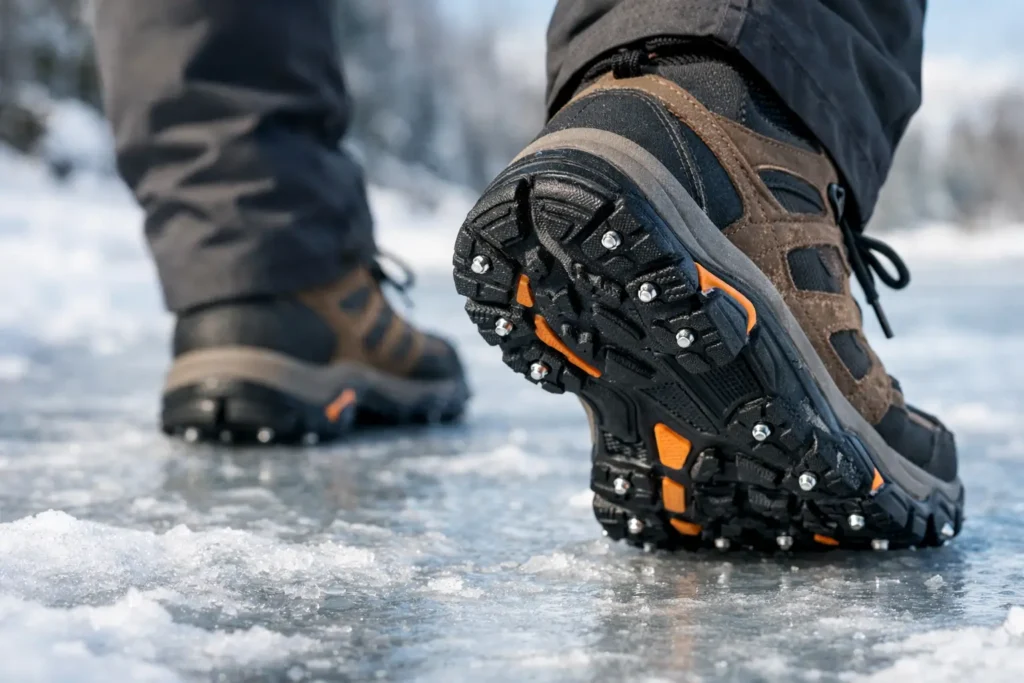
The first bad step on black ice usually happens fast – one foot lands, the other scrambles, and suddenly you do not care about style, brand names, or winter marketing. You care about traction. If you are shopping for non slip shoes for ice, that is the right instinct. But there is one problem: most shoes sold as slip resistant are not truly built for frozen, polished, unpredictable ice.
That gap matters. A shoe that feels secure on wet tile, packed snow, or slushy pavement can still skate on hard ice. Real winter footing comes down to how traction is created, how your foot moves, and whether your setup can handle mixed terrain without turning your stride into a stiff, awkward stomp.
What makes non slip shoes for ice actually work
On ice, rubber alone often is not enough. Even aggressive winter tread can lose its bite when the surface gets smooth, glazed, or refrozen. Deep lugs help in snow because they can dig and shed material. Ice is different. It demands points of contact that can bite into the surface instead of just pressing against it.
That is why many so-called winter shoes disappoint people the moment conditions get serious. The outsole may look tough. The marketing may promise grip. But if the shoe relies only on rubber tread, performance can drop fast on hard ice, especially on driveways, sidewalks, shaded trails, loading areas, and parking lots where surfaces freeze and polish over.
The best non slip shoes for ice usually succeed in one of two ways. Either they use a specialized traction compound designed for cold weather, which can help in lighter icy conditions, or they add actual mechanical grip with spikes or cleats. When ice is steep, slick, or repeated underfoot day after day, mechanical traction is usually the more dependable answer.
The trade-off most buyers miss
A lot of people assume the solution is to buy a dedicated ice shoe. Sometimes that works. If all you do is walk short distances on snow-covered sidewalks, an insulated winter shoe with a decent outsole may be enough. But for runners, hikers, outdoor workers, and anyone moving between ice, pavement, concrete, gravel, and indoor surfaces, dedicated ice footwear can become a compromise.
Heavy winter shoes can change your gait. Bulky add-on traction can feel unstable, clunky, or tiring. Strap-on devices may shift, loosen, or pack with snow. Some work well in short bursts but become irritating over a long shift, a cold morning run, or a full day outside.
This is where the category gets real. The goal is not just more grip. The goal is secure footing without sacrificing natural movement. If your traction system makes you walk like you are wearing mini crampons to the grocery store, it is not solving the full problem.
Why ordinary slip-resistant shoes often fail on ice
Slip-resistant work shoes are built for a different threat. They are designed for oily floors, wet kitchen tile, smooth indoor surfaces, and controlled environments. That matters, but it is not the same as frozen ground.
Ice is colder, harder, and less forgiving. It also changes constantly. Morning frost can turn to slush by noon and refreeze by evening. A sole designed for restaurant floors may feel fine in the cold for a few steps, then lose confidence when the surface gets glazed.
Even trail shoes with aggressive tread can come up short. They shine on dirt, mud, loose rock, and packed snow. On ice, the lugs may not penetrate enough to hold. That does not mean the shoe is bad. It means the condition demands a different kind of traction.
A better way to think about footwear for ice
Instead of asking, what shoe is best on ice, ask what system gives me the most traction with the least interference. That shift matters.
For many people, the strongest setup is not a special winter shoe at all. It is a comfortable everyday shoe or boot with added traction built into the sole. That approach lets you keep the fit, support, and flexibility you already trust while upgrading the part that matters most on ice – ground contact.
This is especially useful if you already own footwear you like for running, working, hiking, or daily winter use. Rather than replacing good shoes with bulky seasonal options, you can turn familiar footwear into something far more capable on slick surfaces.
Non slip shoes for ice vs strap-on cleats
Strap-on traction devices became popular for a reason. They are easy to understand and easy to remove. But they also come with common frustrations: shifting underfoot, uneven feel, added bulk, broken rubber harnesses, and a clumsy transition on mixed terrain.
For casual use, some people accept those drawbacks. For anyone logging miles, working outside, or moving with purpose, those drawbacks add up fast. A traction device that moves independently from your shoe can affect confidence, stride, and fatigue. You spend energy managing the gear instead of trusting your footing.
A direct-to-sole traction system solves a different problem. It creates a more integrated feel because the grip is part of the shoe, not hanging off it. That means less movement, less bulk, and a stride that feels more natural. For active users, that difference is not minor. It is often the difference between wearing traction all day and leaving it in the truck.
ICESPIKE was built around that exact advantage – durable screw-in traction that turns your existing shoes or boots into high-grip footwear without the slop and bulk of over-shoe devices.
Who needs true ice traction most
Not every winter walker needs the same setup. A retiree taking the dog out on an icy sidewalk has different needs than a trail runner or a utility worker. Still, the pattern is clear.
If you spend repeated time on frozen pavement, steep driveways, icy trails, boat ramps, work yards, or mixed winter ground, traction should not be an afterthought. The more often you face unpredictable footing, the less sense it makes to rely on smooth-soled casual shoes or heavy removable gear that you hate wearing.
Runners need grip that does not wreck cadence. Hikers need stability on varied terrain. Workers need dependable footing without extra fatigue. Seniors often need confidence first – something secure, simple, and steady enough to reduce the fear of a fall before the first step even happens.
How to choose the right setup
Start with the shoe you actually want to wear. Fit, support, and comfort still matter. A poor-fitting boot with great traction can still make you miserable. Once that is covered, look at your most common surface.
If your winter is mostly packed snow and occasional slick spots, a quality outsole may be enough. If you regularly hit polished ice, shaded sidewalks, or refrozen hardpack, you need more than tread. You need bite.
Also think about transitions. If you move constantly between outdoor ice and firmer mixed terrain, bulky temporary cleats may become a hassle. A lighter, more integrated traction option often works better because it keeps your movement more natural. That matters more than many buyers expect, especially over long distances or long workdays.
Durability should be part of the decision too. Cheap screw-shoe hacks and low-grade add-ons can wear unevenly or fail when you need them most. Real traction gear has to hold up under pressure, cold, and repetition.
The biggest mistake: buying for snow when the problem is ice
Snow gets all the attention in winter shopping. Ice causes the falls.
That is why a lot of people buy insulated boots with chunky tread and still end up slipping in the driveway. The boot looks winter-ready, but the traction system is built for soft accumulation, not frozen slick surfaces. If ice is your actual hazard, choose for ice.
That might mean using a lighter shoe with installed traction instead of a heavier winter boot. It might mean upgrading your work boots rather than replacing them. It might mean admitting that the shoe itself is only half the solution.
The good news is that you do not need to settle for awkward gear or hope for the best. There are better options now than the old choice between slippery shoes and clunky overshoes.
When your footing matters, confidence comes from traction you can trust and movement that still feels like your own. Start there, and winter gets a lot less slippery.