
The wrong traction device can make winter walking feel even less stable. That is the first thing to understand when choosing the best ice cleats for seniors. A lot of products promise grip, but if they shift underfoot, feel bulky, or change the way you walk, they can create a new problem while trying to solve the old one.
For seniors, traction is not just about biting into ice. It is about confidence, balance, and being able to move naturally from the driveway to the mailbox, from the sidewalk to the store, or from packed snow to wet pavement without feeling awkward or overcorrected. The best option is the one that adds serious grip without fighting your stride.
What the best ice cleats for seniors need to do
A good ice cleat for an older adult has one job – keep footing secure without adding instability. That sounds simple, but plenty of winter traction products miss the mark.
Some strap-on systems rely on rubber harnesses, chains, or coils that sit between the foot and the ground. They can help in certain conditions, but they also add bulk and can feel sloppy on mixed surfaces. If the device shifts, bunches, or creates pressure points, it can throw off balance. For seniors, that trade-off matters.
The best ice cleats for seniors should feel integrated with the shoe, not like an extra gadget hanging off it. Low-profile traction matters because a more natural walking motion reduces fatigue and helps preserve balance. Lightweight construction matters because heavy footwear can make every step more tiring. Secure attachment matters because if a cleat loosens or slips out of place, confidence disappears fast.
There is also the reality of real winter surfaces. Very few people walk only on pure ice. Most daily movement happens across mixed terrain – frozen sidewalks, packed snow, wet concrete, slush, gravel, porch steps, and parking lots. Traction that performs only in one narrow condition is not enough.
Why bulky traction devices can be a bad fit
A lot of people picture ice cleats as removable overshoe gear. That category has been around for years, and it has its place. But for many seniors, it comes with drawbacks that are easy to overlook until they are wearing them.
First, bulk changes gait. When traction sits under the shoe in a thick layer, it can alter the way the foot lands and rolls forward. That may not seem like a big deal in a product demo, but out in the cold, on uneven winter ground, even a subtle change can feel unsettling.
Second, removable devices are one more thing to wrestle with. Pulling rubber harnesses over boots can be frustrating, especially for anyone with reduced hand strength, arthritis, or limited flexibility. If the product is hard to install, people are less likely to use it consistently.
Third, many removable cleats work poorly once the surface changes. Metal coils and aggressive spikes can feel harsh or unstable on hard pavement, store entrances, or indoor flooring. That often leads people to take them off and carry them, which creates another hassle and another chance to skip protection altogether.
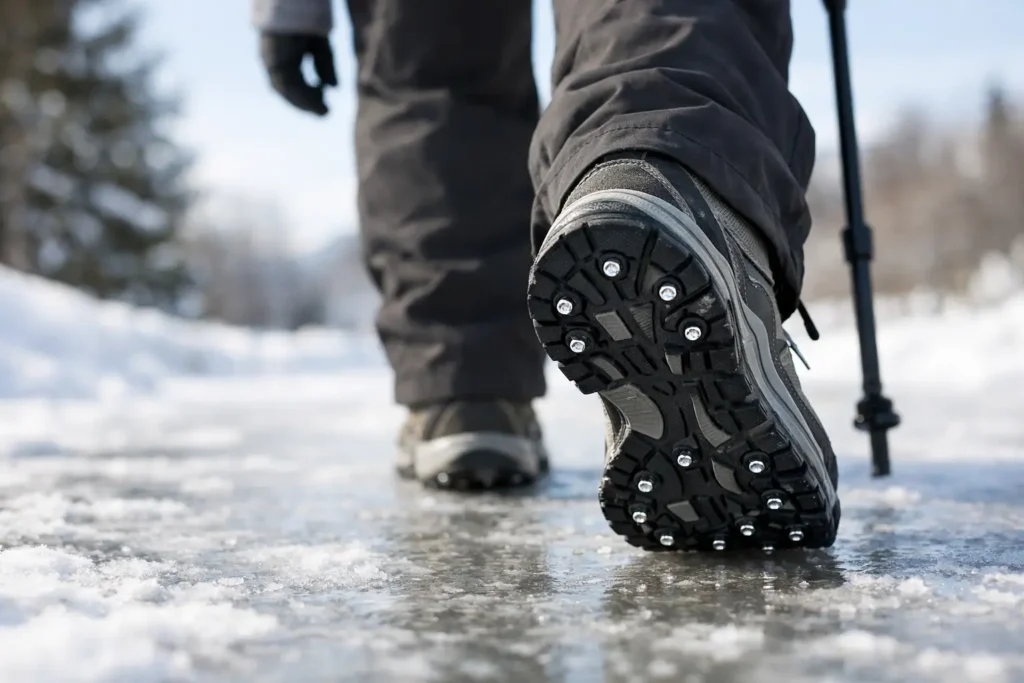
That is why low-profile, directly installed traction can be a better answer. A screw-in system built into the sole keeps the grip where it belongs, reduces movement between cleat and shoe, and preserves a more normal stride. For seniors who want safer footing without the clunky feel of traditional add-ons, that design makes a real difference.
The features that actually matter
When comparing traction options, it helps to ignore the flashy claims and focus on how the product behaves under real use.
Grip is the headline feature, but it is not just about sharpness. The cleat has to engage ice reliably while remaining stable on packed snow and other slick surfaces. More aggressive is not always better if it makes everyday walking feel awkward.
Fit is just as important. A traction system that attaches directly to the outsole tends to stay put better than something stretched over the shoe. Stability starts with secure placement. If the traction point moves, rotates, or shifts under load, footing becomes less predictable.
Weight matters more than many people think. Seniors often do better with footwear that feels light and manageable. Heavy traction systems can increase leg fatigue and make stairs, curbs, and long walks feel harder.
Ease of use is another big one. Some people want a seasonal solution they can leave in place, not something they have to put on and remove every time the weather changes. A simpler system usually gets used more often, and consistent use is what lowers the risk of slips.
Durability should not be ignored either. Winter traction takes abuse. It hits ice, pavement, frozen gravel, and rough concrete. Cheap products wear down fast or fail at the connection points. That is a bad gamble when safety is on the line.
Best use cases by senior lifestyle
Not every senior needs the same kind of traction. The right choice depends on where and how the product will be used.
For the senior who mainly walks from house to car, takes the trash out, or checks the mail, comfort and simplicity matter most. A lightweight, low-profile cleat that stays installed on a winter shoe is often the easiest and safest choice. There is no fumbling, no storage issue, and no decision to make at the door.
For active older adults who walk daily, hike local trails, or spend time outside in changing conditions, durability and mixed-terrain performance become more important. They need traction that bites on icy patches but does not feel clumsy when the route shifts to packed dirt, gravel, or bare pavement.
For family members buying for a parent or grandparent, the smartest move is usually not the most aggressive-looking product. It is the one that promotes steady, natural movement and gets worn consistently. Safety gear only works when people are willing to use it every day.
What to avoid when shopping
The biggest mistake is choosing based on appearance alone. Big chains, dramatic spikes, and heavy hardware can look tough, but they are not automatically safer. If they interfere with normal walking, they may not be the right solution for an older adult.
It is also worth being careful with products that depend on stretchy rubber frames alone. In deep cold, lower-quality materials can stiffen, crack, or lose their hold. A loose traction device is not a small inconvenience. It is a hazard.
Another common mistake is using makeshift screw-shoe setups done without a real system behind them. Driving random screws into footwear might sound practical, but uneven placement, poor materials, and outsole damage can create more instability instead of less. Purpose-built traction matters.
A better standard for senior traction
If the goal is real safety, the standard should be simple. The best traction solution for seniors should improve grip, preserve natural gait, stay secure, and reduce hassle. It should work in the real world, not just in ideal test conditions.
That is where an integrated screw-in design stands apart. Instead of hanging traction under the shoe, it turns the outsole itself into a grip platform. That means less bulk, less movement, and more control. For many seniors, that translates into the thing that matters most – walking with confidence instead of hesitation.
ICESPIKE fits that category well because it is built around direct-to-sole traction rather than the over-shoe model that often feels clumsy and temporary. The advantage is straightforward: strong bite, lighter feel, and a more stable connection to the shoe you already trust.
How to choose the right pair of shoes for cleats
The cleat is only part of the system. The shoe or boot matters too.
A stable winter shoe with a solid outsole gives traction hardware a better foundation. Shoes that are too soft, too worn, or too thin in the sole may not deliver the same security. Seniors usually do best with footwear that has a supportive midsole, a broad base, and enough structure to keep the foot steady.
It also helps to think about where the shoe will be worn. A casual slip-on used for quick errands has different demands than a walking shoe worn every day outdoors. Matching the traction setup to the routine is what makes the difference between occasional use and everyday confidence.
Winter footing is never just about metal under the shoe. It is about the whole walking experience – stability, comfort, effort, and trust. When traction supports the way a person already moves instead of forcing them to adapt, they are far more likely to stay active and steady through the season.
The best ice cleats for seniors are the ones that disappear underfoot and let secure movement take over. That is the real win in winter: not just more grip, but fewer second thoughts every time the ground turns slick.