
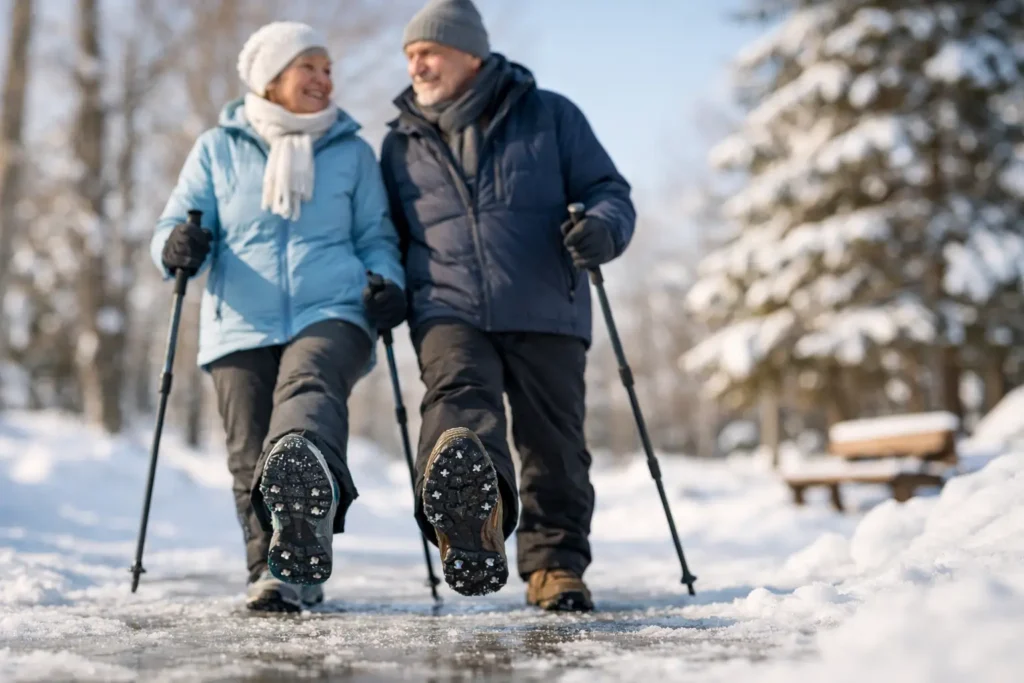
The risk is rarely the big snowstorm. It is the thin glaze on the driveway at 8 a.m., the patch of packed snow in the grocery lot, or the shaded sidewalk that looks harmless until a foot slides. Winter walking safety for seniors comes down to handling those everyday moments with better traction, better habits, and less guesswork.
A winter fall can change a season fast. It can also change confidence. Many older adults do not stop walking because they want to. They stop because winter footing becomes unpredictable, and once a slip happens, every step feels risky. That is the real problem to solve. Safe winter walking is not about moving timidly. It is about creating dependable grip so normal movement still feels normal.
Why winter walking safety for seniors starts at ground level
Most winter advice focuses on clothing first. Warm layers matter, but they do not stop a slip. Footing does. If the sole cannot bite into ice, even a strong, active walker is left reacting instead of moving with control.
That is where a lot of winter gear misses the mark. Bulky overshoe traction devices can help in some conditions, especially on straight stretches of snow or ice, but they often change how a person walks. They add height underfoot, shift pressure points, and can feel awkward on mixed surfaces. For seniors, that matters. Anything that disrupts natural gait can create a new problem while trying to solve the first one.
The better approach is traction that supports a stable, natural stride instead of fighting it. Secure footing should feel integrated, not strapped on as an afterthought. That difference shows up in fatigue, confidence, and how likely someone is to keep using the gear every day.
The biggest winter walking hazards seniors actually face
Ice gets the headlines, but winter surfaces are rarely uniform. One route can include dry pavement, crusted snow, slush, black ice, wet entryways, and frozen gravel all in the same walk. That mixed terrain is what catches people off guard.
Driveways and front steps are obvious trouble spots, but transitions are just as risky. Moving from a shoveled sidewalk onto packed snow, crossing a slick parking lot, or stepping from cold pavement into a wet store entrance can all break stability. Vision also plays a role. Low winter sun, shadows, and snow glare make it harder to read the ground correctly.
There is also the issue of timing. Early morning and late afternoon tend to be worse because melt and refreeze create invisible slick spots. A path that felt safe at noon can become dangerous by evening. Winter walking safety depends on respecting those changes instead of assuming yesterday’s route will behave the same way today.
Footwear matters more than most people think
A good winter shoe or boot should fit securely, hold the heel in place, and provide a stable base. That sounds basic, but many slips start with footwear that is too loose, too worn, or too smooth on the outsole. Deep tread helps on snow, but tread alone does not solve ice.
This is where trade-offs matter. A heavy winter boot may feel protective, but if it is stiff, bulky, or tiring to lift, it can make walking less efficient. A lighter everyday shoe may feel more natural, but without real traction support, it will struggle on slick surfaces. The goal is not the biggest boot. The goal is stable footwear that works with the walker’s normal mechanics.
For many seniors, the best setup is a comfortable everyday walking shoe or boot upgraded with direct traction. That preserves the fit they already trust while adding grip where winter demands it. Compared with strap-on systems, an installable traction solution keeps the sole profile lower and the feel more natural. That is a serious advantage when balance and confidence are the priority.
How to build safer winter walking habits
The strongest traction system in the world does not replace judgment. Winter walking safety for seniors works best when equipment and habits reinforce each other.
Start with route choice. A longer path that is plowed, salted, and well lit is often the safer option than a shortcut over uneven or shaded ground. If a parking lot looks glazed, walk the perimeter where texture is better rather than crossing the smooth center. If snow covers a surface completely, assume there may be ice underneath.
Pace matters too. Rushing creates long strides, and long strides reduce control. Shorter, deliberate steps keep the center of gravity more stable. That does not mean shuffling with fear. It means walking with traction and intention. Hands should stay as free as possible, because carrying bags or keeping hands buried in pockets reduces balance recovery if a slip begins.
A simple pre-walk check helps more than people realize. Look at the temperature, scan the route from the doorway, and ask one hard question: has anything melted and refrozen since the last time I walked this? That quick pause can prevent the kind of surprise that sends a person down.
Traction devices: what helps and what gets in the way
Not all winter traction is created equal. Some products are built for occasional use on solid snowpack. Others are designed for active movement across changing terrain. Seniors need the second category far more often than the first.
Traditional slip-on cleats with coils, chains, or rubber harnesses can improve grip in the right conditions, but they come with compromises. They can shift underfoot, wear unevenly, feel bulky on pavement, and be annoying to pull on and off every time a route changes. Just as important, they can alter gait. When gear feels unstable or cumbersome, people avoid using it consistently. That is when risk creeps back in.
Installable traction spikes offer a different advantage. Because they attach directly to the sole, they move with the shoe instead of against it. That creates a more connected feel, better ground contact, and less of the clunky, high-stacked sensation common with overshoe traction. For seniors who still want to walk daily, handle errands, or stay active outdoors, that more natural feel is not a luxury. It is part of what makes the system practical enough to use.
ICESPIKE was built around that exact problem: delivering serious grip without the bulk and gait disruption of old-school strap-on traction. For seniors and the family members looking out for them, that means more confidence on ice without turning a normal shoe into a heavy, awkward winter contraption.
When a cane or walking pole helps
Extra support can be smart, but it depends on the person and the surface. A cane improves stability for many seniors, especially on predictable ground. On ice, though, the cane tip also needs traction. A slick tip on slick ground adds little value.
Walking poles can help active seniors on snowy paths or uneven terrain because they widen the base of support. But poles are not ideal for every errand, and they can become one more thing to manage when opening doors or carrying groceries. If a person already walks well without an aid, stronger shoe traction may do more for winter safety than adding a device that changes rhythm or takes up a hand.
Clothing, visibility, and cold weather judgment
Good winter walking gear should protect without restricting movement. Coats that are too long can interfere with stride. Gloves need enough grip to hold a rail securely. If a hat limits hearing too much near roads or parking lots, awareness drops.
Visibility matters because winter days are short and drivers often do not expect pedestrians in snow glare or dusk light. Bright outerwear or reflective details can make a real difference, especially near intersections and parking areas where plowed snow narrows walking space.
Cold also affects decision-making. Muscles tighten, reaction time drops, and people tend to hurry to get out of the weather. That combination leads to careless steps. If conditions are severe, the safest call may be to wait, ask for help, or choose an indoor walking option that day. Staying active matters, but so does knowing when the surface is not worth testing.
Confidence is a safety tool
Fear changes movement. People stiffen up, shorten breathing, and place their feet less naturally. Ironically, that tension can make slips harder to recover from. Real confidence is not denial. It is the calm that comes from knowing your footing is built for the conditions.
That is why winter walking safety for seniors is about more than avoiding injury. It is about protecting independence. When an older adult trusts their traction, they are more likely to keep walking the dog, visit neighbors, get the mail, and stay active through the hardest months of the year. Those daily routines matter.
The strongest move is usually the simplest one: set up your footwear for grip before the first icy morning arrives, not after a close call. Winter is hard enough. Every step should feel like it has a fighting chance.