
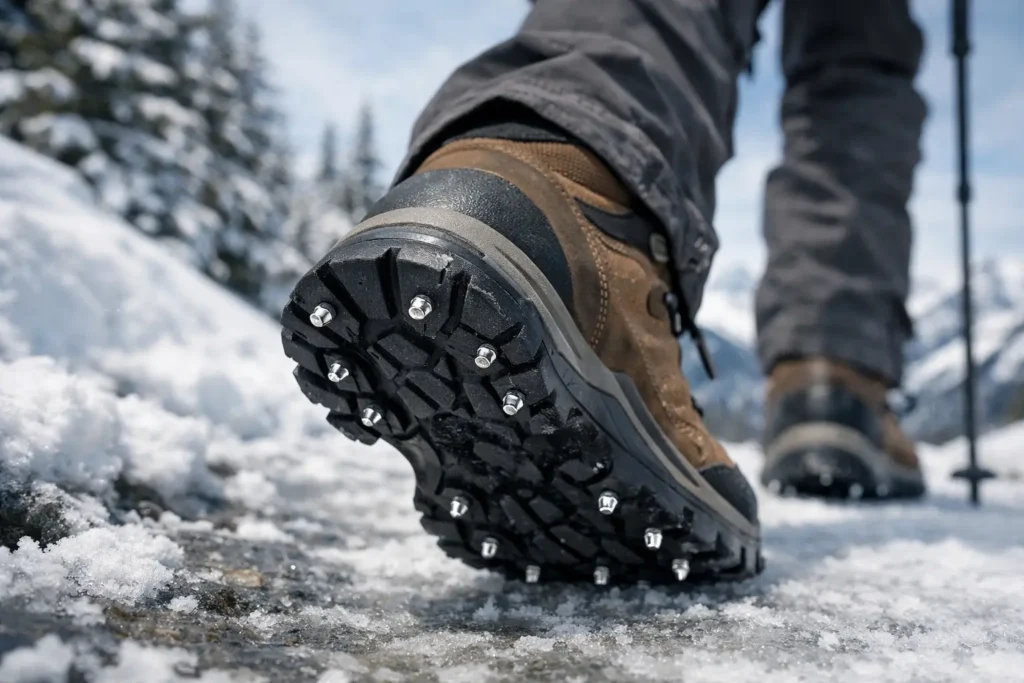
A frozen switchback changes the whole day. One shaded stretch of trail, one patch of hard ice under a dusting of snow, and suddenly your boots matter a lot more than your pace. That is why choosing the best boot spikes for hiking is not about grabbing the most aggressive-looking traction device. It is about getting secure footing without wrecking your stride, adding fatigue, or fighting gear every time the terrain changes.
Hikers usually learn this the hard way. Strap-on cleats feel reassuring in the parking lot, then shift on uneven ground, pack with snow, or make your boots feel clumsy and heavy after a few miles. Cheap screw-in options can work for a while, but many are built more like a quick hack than a traction system you trust in real winter conditions. The best setup gives you bite where you need it and a natural feel underfoot the rest of the time.
What makes the best boot spikes for hiking?
Traction is the first job, but it is not the only job. A spike that grabs ice well but throws off your gait can wear you down fast. A device that feels stable on a flat path may become a problem on rocky sections, roots, or mixed trail where footing changes every few steps.
The best boot spikes for hiking do four things well. They grip reliably on ice and packed snow. They stay put instead of sliding around your boot. They keep weight and bulk low enough that your stride still feels like your own. And they hold up to repeated use in rough terrain instead of acting like a one-weekend accessory.
That last point matters more than most buyers think. Winter hiking traction takes abuse. You move from frozen ground to gravel, from slick bridge planks to muddy ruts, from snow-covered trail to bare rock. If your traction system only works in one perfect condition, it is not much of a hiking solution.
Why traditional strap-on spikes fall short
There is a reason so many hikers end up frustrated with over-the-boot traction. Strap-on systems are easy to understand and easy to remove, but that convenience often comes with trade-offs. They add another layer under your foot, which changes how the boot feels on the trail. They can shift during sidehilling or uneven steps. Some feel loose when temperatures change or when snow packs into the harness.
That bulk is not just annoying. It can make you work harder than you need to. On longer hikes, extra weight and an altered stride add up. You feel it in your calves, your hips, and the way you move over variable terrain. If traction makes every step feel less natural, you are paying for grip with comfort and efficiency.
There is also the stop-and-go problem. Many hikers remove strap-on cleats when they hit bare ground and put them back on when the trail turns icy again. That constant switching is a hassle, especially in cold wind or low light. If you hike mixed terrain often, that routine gets old fast.
The better option for many hikers: low-profile screw-in spikes
For a lot of real-world trail use, low-profile screw-in spikes are the smarter answer. Instead of wrapping around the boot, they install directly into the sole. That means less bulk, less movement, and a more integrated feel underfoot. You are not wearing a device over your boot. Your boot becomes the traction platform.
That difference shows up immediately on the trail. Properly placed screw-in spikes preserve a more natural gait than strap-on systems because they do not create the same awkward layer between your boot and the ground. The result is better control, less clunk, and more confidence when the surface changes from one step to the next.
This is where a purpose-built system stands apart from hardware-store do-it-yourself fixes. Random screws jammed into a sole are not the same as a traction product designed for outdoor movement, durability, and placement. If you are going to install spikes in your boots, the design matters. Head shape, bite, material strength, and how the spike interacts with the sole all affect performance.
A dedicated screw-in traction system like ICESPIKE is built around that idea. It gives hikers aggressive grip without the heavy, awkward feel of traditional over-shoe traction. That matters on winter trails, but it also matters on mud, loose gravel, slick roots, and shoulder-season conditions where footing is unpredictable.
How to choose boot spikes based on where you hike
Not every hiker needs the same traction profile. If your winter miles are mostly packed trails with sections of glare ice, you want dependable bite and a low-profile feel that stays comfortable for distance. If you hike steeper terrain with repeated freeze-thaw cycles, secure placement and durability move higher on the list.
If your trails are mixed – part snow, part dirt, part exposed rock – bulk becomes a serious factor. Big, aggressive devices can feel overbuilt in those conditions. You need traction that helps on slick sections without punishing you on the rest of the route.
For casual walkers and day hikers, ease matters too. If a traction solution is annoying to wear, awkward to store, or a pain to reinstall, people stop using it. The best gear is the gear that actually stays on your boots when conditions get sketchy.
That is why all-around performance usually beats extreme specialization. Unless you are dealing with mountaineering terrain, the best hiking spikes are the ones that handle ice, snow, mud, and uneven surfaces without forcing you into a stiff, unnatural stride.
Features that actually matter on the trail
Material quality matters because winter trails are hard on traction. Spikes need to resist wear when they hit rock or frozen ground repeatedly. A weak spike may look fine out of the package and fail when the trail gets real.
Weight matters because ounces on your feet cost more than ounces in your pack. Heavy traction systems sap energy over time. Lightweight spikes keep you moving with less fatigue, which is especially valuable on longer hikes or all-day use.
Fit matters, but not in the usual sense. With strap-on systems, fit depends on the harness staying tight around your boot. With screw-in spikes, fit depends on proper installation and smart placement across the sole. Done right, that creates a much more stable platform.
Versatility matters because winter trails are rarely uniform. You may start on frozen pavement, move into packed snow, cross a muddy low spot, and finish on slick rock near a stream. The best traction systems are not one-surface tools. They are built for mixed terrain and repeated use.
When aggressive spikes are too much
There is a point where more bite becomes less practical. Oversized traction devices can be great in very specific conditions, but they are often overkill for everyday hiking, neighborhood walking, light trail work, or shoulder-season use. They can feel noisy, awkward, and tiring on hard surfaces.
That does not mean aggressive traction is bad. It means the right amount of traction depends on how and where you move. Most hikers are not looking for a crampon substitute. They want stability, confidence, and a normal-feeling stride on slippery ground.
That is the sweet spot where low-profile boot spikes shine. They give you meaningful grip without turning every walk into a heavy-footed stomp.
Who benefits most from installable hiking spikes?
Experienced hikers who are tired of strap systems slipping around will feel the difference right away. Trail runners and fast hikers also benefit because natural movement matters when you cover miles quickly. Outdoor workers, dog walkers, and anyone dealing with ice day after day get another advantage – they do not have to keep taking traction on and off.
Seniors and safety-conscious families should pay attention here too. A lightweight, stable traction setup can make winter walking feel less intimidating. Confidence counts. When your footing feels secure, you move better and react faster.
The same logic applies to hunters, anglers, and anyone who spends time on slick ground outside the typical hiking trail. Reliable traction is not just a performance upgrade. It is a fall-prevention tool.
So what are the best boot spikes for hiking?
For most hikers, the best choice is not the bulkiest cleat or the most aggressive chain system. It is a durable, lightweight traction solution that grips ice and mixed terrain while preserving the natural feel of your boots. That points many hikers toward screw-in boot spikes over strap-on alternatives.
If you hike often in winter, deal with changing terrain, or want traction that stays with the boot instead of fighting against it, low-profile installable spikes are hard to beat. They offer a cleaner fit, a more stable feel, and less fatigue over distance. And when conditions are unpredictable, that balance of grip and freedom matters more than flashy hardware.
The safest step is usually the one that still feels like your own. Choose traction that works with your boots, not against them, and the trail gets a lot less slippery.