
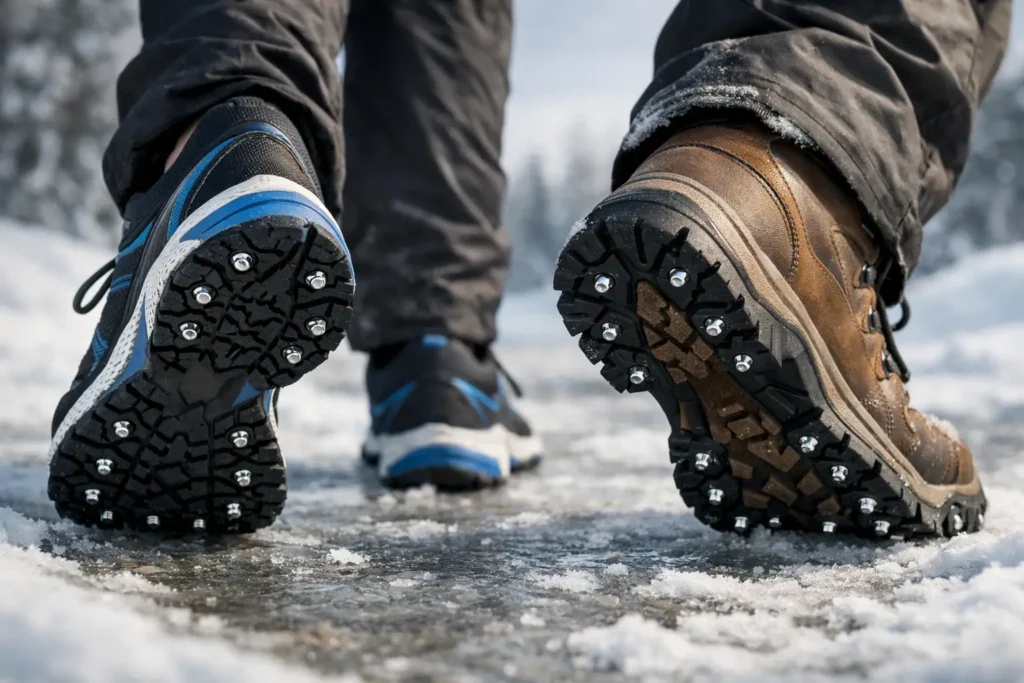
The trouble usually starts at the transition: dry pavement to a shaded sidewalk, packed snow to glazed ice, a trailhead to a frozen bridge. Your boots may feel fine until one invisible slick patch sends your foot forward and your confidence backward. This winter footwear traction guide is built for that reality – helping you choose traction that stays dependable when surfaces change fast.
Winter footing is not just about buying the most aggressive-looking boot. It is about matching your sole, traction system, fit, and routine to the ground you actually cover. A dog walk on icy neighborhood streets demands something different than a long run on packed snow, a shift outside, or a hike through frozen mud and exposed rock.
Why Winter Footwear Loses Its Grip
Rubber alone has limits. On cold, hard surfaces, many outsoles stiffen and lose their ability to conform to tiny imperfections in the ground. On wet ice, the thin layer of meltwater at the surface is especially slick. Even a deep lug pattern that works well in loose snow or mud can slide when there is no material for the lugs to bite into.
Snow creates its own challenges. Fresh powder can hide ice, rocks, roots, and uneven ground. Packed snow becomes hard and slick after repeated foot traffic. Slush can clog lugs, while refreezing turns a normal route into a patchwork of unpredictable traction conditions.
That is why traction needs to do more than look rugged. It must create positive contact with the surface. On true ice, metal points that penetrate or grip the surface offer a major advantage over tread alone. On mixed terrain, that traction must work without making your stride feel awkward, heavy, or unstable.
Winter Footwear Traction Guide: Start With Your Terrain
Before choosing a footwear setup, be honest about where you move. The best option is not always the most aggressive one. Bigger hardware can be useful on steep, icy trails, but it can also feel excessive for quick errands, indoor transitions, or routes that include a lot of bare pavement.
For neighborhood walking, the priority is steady, low-fatigue footing on thin ice, compacted snow, and cold sidewalks. A lightweight traction solution is often more practical than a bulky over-shoe device. You want to walk naturally, move confidently, and avoid the hassle of constantly putting gear on and taking it off.
For runners and trail runners, natural gait matters even more. Heavy chains and harness systems can alter foot movement, add swing weight, and create an uneven underfoot feel. A lighter, direct-to-sole traction setup can keep footwear closer to its original feel while adding bite where a runner needs it most.
Hikers, hunters, and anglers face a broader terrain mix: snow, ice, loose gravel, frozen mud, wet rocks, roots, and off-camber ground. Here, a traction system must hold up through repeated impacts and changing conditions. Traction that shifts, stretches, or comes loose under hard use is not just irritating. It can create a real safety problem miles from the trailhead.
Outdoor workers need durability and consistency. Icy loading areas, ladders, walkways, driveways, and job sites do not wait for ideal conditions. Footwear traction should support the long day, not become another piece of equipment to manage. Secure footing reduces slips, helps control fatigue, and lets workers focus on the task in front of them.
Tread, Studs, and Spikes Do Different Jobs
A quality outsole is still the foundation. Deep, widely spaced lugs help shed mud and grip loose snow. Softer winter-focused rubber can improve contact on cold surfaces. A stable shoe or boot platform helps prevent rolling on uneven ground. But outsole design cannot fully solve polished ice.
Metal traction elements create the bite that rubber lacks. Their effectiveness depends on placement, point shape, material, and how securely they are attached. A system that puts traction under key load zones can improve control at heel strike, mid-stance, and push-off without covering the entire sole in bulky hardware.
Strap-on devices have a place, particularly for occasional use and highly icy conditions. They are easy to share between footwear and can be removed before stepping indoors. The trade-off is familiar to many winter users: straps can stretch, harnesses can shift, chains can feel clumsy, and the whole device can change how a shoe flexes and rolls.
Screw-in traction spikes take a different approach. Installed directly into the sole, they eliminate the moving harness around the shoe and keep traction close to the footwear itself. ICESPIKE systems are designed for this integrated, lightweight approach, giving users serious traction without turning their shoes or boots into oversized winter gear.
No system is perfect everywhere. Metal traction can be noisy and less comfortable on tile, hardwood, finished concrete, or other indoor flooring. It can also wear faster on extensive bare pavement. If your day involves frequent indoor stops, removable spikes or footwear dedicated to outdoor use may be the smarter call.
Fit Is a Safety Feature
Traction cannot compensate for footwear that fits poorly. A loose heel can delay your response when you slip. A cramped toe box can make downhill movement painful and reduce balance. Heavy socks can change the fit of a boot enough to create pressure points or heel lift.
Try winter footwear with the socks you expect to wear most often. Walk up and down an incline if possible. Your heel should stay planted, your toes should have room to move, and the foot should not slide sideways inside the shoe during turns.
For older adults, fit deserves extra attention. The safest winter shoe is one that feels stable before traction is added. Look for a supportive base, a secure closure, and a manageable weight. A person who avoids wearing their traction footwear because it feels cumbersome is still exposed when the sidewalk freezes.
Installation and Placement Matter
Direct-to-sole spikes are only as effective as their installation. Start with a sole that has enough material and a tread layout suitable for hardware. Avoid placing spikes into air pockets, thin sections, or areas where they could interfere with shoe flex. Follow the product instructions closely and inspect the sole before committing to placement.
Think about how your foot contacts the ground. The heel is crucial for controlled landings, especially when walking downhill or stepping onto icy pavement. The forefoot drives push-off and helps with climbing. Balanced placement supports a more secure stride than concentrating all traction in one spot.
After installation, test your footwear in a controlled setting. Walk slowly on a familiar outdoor surface, turn, climb a small incline, and pay attention to any pressure points or changes in gait. Check the spikes regularly, particularly after long runs, hard workdays, or repeated travel over rock and pavement.
Use Traction Like It Matters
Even the best traction does not make winter surfaces risk-free. Slow down before transitions. Take shorter steps on glare ice. Keep your center of gravity over your feet instead of leaning forward. On steep or uneven ground, give yourself space and avoid rushing to keep pace with someone else.
Stay alert for the places ice hides: shaded sections, bridges, north-facing slopes, vehicle tracks, steps, curb cuts, and entrances where snowmelt refreezes. At night, use reliable lighting. In low visibility, traction helps, but seeing the surface early gives you time to choose the right line.
Maintain your footwear, too. Clear packed snow and mud from lugs after use. Let boots dry naturally away from direct high heat, which can damage adhesives and materials. Inspect soles for wear, cracks, and loose traction components before the next storm rather than during it.
Winter should not force you indoors or make every walk feel like a calculated risk. Choose traction for the ground you travel, fit it properly, and inspect it often. Then step outside with the kind of grip that lets you keep moving when the surface stops cooperating.