
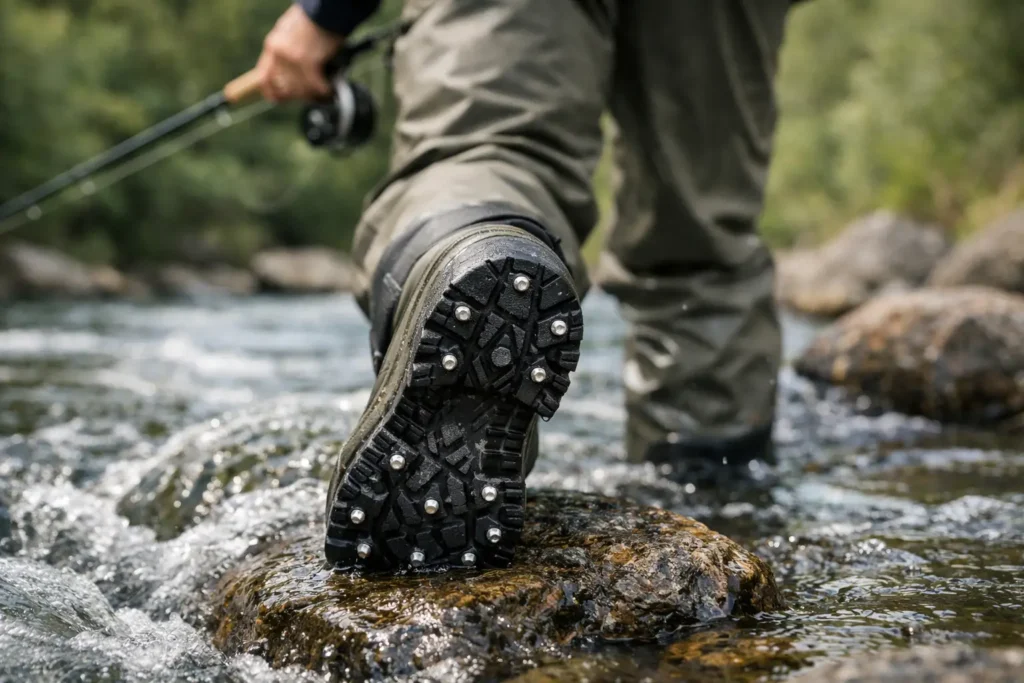
A riverbed can look harmless from the bank, then turn into a skating rink the moment you step onto algae-coated stone. The right fishing wader traction options are not a comfort upgrade. They are what keep a careful wade from becoming a hard fall, a soaked gear bag, or a premature end to a day on the water.
Traction needs change with the river, the season, and the wader style you wear. A smooth limestone stream, a muddy pond edge, a cobbled tailwater, and a frozen boat ramp demand different things from your boots. The strongest choice is not always the most aggressive sole. It is the option that gives you dependable bite while letting you move naturally, quietly, and with enough feel to read the bottom.
Start With Your Wader Boot Setup
Before choosing traction, look at what is under your feet. Bootfoot waders have boots permanently attached to the wader. Stockingfoot waders use separate wading boots over neoprene socks. That difference matters because traction upgrades attach to, fit around, or are built into the boot sole – never the thin wader fabric itself.
Stockingfoot anglers have the most flexibility. You can select boots with rubber or felt soles, then add studs or other traction hardware suited to the water you fish. Bootfoot waders are simpler and often warmer, but their sole design may limit what can be installed safely. Check the sole thickness, tread pattern, and manufacturer guidance before adding any screw-in hardware.
A worn outsole deserves attention, too. No traction accessory can fully rescue a sole that is separating, cracked, or polished smooth from years of use. Start with sound footwear, then build grip where you need it.
Fishing Wader Traction Options That Work
Rubber Soles: Versatile and Travel-Friendly
Rubber is the standard choice for many modern wading boots because it handles trails, gravel, dry rock, mud, docks, and boat decks without carrying the regulatory concerns associated with felt. A quality lugged rubber sole is durable and practical for anglers who hike to water, fish multiple kinds of terrain, or travel between states.
Its weakness appears on slick, rounded rock. Wet algae, clay-coated stones, and smooth riverbed shelves can overwhelm plain rubber, even when the tread is deep. Rubber works best as a versatile foundation, not a promise that every river crossing will feel secure.
Felt Soles: Strong Grip on Slick Rock, With Limits
Felt has long been favored for one reason: it can grip exceptionally well on wet, slippery rock. On certain freestone rivers and mossy boulder fields, felt provides a planted feel that many experienced anglers trust.
But felt is not a universal answer. It can become packed with snow, lose effectiveness in mud, wear quickly on long approaches, and remain restricted or prohibited in some waters because it can carry invasive species between locations. It also does little for ice. If you use felt, clean and dry it thoroughly between trips, and confirm the local rules before you go.
Screw-In Studs and Spikes: Targeted Bite Where It Counts
For anglers who need more grip from a rubber sole, screw-in traction studs are often the most practical upgrade. Installed into the boot outsole, they create hard contact points that bite into slick rock, frozen ground, hard-packed snow, roots, and loose gravel. They are especially useful when the walk to the river is as hazardous as the river itself.
The advantage is control. Instead of wearing a heavy strap-on device that can shift, snag, or alter your stride, properly selected screw-in spikes become part of the sole. ICESPIKE traction spikes are designed for this direct-to-sole approach, delivering aggressive grip without the bulky chains and harnesses that can interfere with natural movement.
Placement matters. Spikes should be distributed across the heel and forefoot rather than clustered in one spot. The heel needs braking power on descents and slick ramps. The forefoot needs grip for pushing off, climbing banks, and finding purchase on angled rock. Follow the boot and traction manufacturer instructions closely, and avoid installing hardware where the sole is too thin or where it could contact your foot.
Studs are not magic on every surface. Metal points can feel unstable on smooth indoor floors, polished concrete, and some wet metal docks. They may also be too aggressive for fragile boat surfaces. Treat them as terrain-specific equipment and stay aware of where you are stepping.
Strap-On Cleats: Useful for Occasional Ice
Over-the-boot cleats can make sense when ice is the main hazard, such as a frozen trail to a winter steelhead run or an icy parking area before daylight. They are easy to put on and remove, and they can deliver significant bite on packed snow and ice.
Their trade-off is bulk. Chains, coils, and rubber harnesses can shift on a wading boot, collect debris, change foot flex, and make uneven river bottoms feel less predictable. They also are not ideal for deep wading, where loose components can snag or create drag. For short approaches over ice, they can be useful. For all-day movement across mixed fishing terrain, an integrated solution is usually less distracting.
Match Traction to the Water You Fish
Think beyond the sole and consider your actual fishing routine. Anglers who walk a mile of muddy trail, cross a rocky river, and climb a steep bank need broad, year-round traction. Anglers who step from a boat onto a maintained dock have a different problem. Winter anglers may need ice-specific grip before they ever reach open water.
On slime-covered rock, move slowly even with studs or felt. Keep your feet low, use short steps, and test each placement before committing your weight. On cobble, traction points help, but ankle support and a stable boot platform matter just as much. In mud, wide lugs that shed material can outperform fine tread that quickly packs solid.
For icy banks and boat ramps, hard spikes provide a serious advantage over plain rubber. Still, use a wading staff when conditions are uncertain. A staff gives you a third contact point, helps you probe depth, and can catch a slip before it becomes a fall. Strong traction reduces risk. Good technique finishes the job.
Build a Setup That Does Not Fight Your Stride
The best fishing traction feels almost invisible until the moment you need it. Your feet should flex naturally, your boot should stay securely planted, and you should not be constantly checking whether a strap has shifted or a coil has snagged. Excess weight at the foot adds fatigue over a long day, especially when you are hiking, climbing, and standing in current.
Avoid the temptation to overbuild. More metal does not automatically mean more stability. Too many oversized points can make a boot awkward on hard surfaces and reduce the natural contact area of the sole. Choose a traction pattern that complements the terrain you fish most, then practice walking in it before the next difficult crossing.
Inspect your setup before every trip. Check that studs are tight, rubber is not torn, laces are secure, and the outsole is free of packed mud or debris. A few minutes at the truck is far better than discovering a loose traction point halfway across cold water.
Know When Conditions Are Beyond Your Gear
Even the best wader traction cannot make unsafe water safe. Fast current, poor visibility, deep slots, rolling rocks, and ice shelves demand judgment first. If you cannot clearly see the bottom or feel stable with each step, back out and find a better crossing. Fish are not worth a broken wrist, a flooded wader, or a dangerous swim.
Give your footing the same attention you give knots, fly selection, and weather. When your boots are matched to the terrain and your traction is built for real movement, you can focus less on the next slippery step and more on the water in front of you.