
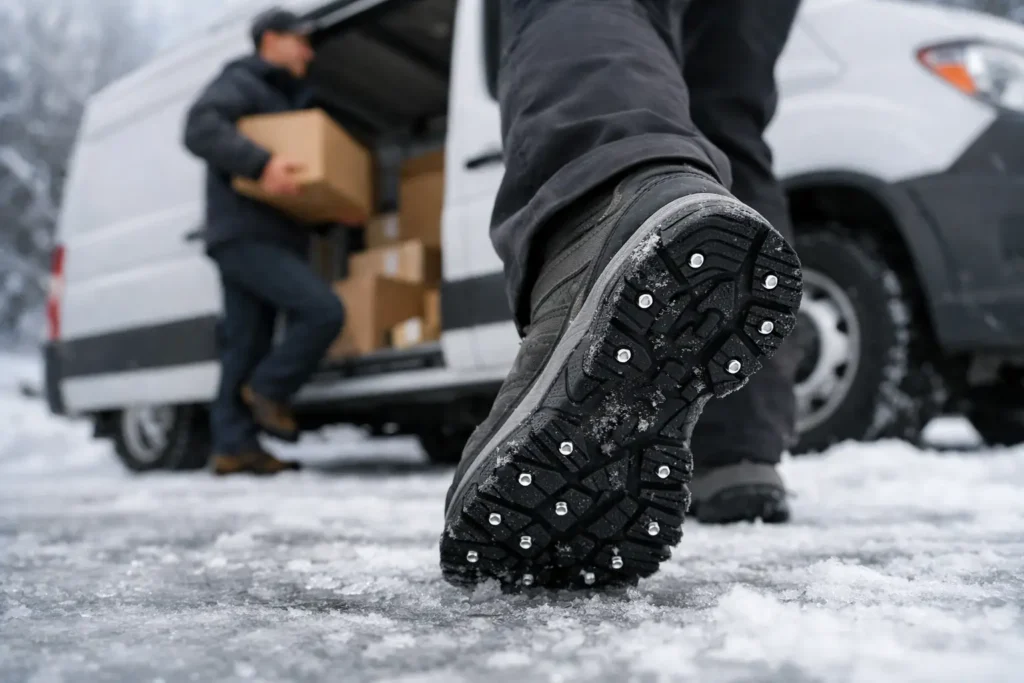
A delivery route does not pause because the sidewalk is glazed over. The best winter traction for delivery drivers is the traction that stays dependable from the first porch step to the last dark driveway – without making every trip in and out of the vehicle awkward, heavy, or slow. When you are carrying packages, food, or equipment on wet snow and black ice, secure footing is not an accessory. It is part of doing the job safely.
Winter delivery work creates a tougher traction problem than a short walk from the parking lot. Drivers constantly move between pavement, concrete steps, packed snow, slush, gravel, entry mats, and vehicle floors. The right setup has to grip when the surface turns slick, preserve a natural stride, and hold up through hundreds of stops.
Why Winter Delivery Routes Demand More Than Good Boots
A quality work boot helps, but even aggressive rubber tread has limits on clear ice. Rubber needs surface texture to bite. On frozen rain, polished sidewalks, and compacted snow, that texture may be gone. Add a box in your hands, a rushed schedule, low light, and repeated stepping off curbs, and a small loss of traction can become a hard fall.
Delivery drivers also face mixed terrain all day. A device that performs well only on snow may feel unstable on bare concrete. A heavy traction overshoe may grip ice but interfere with pedals, catch on floor mats, or make your feet feel clumsy on stairs. That is why the answer is not simply to buy the most aggressive-looking cleat available.
The strongest choice balances three realities: the amount of ice on your route, how often you enter and exit a vehicle, and whether you need traction to remain attached through the entire shift. For many drivers, low-profile, direct-to-sole spikes offer a more practical answer than bulky strap-on gear.
Best Winter Traction for Delivery Drivers: What Works
There is no single solution for every route. A driver serving steep rural homes after freezing rain needs a different setup from a courier walking mostly cleared city blocks. Still, the main options are easy to compare once you focus on how they behave during a real shift.
Winter work boots with aggressive lug soles
Deep-lug boots are a solid starting point for cold, wet, and slushy conditions. They shed mud, handle loose snow, and provide more stability than smooth casual footwear. For routes with mostly wet pavement and occasional soft snow, a good waterproof work boot may be all you need.
The trade-off is ice. Even the best lug sole can skate on hard, smooth ice because it does not penetrate the surface. If freezing rain, shaded walkways, or packed snow are routine hazards, boots alone leave a gap in your safety plan.
Strap-on cleats and chain-style traction devices
Traditional over-shoe cleats can provide strong grip on icy walking routes. Their chains, coils, or plates place metal contact points beneath the foot, and they are easy to remove when conditions improve. For a person taking a long walk on a frozen trail, that removable design can make sense.
For delivery work, though, constant removal is the problem. A driver may need to take them off before operating pedals or walking across smooth indoor flooring, then put them back on at the next stop. Harnesses can stretch, shift, snag, collect slush, or feel bulky underfoot. The more stops you make, the more those interruptions add up.
They can still be useful as an emergency option kept in the vehicle. They are less ideal when ice is part of the route all day and you need fast, natural movement at every door.
Screw-in traction spikes
Screw-in spikes attach directly to the sole of compatible boots or shoes. Rather than wrapping around the footwear, they become a low-profile part of it. That means no rubber harness to adjust, no chains under the arch, and no separate device to remember at the start of a shift.
This approach is especially effective for drivers who need repeatable traction on ice, packed snow, mud, and loose gravel while still moving naturally through a busy route. Because the spikes are placed in the outsole, they can be positioned where the foot needs bite most – commonly around the heel and forefoot contact zones.
ICESPIKE uses a patented screw-in system designed to deliver that integrated traction without the bulk and gait disruption common with strap-on devices. The practical benefit is simple: your footwear can feel like your footwear, only more prepared for slick ground.
Screw-in spikes are not a license to sprint across glare ice, and they should be selected for footwear with enough outsole material to support installation. But for repeated winter stops, they solve the biggest weakness of removable cleats: traction disappears the moment the device comes off.
The Features That Matter on a Delivery Shift
Do not judge winter traction only by the number of spikes or the size of the tread. Delivery drivers need gear that supports the whole workday.
First, look for low-profile contact points. High, bulky devices can change how your foot lands, creating fatigue over a long route and making vehicle transitions more awkward. A lower-profile setup is generally better for drivers who climb in and out of a van, truck, or personal vehicle dozens of times.
Second, prioritize secure attachment. Loose traction gear is more than an annoyance. If it rotates, slips under the heel, or comes partially off on a stair, it can create the instability it was supposed to prevent. Direct-to-sole systems eliminate many of those fit issues because they do not rely on an exterior harness.
Third, consider durability across surfaces. A route rarely delivers ideal snow conditions. You may cross salted concrete, gravel driveways, muddy yards, frozen grass, and bare pavement within a single block. Tough spikes and a durable outsole handle those transitions better than a lightweight device made only for occasional sidewalk use.
Finally, think about footwear compatibility. Winter traction works best when it is matched to a stable shoe or boot with sufficient sole thickness, solid heel support, and room in the toe box. If your work shoes are worn smooth or unevenly, replace them before adding traction. Spikes cannot compensate for a boot that no longer supports your foot.
How to Set Up Safer Footing for Your Route
Start by looking at your actual risk, not the weather report alone. A route with shaded apartment stairs and untreated driveways may remain icy long after main roads are clear. A suburban route with long walks from the curb has different demands than dense downtown deliveries where entryways are frequently salted.
For mostly slush and wet pavement, waterproof boots with aggressive tread may be enough. For regular ice, installable spikes or a reliable cleat system are the stronger choice. If you frequently switch between a vehicle and indoor locations, favor low-profile traction that does not force you to stop and change gear at every transition.
Check your soles regularly. Packed snow, road salt, and grit can reduce traction over time. Clear debris from treads at the end of the day, inspect spikes for wear or looseness, and replace damaged footwear before it becomes a winter hazard. This takes minutes and can prevent the kind of fall that takes you off the route for weeks.
Traction also works best alongside basic route habits. Slow down before stepping from a vehicle onto an unknown surface. Keep at least one hand free when possible, especially on stairs. Take shorter steps on visible ice, and do not let a delivery deadline force a rushed descent. The goal is controlled movement, not dramatic recovery after your foot slides.
When More Traction Is Not the Right Answer
More metal is not always better. Extremely aggressive spikes can be uncomfortable or noisy on hard indoor floors, and some work environments may prohibit them inside buildings. If your route includes frequent access to polished lobbies, hospitals, schools, or customer homes, confirm the expectations for footwear and use good judgment.
Vehicle operation deserves attention as well. Any traction device should allow you to control pedals safely and comfortably. Test your footwear setup in a parked vehicle before taking it on a route. If it feels unstable, catches on a mat, or changes pedal feel, reassess before driving.
The right winter traction is the setup that gives you confident grip where falls happen while still fitting the physical demands of the job. Delivery work is repetitive by nature. Your traction needs to be equally consistent.
The next time freezing rain is on the forecast, prepare before the first stop. A stable boot, properly chosen traction, and a deliberate step off the curb can keep a difficult winter shift from becoming an avoidable injury.