
A slip at work rarely starts with a dramatic fall. More often, it starts with one thin patch of black ice outside the loading door, a wet entry mat that has curled at the edge, or muddy boots crossing a smooth concrete floor. Knowing how to prevent slips at work means treating traction as a daily operating condition, not an afterthought when the weather turns bad.
For outdoor crews, delivery teams, maintenance workers, landscapers, warehouse staff, and anyone moving between buildings, secure footing protects more than productivity. It protects knees, wrists, backs, and the confidence to move at a normal working pace. The goal is not to creep through every shift. The goal is to build a worksite where people can walk with purpose because the surface, the process, and their footwear are ready for the conditions.
How to Prevent Slips at Work Starts at Ground Level
Slip prevention begins before anyone steps onto the surface. Walkways, entrances, ramps, stairs, loading areas, and routes between vehicles need regular attention because conditions can change within hours. A clear path at 7 a.m. can become slick by midday when snow melts, refreezes, or gets tracked indoors.
Assign responsibility for checking high-traffic areas at the start of a shift and again when weather changes. This does not need to become a complicated paperwork exercise. It needs to be consistent. Look for standing water, packed snow, loose gravel, mud, oily residue, leaves, uneven mats, and poor drainage. If the route is not safe, control the hazard immediately instead of assuming the next person will see it.
For outdoor workplaces, snow removal and de-icing matter, but neither is a complete answer. Salt may take time to work, can be diluted by new precipitation, and may not address compacted snow. Sand or grit can improve footing in some locations, but it can also be displaced by traffic. The strongest approach combines surface treatment with footwear that can handle the remaining risk.
Build a Fast Hazard-Control Routine
The best safety routines are simple enough to hold up on busy days. When a hazard appears, workers should know exactly what happens next: protect the area, fix the condition, and communicate the change.
A practical routine includes four actions:
- Remove or contain water, snow, mud, spills, debris, and loose materials as soon as they are found.
- Mark the area or redirect foot traffic while cleanup or repair is underway.
- Use entry mats that lie flat, stay in place, and are replaced when saturated or worn.
- Record recurring trouble spots so drainage, lighting, grading, or maintenance problems can be fixed at the source.
That last point is where many workplaces lose ground. If the same doorway freezes every morning or the same stair landing stays wet after rain, the problem is not employee awareness. It is a predictable site condition. Permanent corrections might include better drainage, a canopy, improved lighting, textured stair treads, or a revised route. Temporary controls are necessary, but repeat hazards deserve a real fix.
Footwear Is Safety Equipment, Not a Dress Code Detail
A clean, well-maintained worksite can still have slick conditions. Footwear is the final point of contact between a worker and the ground, which makes outsole condition and traction a serious safety issue.
Start with a boot or shoe that fits correctly. Loose footwear makes it harder to react to unstable footing, while worn-out soles lose the tread edges that help channel water and bite into uneven ground. Replace footwear when the tread is visibly rounded, cracked, hardened, or unevenly worn. A boot can still look tough from the side and offer very little grip underneath.
The right sole depends on the job. Deep lug patterns work well in mud, loose dirt, and snow, but a sole built for soft terrain may not provide the same grip on smooth wet concrete or glazed ice. Oil-resistant footwear can be the right choice for a shop floor, while insulated waterproof boots make more sense for a crew working outside all day. There is no single outsole that dominates every surface.
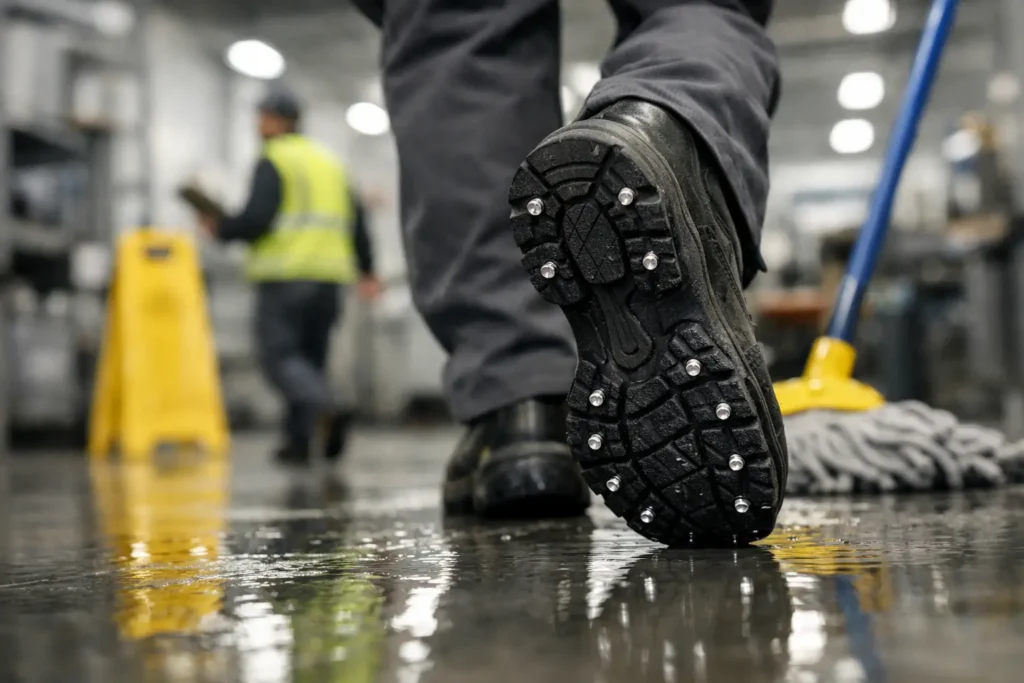
Ice is the condition that exposes the limits of ordinary work boots fastest. Rubber tread can help, but ice often requires a more aggressive mechanical grip. For workers who regularly face frozen loading areas, icy trails, compacted snow, or mixed winter terrain, installable traction spikes can add a hard, direct point of contact without the bulk and shifting feel of strap-on systems. ICESPIKE traction can be installed directly into compatible footwear, giving workers a low-profile grip upgrade that moves naturally with the boot.
That does not mean traction spikes belong everywhere. Metal points are not appropriate for every polished indoor surface, and workplaces should set clear expectations for when workers transition between outdoor and indoor areas. The right traction setup matches the route, the surface, and the job.
Keep Entrances From Becoming Slip Zones
The first few steps inside a building are among the most overlooked hazards at work. Rain, snow, and slush travel in on footwear, then collect on smooth floors where people assume they are safe. A good entrance plan reduces the amount of moisture that reaches the floor and makes remaining moisture easy to spot.
Use enough matting to let people take several steps before reaching the finished floor. Mats should be secured, flat, and large enough for the traffic volume. Small mats that slide, wrinkle, or become soaked can create a new trip or slip hazard. During heavy weather, check them more often and swap them out before they are saturated.
Lighting also matters. Workers cannot avoid what they cannot see. Ensure entrances, stairwells, ramps, parking areas, and paths from vehicles are adequately lit before early shifts and after dark. A reflective wet patch, an icy curb, or a sudden change in elevation is easier to manage when it is visible.
Train for Movement, Not Just Compliance
Slip prevention training should be practical enough to use while carrying equipment, moving a cart, or stepping down from a vehicle. Telling people to “be careful” is not training. Explain where conditions change, which routes are approved, how to report a hazard, and what footwear is expected for the work.
Movement technique can reduce risk, especially outdoors. Encourage workers to slow down when transitioning from one surface to another, keep their hands available for balance when possible, and use handrails on stairs. Loads should be carried in a way that preserves visibility. If a box blocks the view of the next step, the worker is more likely to miss ice, water, or an uneven edge.
At the same time, avoid putting the entire burden on workers. Asking someone to walk cautiously across an untreated icy lot in worn boots is not a safety plan. Good training supports strong controls. It does not replace them.
Pay Attention to Weather and Work Transitions
Most winter slip incidents happen during transitions: freezing rain after a mild morning, snow packed down by vehicle traffic, thawing surfaces that refreeze overnight, or workers moving from a heated building into a shaded lot. Build weather checks into the daily plan when conditions are unstable.
Supervisors should know when temperatures are expected to cross the freezing point and which areas stay shaded longest. Outdoor workers should have a clear way to report unsafe routes without feeling that they are delaying the job. A five-minute response to a new ice patch is far less disruptive than an injury report, an emergency room visit, and a worker off the schedule.
For crews that move across mud, gravel, roots, snow, and pavement in the same day, footwear decisions deserve special attention. Lightweight, direct-to-sole traction helps maintain a more natural gait than bulky over-shoe devices, but every worksite should still define where aggressive traction is required and where it should be removed or avoided.
Make Safe Footing Part of the Job Standard
Slips are often treated as random events, but most have a chain of visible causes: poor surface maintenance, inadequate lighting, worn footwear, rushed movement, or a known hazard left unresolved. Break that chain early. Inspect the route, control changing conditions, maintain shoes and boots, and give workers traction that fits the terrain they actually face.
A safer workday does not demand that people move timidly. It gives them the footing to move with confidence, carry their share, and get home without a preventable injury.