
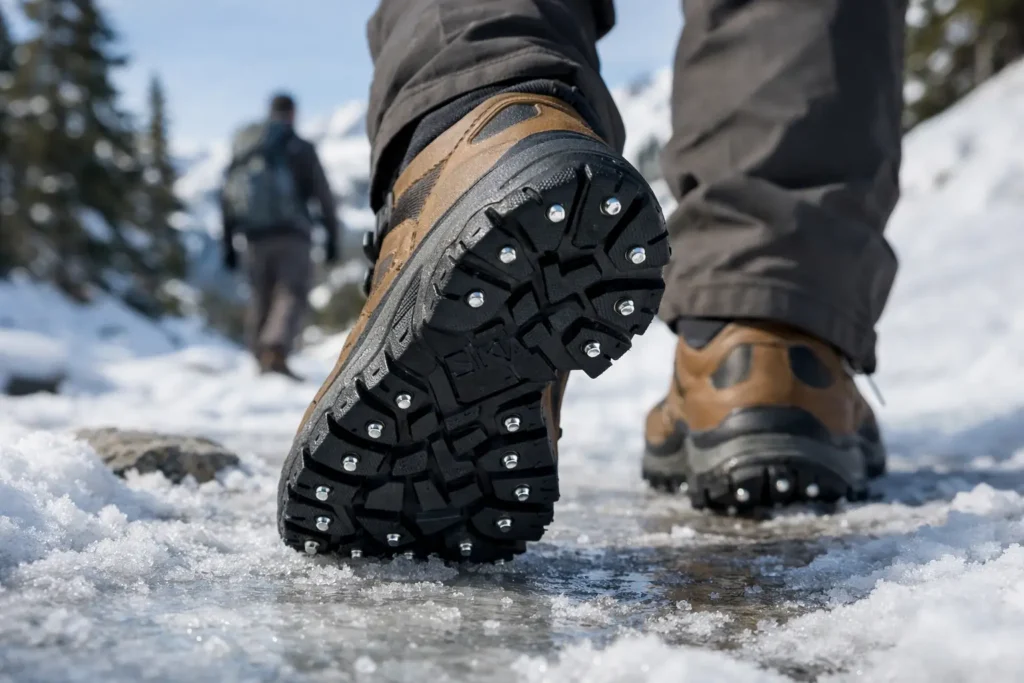
A shaded switchback can turn a routine winter hike into a hard lesson in traction. One minute the trail is packed snow; around the next bend, it is polished ice hidden under powder. The best winter traction for hikers is not simply the sharpest option. It is the system that grips the terrain under your boots without changing the way you walk, weighing down every step, or becoming a problem when conditions shift.
For hikers who cover mixed trails, secure footing is performance gear. It protects knees, hips, wrists, and confidence. The right traction lets you keep moving with a natural stride instead of taking stiff, cautious steps that burn energy long before the summit.
What Makes the Best Winter Traction for Hikers?
Winter traction has to do more than bite into ice. Hiking trails are rarely one surface for long. You may cross frozen dirt, exposed rock, packed snow, wet roots, slush, gravel, and glare ice in the same mile. A traction setup that dominates on one surface but feels unstable, bulky, or awkward on the others is not the right tool for most hikers.
Start with the terrain you actually hike. If your route is mostly packed snow with occasional ice, low-profile spikes can provide the extra security you need without overbuilding your footwear. If your trails regularly become icy, steep, or off-camber, deeper and more aggressive points create a more dependable bite. The goal is controlled grip, not a clumsy stomp.
Natural gait matters just as much as point depth. Heavy chains and oversized underfoot systems can change how a boot flexes and where your foot lands. That can make a short walk feel tiring and a long hike feel worse. Good traction should work with the boot you already trust, keeping your stride balanced while adding decisive grip where it counts.
Durability also separates trail-ready traction from a temporary fix. Winter hiking puts hardware through repeated impact, twisting, wet conditions, and abrasive surfaces. Gear that shifts, stretches out, or sheds components is not dependable when the trail gets serious.
Know the Difference Between Winter Traction Options
There is no single traction product that wins every situation. The best choice depends on whether you are hiking rolling local trails, steep frozen approaches, or mountain terrain with sustained snow and ice.
Strap-on coils and chain-style cleats
These devices stretch over the outside of a shoe or boot, placing coils, chains, or small points beneath the sole. They are common because they are easy to put on and remove. For a short neighborhood walk or a consistently snowy path, they can be useful.
On a hike, their limits become more obvious. Harnesses can shift on narrow boots, collect snow, rub against footwear, or create an uneven feel underfoot. Chains and coils add bulk, and some designs can feel unstable on rocks, roots, and dry trail sections. They are a reasonable seasonal accessory, but they are not always the most natural-feeling choice for hikers moving through changing conditions.
Microspikes and aggressive trail cleats
Microspike-style systems use metal points connected by chains and held to the footwear with an elastomer harness. They offer more bite than coils and are often a strong option for packed snow and icy trails. For many winter hikers, they are a practical middle ground between basic slip protection and mountaineering equipment.
The trade-off is weight and rigidity. They are still an over-the-boot system, so fit varies by shoe shape, and they can be uncomfortable or quickly worn down on long stretches of bare rock or pavement. They also require you to stop, put them on, take them off, and carry them whenever trail conditions change.
Crampons
Crampons are built for technical winter terrain: steep snow, firm alpine ice, glacier travel, and mountaineering objectives. Their long, aggressive points are designed for conditions where a hiking cleat is not enough.
That power comes with a clear limitation. Crampons are not the everyday answer for wooded trails, rolling terrain, or mixed surfaces. Used where they do not belong, they can damage trails, feel awkward on rock, and interfere with normal walking. Match them to technical objectives, not casual winter mileage.
Installable screw-in traction spikes
Direct-to-sole spikes are installed into the lugs of compatible hiking boots or trail shoes. Rather than wrapping around the footwear, they become part of the outsole. That means no harness to stretch, no chains underfoot, and no bulky layer between your foot and the ground.
For hikers who regularly encounter ice, hard snow, mud, loose gravel, and slick roots, this approach provides a low-profile, integrated feel. The spikes can be placed where your foot needs grip most, such as the heel and forefoot contact zones. Because they sit within the sole pattern, they can preserve the flex and natural gait of the footwear better than many over-shoe systems.
ICESPIKE screw-in traction is built around this direct, lightweight approach. It gives hikers a durable grip upgrade without turning a favorite pair of boots into a stiff, heavy piece of seasonal gear. When conditions demand traction but the route includes plenty of mixed terrain, that difference is felt in every mile.
Match Your Traction to the Trail, Not the Forecast
A forecast may say snow, but the trail can deliver something else entirely. South-facing slopes may be wet and muddy while shaded north-facing sections stay frozen for days. Popular trails often pack down into hard, slick lanes. Creek crossings create hidden ice. Wind can blow fresh snow over old ice, removing every visual clue that footing is compromised.
On mostly snowy trails, moderate spikes or microspikes may be enough. On trails where ice appears in unpredictable patches, low-profile installed spikes can make more sense because the traction is already there when the surface changes. You do not need to stop at every frozen corner or decide whether a short icy section is worth digging gear out of your pack.
For steep, sustained ice or technical alpine travel, use equipment designed for that exact environment, along with boots that support it. No light hiking traction device replaces crampons, an ice axe, route knowledge, or sound winter judgment.
Fit and Placement Decide Whether Traction Performs
Traction is only as good as the connection between the device and your footwear. With strap-on systems, use the manufacturer’s sizing guidance and test the fit at home. Walk up and down stairs, flex the boot, and make sure the harness does not roll off the heel or crowd the toe. A loose system can shift at the exact moment you need a secure edge.
With installable spikes, start with a sole that has adequate lug depth and durable rubber. Placement should support the way your foot contacts the ground. Heel placement is critical for descending, where slips often happen. Forefoot placement helps create a reliable bite when climbing and pushing off. Avoid placing hardware where it will interfere with natural flex points or where the sole is already thin.
Do not wait for a remote trailhead to test new traction. Wear it on a short local walk first. Pay attention to whether your boot rolls naturally, whether you notice pressure points, and how the setup behaves on a transition from snow to bare ground. A little testing turns a guess into dependable gear.
Winter Hiking Habits That Make Traction Work Better
Traction gives you grip, not invincibility. The strongest setup still works best with deliberate movement. Shorten your stride on ice, keep your weight centered over your feet, and avoid sudden turns. On descents, bend slightly at the knees and let your heel traction do its job rather than leaning too far back.
Keep an eye on buildup. Wet snow can pack around any traction system, especially when temperatures hover near freezing. Clear it before it becomes a platform that reduces contact with the trail. Check straps, chains, and spike points periodically, particularly after walking across exposed rock or pavement.
Choose footwear with a stable platform, too. A boot with a worn-out sole, weak ankle support, or poor fit cannot be fully rescued by traction. Strong tread, secure lacing, warm socks that do not crowd the toe box, and a boot that fits your hiking style remain the foundation.
Do Not Let Convenience Create a Slip Risk
Many hikers own traction but leave it in the car, at the bottom of a pack, or at home because it is cumbersome to carry and annoying to put on. That is where convenience becomes a safety issue. The best system is one you will actually use before the trail turns slick.
Consider how often you hike through winter and how variable your ground conditions are. If ice is an occasional hazard on a predictable route, removable cleats may be all you need. If winter footing is a constant part of your hiking, work, dog walks, or trail running, an integrated traction solution can eliminate the repeated hassle of gearing up and gearing down.
The trail does not care whether you planned for ice. Build your footing around the conditions you face most, test your setup before a big outing, and choose traction that lets your boots move like boots. When the ground turns hard, slick, and unpredictable, confident steps are worth carrying with you.