
A glazed driveway, a frozen trail crossing, or a slick jobsite entrance can change your day in one bad step. Made in USA ice cleats matter because traction gear is not a fashion accessory or a once-a-season purchase. It is safety equipment that has to bite when the ground gives you nothing back.
For runners, hikers, outdoor workers, anglers, and anyone walking through a real winter, the goal is simple: stay upright without strapping a heavy, awkward contraption over your footwear. The best traction solution should move with your shoe, preserve your normal stride, and keep working when conditions shift from ice to packed snow, mud, gravel, and frozen ground.
Why Made in USA Ice Cleats Are Worth Looking For
Buying American-made gear can mean more than supporting domestic manufacturing. With ice cleats, it can also mean choosing a product designed around the conditions American users actually face: icy sidewalks, uneven rural roads, mountain trails, frozen boat ramps, loading docks, and long winter workdays.
That said, “made in USA” is not a magic guarantee by itself. Materials, manufacturing standards, product design, and installation all determine whether a traction system performs when it counts. A poorly designed cleat made close to home can still be a poor choice. The right question is whether the product combines trustworthy construction with a design that works in the real world.
For many people, the biggest advantage is accountability. A domestic manufacturer is often closer to its customers, testing feedback, and the everyday conditions that reveal weak points. When a product is built for repeated use instead of a single storm, details matter: how the spike seats in the sole, how it handles torque during installation, whether it remains secure after miles of movement, and how naturally it feels underfoot.
The Problem With Traditional Strap-On Cleats
Most people have tried the familiar over-shoe traction device at some point. It stretches around the toe and heel, uses chains, coils, or metal studs underneath, and promises an easy seasonal fix. For a short walk across an icy lot, it may do the job. But for active use, the limitations show up fast.
Strap-on cleats add bulk underfoot. They can shift, loosen, collect snow, or change the way your shoe flexes. Runners may feel the harness pull against the upper. Workers may find themselves stopping to readjust. Older adults may struggle to put them on and take them off with cold hands or limited mobility. And when the route changes from ice to bare pavement, a bulky traction device can feel clumsy and unstable.
The issue is not that removable traction is always wrong. It is that removable systems ask the user to manage another piece of gear. You have to remember it, carry it, fit it correctly, and remove it when conditions improve. That is workable for occasional use. It is less useful when your footwear needs to be ready before sunrise, after a storm, or halfway through a demanding day.
A Better Fit: Direct-to-Sole Traction
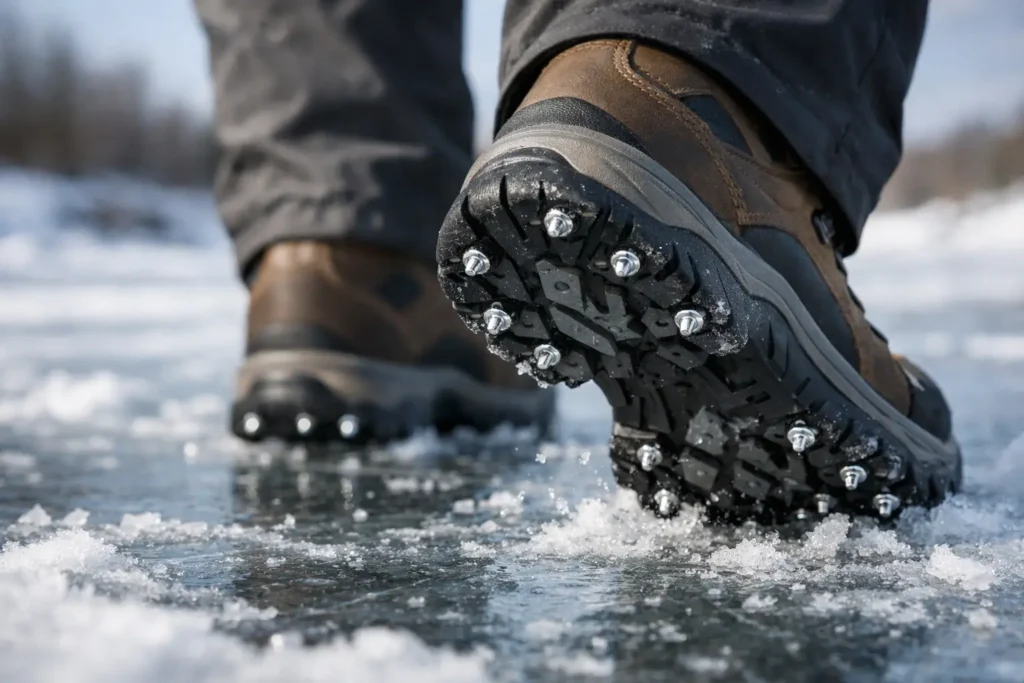
Installable ice cleats take a different approach. Rather than wrapping traction around the shoe, screw-in spikes attach directly to the outsole. The result is a lower-profile, more integrated setup that lets the footwear keep doing what it was designed to do.
This matters because your footwear already matches your activity. A trail runner has the cushioning, fit, and flex a runner needs. A work boot has the support and protection a worker relies on. A hiking boot has the stability built for uneven ground. Adding compact traction points to that existing sole can provide grip without turning the shoe into something unfamiliar.
ICESPIKE uses this direct-to-sole concept to give users a lightweight traction upgrade that stays where it belongs. Properly installed spikes are there when the surface gets slick, without chains dragging underneath or rubber harnesses fighting the shape of the shoe.
The natural-feeling advantage is not just about comfort. A more familiar stride can reduce fatigue over long distances. When you are walking a frozen property line, running a winter route, hauling equipment, or moving between vehicles and a jobsite, every unnecessary change in gait adds up.
The Sole Is the Foundation
No cleat system can make the wrong shoe perfect. Before installing any screw-in traction, look at the outsole. A supportive shoe or boot with adequate sole thickness gives the cleat a better foundation. Deep lugs and a defined tread pattern can help identify practical placement areas, while very thin, worn-out, or heavily cushioned soles may not be a good candidate.
Placement matters, too. Traction should support the parts of the foot that contact and drive against the ground, without interfering with the shoe’s natural flex zones. This is why following the product’s installation guidance is essential. Randomly adding hardware to footwear is not the same as using a traction system engineered for the purpose.
What Good Winter Traction Should Do
The strongest traction setup is not necessarily the one with the most metal hanging from the bottom of the shoe. It is the one that fits the activity and surface.
For icy neighborhood walks, you want reliable contact and confidence with every step. For trail running, you need grip that does not feel heavy or disruptive at pace. For outdoor work, durability is critical because the footwear may encounter ice, frozen dirt, gravel, wet grass, and concrete in the same shift. For fishing, hunting, and backcountry use, compact traction can be especially valuable when footing changes without warning.
A quality cleat system should deliver four practical benefits:
- Secure bite on ice and hard-packed snow.
- Low-profile traction that does not overwhelm the shoe’s natural feel.
- Durable construction for repeated use across changing terrain.
- A setup that stays attached instead of sliding, stretching, or shifting.
There is still a trade-off. Any metal traction can wear faster on long stretches of bare pavement, and no cleat makes every surface risk-free. Smooth indoor floors, polished concrete, tile, and other hard surfaces require caution. The point is not to become careless. The point is to have more control when winter conditions demand it.
Choosing the Right Setup for Your Use
Start with how you actually move outdoors. A runner should prioritize a lightweight configuration that supports a quick, efficient stride. A hiker may want a pattern that helps on icy climbs, descents, and uneven trail surfaces. An outdoor worker should focus on secure installation and long-term toughness. For seniors and everyday walkers, the priority is often simple, dependable footing without the hassle of managing an over-shoe device.
Also consider whether your winter terrain stays consistent. If you spend most of your time on solid ice, traction needs are different from someone moving between ice, gravel, dirt, snow, and pavement. Installable spikes are particularly useful for mixed terrain because they avoid the bulky, chain-heavy feel that can make traditional cleats unpleasant beyond a frozen sidewalk.
Do not ignore shoe condition. Replace footwear with cracked soles, severely worn tread, or poor structural support before adding traction. Cleats improve grip, but they cannot restore stability to a shoe that has already reached the end of its useful life.
Installation Is Part of Performance
A direct-to-sole system is only as dependable as its installation. Use the correct tool, follow the recommended placement pattern, and make sure each spike is seated securely. Check the cleats before heading out, especially after heavy use or a long stretch on abrasive surfaces.
This small amount of preparation pays off. Instead of hoping a strap stays tight or wondering whether your traction device is in the truck, you step out in footwear that is ready for the conditions. That is a major advantage for people who cannot afford to lose time, comfort, or confidence to slippery ground.
Built for More Than One Storm
The best made in USA ice cleats should earn their place beyond the first freeze. Winter weather rarely stays neat. One day brings clear ice, the next wet snow, and the next a thaw that turns the trail into mud. A useful traction system has to support the places you actually go, not just the worst patch of ice on the driveway.
Choose traction that respects the way you move, the footwear you trust, and the terrain you face. Then use it with the same judgment you bring to any piece of serious outdoor gear. Secure footing does not make winter less demanding, but it gives you a stronger reason to keep moving through it.