
A hard sole can feel perfectly secure on dry concrete, then turn dangerous the second it meets black ice, wet metal, packed snow, or oily ground. Knowing how to add traction to work boots is not about making footwear look more aggressive. It is about creating reliable bite where your job, your route, and the weather demand it – without turning every step into an awkward, tiring shuffle.
The right solution depends on the surface underfoot and the boot you already own. A warehouse worker moving between a loading dock and a frozen parking lot needs something different from a utility worker climbing snowy slopes or a landscaper working in mud. Start with the terrain, then choose traction that works with your boots instead of fighting them.
Start With the Boot Sole You Have
Before adding anything, inspect the outsole. Deep, flexible lugs can shed mud and grip loose ground well, but they are not automatically built for ice. Smooth, hardened rubber soles may resist wear and oil but can become slick on frozen pavement. If the tread is worn flat at the heel or forefoot, an add-on may help temporarily, but a new outsole or new boots may be the safer call.
Check for cracked rubber, separated soles, exposed midsole foam, and loose heel blocks. Traction hardware needs solid material to hold. Installing spikes into a thin, hollow, damaged, or heavily worn outsole can lead to poor retention and uneven footing.
Also consider where your boots travel during a normal shift. Metal traction that performs brilliantly outdoors can be loud, slippery, or damaging on polished tile, sealed concrete, wood floors, and ladders. No single setup is best for every surface. The goal is controlled traction for the conditions you face most often.
Choose the Right Way to Add Traction to Work Boots
There are several ways to improve grip. Each has a place, and each comes with trade-offs.
Replace Worn Boots or Resole Them
If the tread is gone, replacement is the cleanest long-term answer. Look for a work boot with a deep lug pattern, a slip-resistant outsole, and a rubber compound designed for cold or wet conditions. For quality boots with an otherwise sound upper, a professional resole can restore the outsole and preserve the break-in comfort you have earned.
This is the best choice when worn tread is the core problem. It will not, however, give ordinary rubber soles the penetrating grip needed for true ice. Snow-packed steps and black ice often require a more aggressive approach.
Use Removable Overshoe Cleats for Occasional Ice
Strap-on traction devices fit over the outside of a boot and usually use chains, coils, studs, or small spikes. They can be useful when you only need extra grip for a short walk from the truck to a jobsite or for infrequent winter tasks.
Their weakness is movement. Harnesses can shift, stretch, catch on debris, or create pressure points under a work boot. They also change the way the boot flexes and can make stairs, ladders, indoor floors, and pedals more difficult. If you use them, put them on only for the icy portion of the job and remove them before moving onto surfaces they can damage.
Install Screw-In Traction Spikes for Integrated Grip
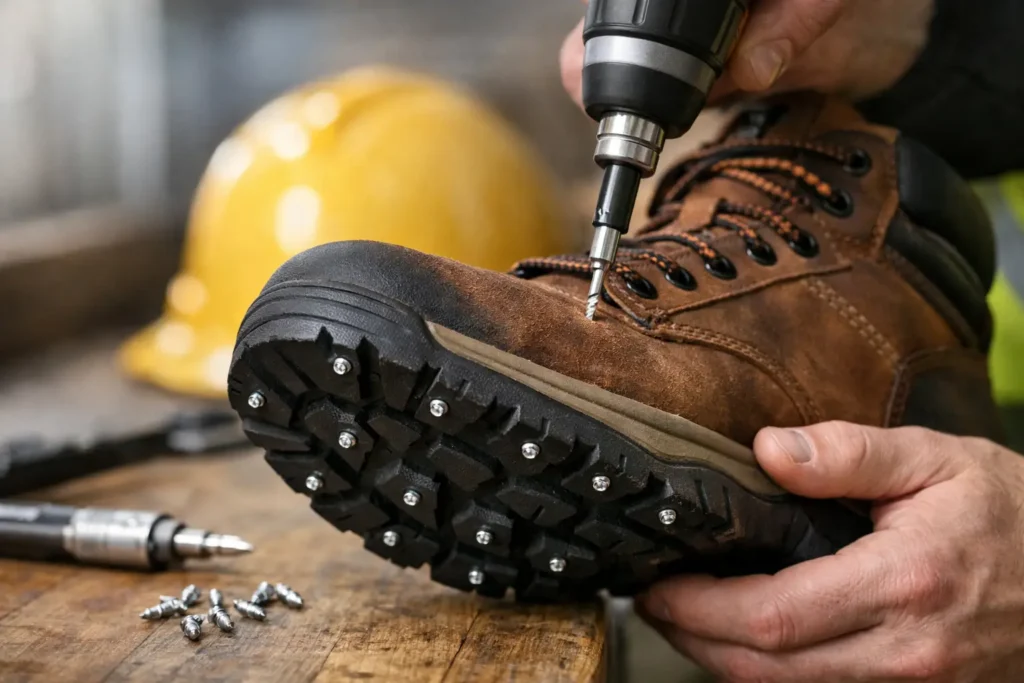
For workers who regularly move over ice, packed snow, mud, gravel, slick roots, or frozen ground, screw-in spikes are a more direct solution. Instead of wrapping a device around the boot, individual spikes install into the outsole, creating low-profile points of contact where traction is needed.
This approach can preserve a more natural gait than bulky overshoe systems because the traction is part of the sole rather than sitting around it. It is also practical for mixed terrain when the spikes are designed to be removable. ICESPIKE uses a direct-to-sole system built for footwear that has enough outsole depth to accept it, giving work boots a durable traction upgrade without chains or a bulky harness.
Placement matters as much as the spike itself. Most workers need grip at the heel for downhill braking and initial contact, plus traction at the forefoot for push-off. Avoid placing hardware where the sole bends sharply, where the tread is too thin, or where it could interfere with a ladder rung or a vehicle pedal. Follow the product-specific installation layout and use the correct driver tool rather than forcing a screw in at an angle.
Treat Adhesive Traction Products as Short-Term Help
Adhesive grit strips, rubber traction pads, and spray-on coatings may add a little grip on dry or mildly wet surfaces. They are usually not a serious answer for ice, heavy mud, or demanding outdoor work. Adhesives wear quickly under flex, moisture, road salt, and abrasion, and loose edges can become a trip hazard.
Use these options only when a temporary, light-duty improvement makes sense. Do not mistake a textured sticker for a traction system.
How to Add Traction to Work Boots With Screw-In Spikes
If your boots have a thick, healthy rubber outsole, screw-in spikes can be a strong option for recurring slippery conditions. Take time to set them up correctly. Rushed installation can damage a boot or leave traction uneven from one foot to the other.
First, clean the outsole thoroughly. Remove packed dirt, stones, oil, and salt, then let the sole dry completely. Mark the intended positions before installing anything. Use the boot’s tread pattern as a guide, choosing substantial lug areas rather than thin grooves or unsupported sections.
Install the same pattern on both boots. Keep the spikes seated flush according to the manufacturer instructions, with no loose or tilted hardware. Then walk carefully on a safe outdoor test surface. Pay attention to whether the heel lands evenly, whether the forefoot flexes normally, and whether any point feels overly prominent.
Do not add as many spikes as possible just because more sounds better. Too much concentrated metal can make hard surfaces uncomfortable and may reduce stable rubber contact on dry flooring. A balanced pattern provides purposeful bite while still letting the outsole do its job.
Match Traction to the Surface, Not Just the Season
Ice is the clearest reason to add spikes, but winter work rarely happens on clean ice alone. You may cross bare pavement, frozen dirt, loose gravel, slush, shop floors, and stair treads in one hour. That is why removability and low-profile design matter.
For slick ice, pointed traction is usually the most dependable choice because it can penetrate the surface instead of merely pressing against it. For mud and loose soil, deep lugs and widely spaced tread matter more because they release debris as you walk. For wet, smooth floors, the rubber compound and tread channeling of the boot are critical. A spike cannot replace a certified slip-resistant sole where oil, water, or chemical residue is the main hazard.
The job also changes the decision. If you climb ladders, operate machinery, work around finished flooring, or enter customer homes, confirm that your employer allows added traction hardware. Some sites require boots to meet specific safety standards or prohibit metal contact points in designated areas. Safety gear has to fit the workplace, not just the weather report.
Keep Your Added Traction Working
Traction gear earns its value through inspection. After a shift, knock mud and packed snow from the outsole. Check installed spikes for looseness, bent points, missing hardware, or uneven wear. Road salt and moisture can accelerate corrosion, so rinse and dry the boot when conditions are harsh.
Replace worn spikes before they become smooth. A rounded point does not bite like a sharp one, and one missing spike can make a boot feel uneven. Inspect the sole around each installation point as well. If rubber begins to tear or a spike no longer holds securely, remove it and reassess the boot rather than forcing a repair.
Your walking habits matter, too. Shorter steps, deliberate foot placement, and keeping your center of gravity over your boots reduce slips even with excellent traction. Added grip is a serious advantage, not permission to rush across a glazed loading dock.
The best setup is the one you will actually wear when conditions turn ugly: secure enough for the surface, comfortable enough for a full shift, and practical enough to move with you instead of becoming one more thing to manage. Give your boots the traction your work demands, then let every step feel more certain.