
Our Website if down for construction for awhile. Not a good time of year but needed to be done. If you need product or help in the mean time please call us at 877-677-3567 Thanks for you understanding.
A frozen parking lot, a sloped driveway, and a hard-packed trail can all punish the wrong traction choice. In the ice cleats versus Yaktrax decision, the real question is not which product looks more aggressive. It is which system stays secure, feels natural underfoot, and gives you dependable bite when a bad step could end a run, a shift, or a winter outing.
Yaktrax-style traction devices have earned their place because they are easy to pull over a shoe and remove at the door. But installable ice cleats take a different approach: the traction is mounted directly in the sole, where it moves with your footwear instead of hanging beneath it. For runners, workers, hikers, and anyone tired of fighting loose overshoes, that difference can be substantial.
Ice Cleats Versus Yaktrax: The Core Difference
Yaktrax are over-the-shoe traction devices. Most designs use an elastic harness to wrap around the shoe, with steel coils, chains, or small studs beneath the foot. They are designed for convenience. Pull them on when conditions turn slick, take them off before you head indoors, and move on with your day.
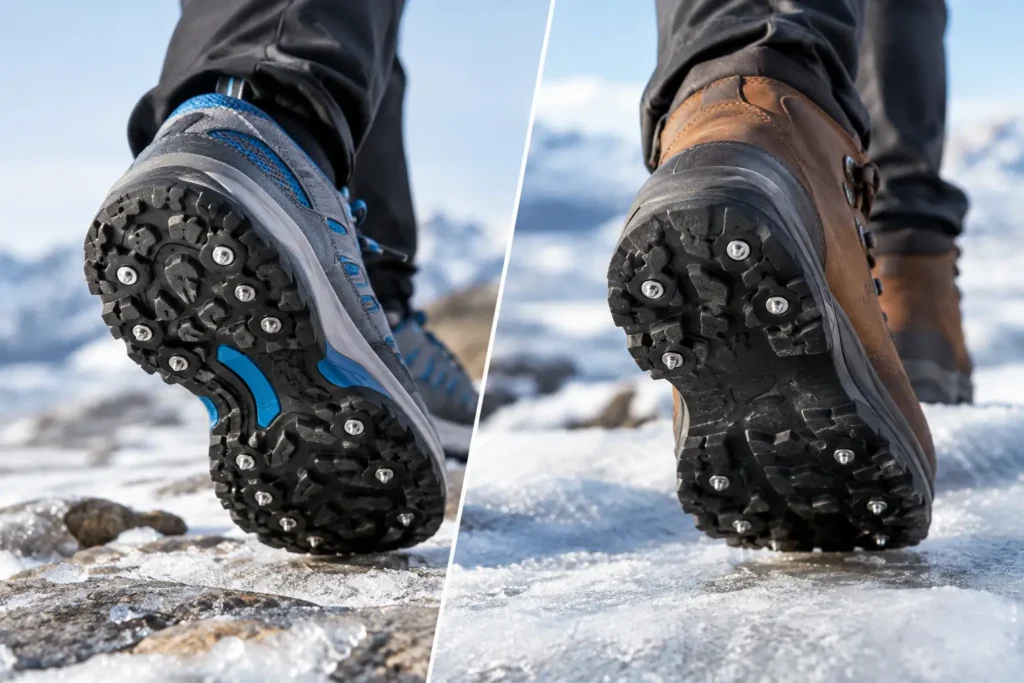
Ice cleats, including screw-in traction spikes, are installed directly into the outsole of compatible shoes or boots. Instead of relying on a rubber harness to keep the traction in place, the cleats become part of the footwear. The result is a lower-profile traction setup that can feel more planted and less bulky.
Neither option wins every situation. A person who needs occasional grip for a short walk from the car to the mailbox may prefer the fast on-and-off convenience of Yaktrax. Someone who runs icy routes, works outside, walks a dog daily, or covers mixed terrain often needs a system that stays put and does not change the feel of every stride.
Grip on Ice Is More Than a Tread Pattern
On smooth, hard ice, traction comes down to penetration and stability. Steel coils can add useful friction, especially on packed snow and lightly icy walkways. They create more contact points than a bare outsole and can make casual walking feel much safer.
The limitation is that coils do not always bite into glare ice the way pointed metal cleats can. When the surface is frozen solid, small spikes concentrate force into a narrow point. That helps them dig in rather than skate across the top of the ice.
Directly installed cleats also stay aligned with the sole. There is no traction harness stretching around the shoe or shifting independently beneath the foot. That matters when you are side-hilling on a trail, carrying equipment, walking down an icy grade, or changing direction quickly. Secure footing is not just about forward grip. It is about knowing where your foot will land and how the shoe will respond when it does.
Mixed terrain changes the answer
Pure ice is only part of a real winter day. You may move from frozen pavement to snow, gravel, mud, wet leaves, roots, or bare ground in a single mile. Coil-style devices can work well on snow-covered sidewalks, but they may feel awkward or wear faster when repeatedly used on rough, abrasive surfaces.
Quality screw-in ice cleats are built for more than icy sidewalks. Their compact profile can provide bite on snow, mud, gravel, and slick natural terrain without the dangling chain or broad rubber frame common to over-shoe traction. That versatility matters to trail runners and outdoor workers who cannot stop to change gear every time the ground changes.
No metal traction device is ideal on smooth indoor flooring, polished stone, or finished wood. Take any cleated footwear off where it can damage surfaces or create an unstable feel.
Fit, Comfort, and Natural Movement
Fit is where many people discover the practical trade-off between Yaktrax and ice cleats. An over-shoe device has to fit tightly enough to stay on. If it is too loose, it can rotate, bunch, or pull away from the sole. If it is too tight, it can be difficult to install and may feel restrictive around the toe and heel.
Even a well-fitted strap-on system adds material around the shoe and underfoot. That added bulk can change flex, increase fatigue, and make a lightweight running shoe or work boot feel less natural. For a quick trip, that may be a minor compromise. Over long distances or long shifts, it becomes more noticeable.
Installed ice cleats keep the upper of the shoe clear and the traction close to the outsole. Because there is no harness around the foot, the footwear can retain more of its intended flex and fit. That is especially valuable for runners who depend on predictable footstrike and hikers who need to feel uneven ground without a loose device moving under them.
Placement matters. Cleats should be installed in appropriate areas of a sturdy outsole, avoiding thin sections, air pockets, and places where they could interfere with the shoe’s natural flex. The goal is not to cover every inch of the sole with metal. It is to place traction where it supports stable movement.
Durability and the Problem With “Temporary” Gear
Yaktrax are convenient, but convenience has a cost. Elastic harnesses are exposed to cold, stretching, abrasion, and repeated installation. Coils and chains can wear on pavement, and any removable device can be misplaced in a vehicle, closet, or gear bag. If your traction is not with you when the ice appears, it cannot protect you.
Installed cleats remove much of that friction. Once mounted, they are ready when the conditions turn bad. There is no separate harness to pack, no chain assembly to untangle, and no need to stop at the trailhead to pull something over frozen boots.
Durability still depends on the cleat material, the outsole, installation, and the terrain you cover. Constant pavement use will wear any traction product faster than snow or dirt. The advantage of screw-in systems is practical serviceability: individual cleats can be removed or replaced when needed rather than forcing you to retire an entire traction harness.
ICESPIKE’s direct-to-sole approach is designed around that long-term, ready-for-action mindset. It gives compatible footwear a lightweight traction upgrade without turning every winter walk into a gear adjustment exercise.
Who Should Choose Yaktrax?
Yaktrax can be a sensible choice when your need is occasional, low-commitment traction. They are easy to share between similar shoe sizes, easy to store, and simple to remove before entering a building. For someone who mainly walks on lightly packed snow or wants an emergency option in the trunk, they can add valuable confidence over bare soles.
They are also useful for people who do not want to dedicate a pair of shoes or boots to traction. If you need one device that can move from one pair to another, an over-shoe system offers flexibility that installed cleats do not.
The key is to recognize their limits. Check the fit before every use, inspect the harness and traction elements for wear, and do not expect a lightweight coil system to perform like aggressive spikes on steep glare ice.
Who Should Choose Installable Ice Cleats?
Installable cleats are built for people who encounter slippery ground as part of normal life, not as a once-in-a-while inconvenience. Think winter runners logging miles before sunrise, hikers on frozen trails, delivery and utility workers, anglers on snowy banks, and older adults who want dependable traction on daily walks.
They are also a strong option for anyone who has been frustrated by strap-on traction that shifts, feels heavy, or gets left behind. The cleat stays with the footwear, so your grip is ready when you step outside.
There is a commitment: you need compatible footwear and you need to be comfortable installing the cleats properly. You also need to accept that cleated shoes are purpose-built for outdoor traction, not indoor floors. For the right user, those are small trade-offs for a system that feels integrated rather than temporary.
The Better Choice Depends on How You Move
If winter traction means a few cautious walks on snowy sidewalks, Yaktrax may be enough. If your footing affects your pace, your work, your safety, or your ability to keep doing what you do outside, direct-mounted ice cleats offer a more stable, lower-profile answer.
Do not wait for the first fall to test your setup. Put your traction choice on the footwear you actually wear, walk a safe route before conditions get severe, and make secure footing part of your routine – not an emergency fix.