
Our Website if down for construction for awhile. Not a good time of year but needed to be done. If you need product or help in the mean time please call us at 877-677-3567 Thanks for you understanding.
The first patch of black ice rarely looks dangerous. It may be a dark shine at the end of the driveway, a frozen spot on a trail bridge, or compacted snow outside the jobsite door. That is why winter traction is not a nice-to-have for people who move outdoors. It is the difference between stepping forward with confidence and spending every stride braced for a fall.
Good traction should not force you to change the way you walk, run, work, or hike. It should support natural movement while giving your footwear the bite needed for frozen sidewalks, hard-packed snow, muddy access roads, gravel, slick roots, and uneven winter ground. The right setup depends on where you go and what you wear, but the goal stays the same: secure footing without unnecessary bulk.
Why Winter Traction Fails When You Need It Most
Many people think a heavy lugged boot automatically means safe footing. Deep tread helps in loose snow and soft mud, but rubber alone can struggle badly on smooth ice. As temperatures drop, some sole compounds also become firmer and less able to conform to a slick surface. Add a thin layer of meltwater over ice, and even a familiar walkway can turn unpredictable.
Traditional over-shoe cleats can help, but they come with trade-offs. Chains, coils, and harnesses add material beneath and around the shoe. For a quick walk across an icy parking lot, that may be acceptable. For running, climbing, working a long shift outdoors, or moving over mixed terrain, bulky traction gear can feel unstable, change your gait, collect snow, or shift out of position.
Improvised screw shoes have their own limits. Standard screws are not designed around the demands of footwear traction, and poorly placed hardware can wear quickly, reduce comfort, or create uneven contact with the ground. Traction is only useful when it stays where it belongs and works with the sole rather than fighting it.
What Strong Winter Traction Actually Does
Traction is not simply about having sharper points. It is about managing the connection between your footwear and the surface beneath it. On ice, metal points can penetrate or catch where rubber skates. In snow, mud, and loose terrain, they provide extra purchase when the sole begins to slide. On variable ground, a low-profile traction system helps you transition between surfaces without the awkward, high-stepping feel common with oversized devices.
The best setup also preserves balance. When traction is too thick, too flexible, or too loose, it can make your foot land differently. That can lead to fatigue in the feet, calves, knees, and hips, especially over distance. A direct-to-sole solution keeps the traction close to the footwear, which supports a more natural stride and a more predictable feel underfoot.
That matters for every type of user. A trail runner needs to keep cadence on frozen singletrack. An outdoor worker needs solid footing while carrying equipment. An angler needs confidence near a slick shoreline. A parent buying for an older family member wants fewer risky steps between the mailbox and the car. Different conditions, same requirement: stay upright and keep moving.
Grip Is Only One Part of the System
Footwear condition matters as much as the traction device. Worn-down heels and flattened lugs reduce contact with the ground, even before ice enters the picture. Check your soles before winter sets in. If the tread is visibly smooth, cracked, or unevenly worn, no add-on will fully restore the stability of a healthy shoe or boot.
Fit matters, too. A boot that allows the heel to slide inside can make any surface feel less stable. Laces should secure the midfoot without cutting off circulation, and socks should keep feet warm without crowding the toe box. Cold, numb feet react more slowly, which makes a small slip harder to correct.
Choosing Winter Traction for Your Terrain
There is no single traction setup that performs identically everywhere. The right choice begins with an honest look at your most common surface, not the worst storm you can imagine.
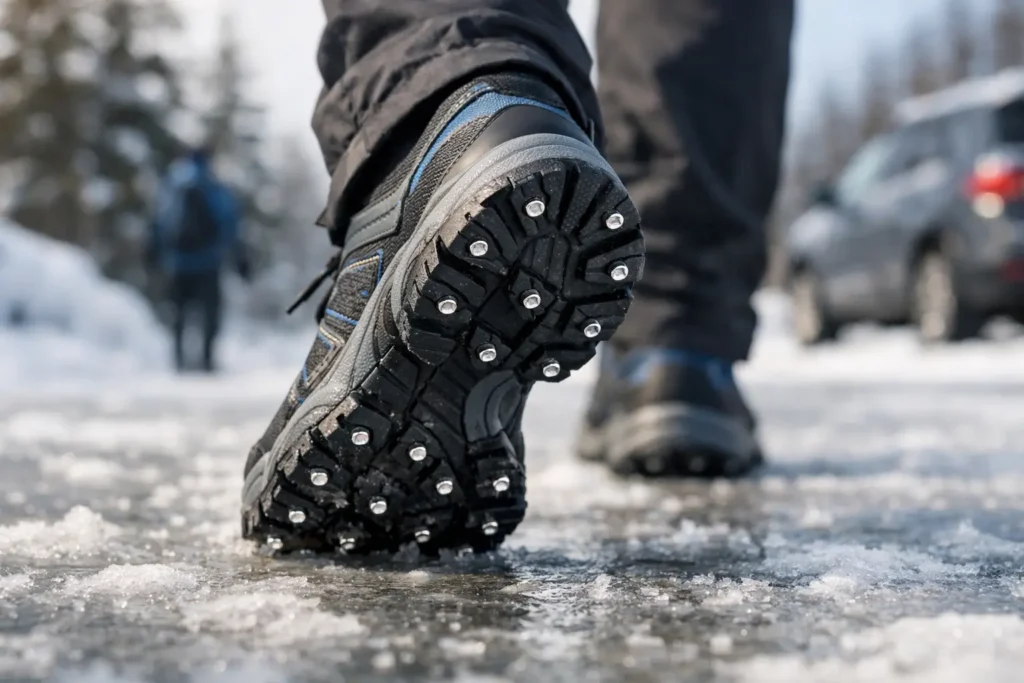
For icy sidewalks, driveways, and packed paths, low-profile metal traction points are often the most practical option. They provide grip where smooth rubber fails while remaining comfortable enough for routine walking. If your day includes moving between a frozen lot, a warehouse entrance, and a vehicle, lightweight direct-to-sole traction can be easier to live with than repeatedly pulling an over-shoe device on and off.
For runners and hikers, the priority is consistent footing with minimal interference. Loose strap-on systems can bounce, twist, or feel clumsy when speed changes. A secure, lightweight system installed in the right areas of the sole can add grip without turning a running shoe or hiking boot into a stiff winter-only tool.
For outdoor work, durability is a major factor. Snow, frozen dirt, wet grass, gravel, and muddy ground can all show up in a single shift. The traction needs to tolerate repeated use, stay secure under load, and avoid creating a cumbersome platform under the foot. A worker carrying tools or materials does not have a free hand to recover from a sudden slide.
For seniors and everyday walkers, ease matters as much as performance. If traction gear is complicated to fit, uncomfortable, or difficult to walk in, it may stay in a closet when conditions turn bad. The best system is one that supports a normal walk and becomes part of the footwear people already trust.
Installation and Placement Make a Real Difference
Installable traction is not random hardware. Where the points sit on the sole affects how the shoe engages with the ground. The heel often needs support for initial contact, while the forefoot needs grip for push-off. Placement should avoid overly thin sole areas and should account for the shoe’s tread pattern, flexibility, and intended use.
Follow the installation guidance for your specific traction system and footwear. Running shoes, work boots, hiking boots, and casual shoes do not all have the same sole thickness or construction. If a shoe is excessively worn, extremely thin-soled, or built with a design that offers little secure material for installation, choose another pair rather than forcing a setup that will not hold properly.
ICESPIKE traction spikes are designed to install directly into compatible footwear soles, giving users a lower-profile alternative to external chains and harnesses. The practical advantage is simple: your footwear keeps feeling like your footwear, but it gains aggressive bite for the conditions that make ordinary soles unreliable.
Know When to Remove or Avoid Traction
Metal traction points are built for outdoor grip, not every indoor surface. Smooth finished floors, tile, hardwood, and certain polished concrete surfaces can be slippery, scratched, or uncomfortable under metal. If your route moves from ice into an office, store, or home, plan for that transition.
Also consider the surface itself. On deep powder, traction points are not a substitute for proper winter boots and sound route choices. On steep ice, they improve grip but do not make a dangerous slope risk-free. Slow down, shorten your stride, keep your center of gravity over your feet, and use handrails or trekking poles when the terrain calls for them.
Habits That Help You Stay Upright
Even the strongest traction system works best with good movement habits. Take shorter steps on ice. Keep your hands free when possible. Avoid rushing downhill, especially when carrying a load. Watch for transition zones near entrances, shaded sidewalks, bridges, and areas where daytime melt refreezes overnight.
Pay attention to changing weather, not just snowfall totals. A light dusting can hide glaze ice. Temperatures hovering around freezing often create the most deceptive conditions because melting and refreezing happen repeatedly. The route that felt secure at noon may be slick after sunset.
Maintenance is straightforward but worth doing. Clear packed snow and mud from the outsole after use. Inspect installed traction regularly for wear, damage, or looseness. Replace worn footwear before it becomes a safety problem. Reliable winter footing is built through small checks long before the next icy morning.
The ground will not always give you a warning. Build winter traction into the footwear and habits you rely on, and you can spend less energy fearing the next step and more energy getting where you need to go.