
Our Website if down for construction for awhile. Not a good time of year but needed to be done. If you need product or help in the mean time please call us at 877-677-3567 Thanks for you understanding.
A frozen loading dock at 6 a.m. does not care how tough your work boots look. Neither does a muddy hillside, a slick roof edge, or a trail packed hard by weeks of foot traffic. The best boot grip solutions for outdoor work give you dependable bite where ordinary rubber soles start to skate, slide, and wear you down.
For anyone who works outside, traction is not a minor comfort feature. It is part of the job. A bad step can mean a strained back, a twisted knee, dropped equipment, lost time, or a hard fall. The right grip setup helps you move with more confidence while keeping your natural stride and the workday moving.
Why Work-Boot Treads Are Not Always Enough
Most work boots have lugged outsoles designed for general traction. They are effective on dry dirt, loose gravel, and moderate terrain. But deep lugs have limits. They cannot consistently bite into glare ice, compacted snow, wet roots, oily surfaces, or hard-packed mud with a frozen top layer.
Cold makes the problem worse. Rubber compounds can stiffen in low temperatures, reducing their ability to conform to slippery ground. Snow can also pack between lugs, turning an aggressive-looking outsole into a smooth platform. When your route includes changing conditions – pavement, ice, mud, gravel, snow, and indoor floors – relying on tread alone can leave you reacting to the ground instead of controlling it.
That is why purpose-built traction matters. The goal is not simply more material under your boot. It is a grip system that creates reliable contact with the surface without making your boots heavy, awkward, or exhausting to wear.
The Best Boot Grip Solutions for Outdoor Work
There is no single traction option for every worker. The right choice depends on the surfaces you cross, how often conditions change, and whether you need to remove the traction before walking indoors. Still, the main options are clear.
Aggressive lug work boots
A quality work boot with deep, self-cleaning lugs is the baseline for outdoor jobs. It is often all you need for loose soil, gravel, dry trails, and shallow mud. Look for a flexible outsole that sheds debris rather than collecting it, especially if you walk through wet clay or slushy snow.
The trade-off is simple: lugs grip uneven ground but do not penetrate ice. If your job includes frozen sidewalks, shady job sites, icy equipment yards, or hard snowpack, lugged boots alone are not enough.
Strap-on cleats and over-boot traction devices
Traditional strap-on cleats place metal coils, chains, or spikes beneath a rubber harness that stretches over the boot. They can provide useful traction on ice and are easy to share between footwear. For occasional use, that flexibility is their biggest advantage.
But workers often find the drawbacks before the shift is over. Harnesses can shift, stretch, collect snow, and feel bulky underfoot. Chains and coils may alter your gait, create pressure points, or make walking on hard surfaces feel unstable. They also need to be taken off before entering many indoor spaces, which means more stopping, more storage, and more chances to leave them behind.
These devices make sense for someone who encounters ice only now and then and needs a removable solution. They are less appealing when traction is needed every day and every step matters.
Screw-in traction spikes
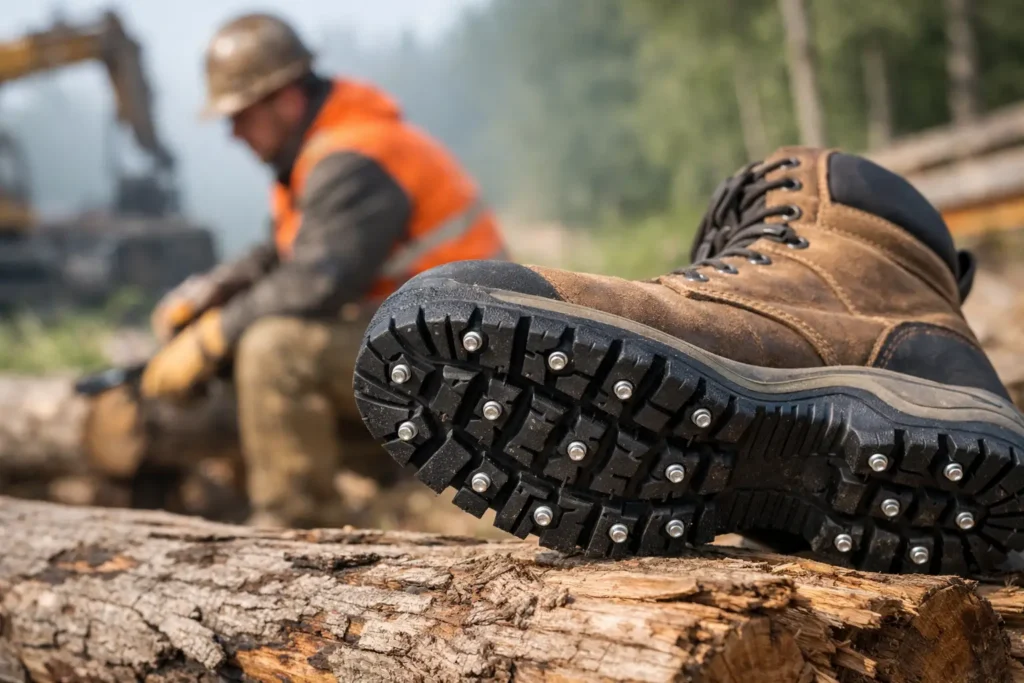
Screw-in spikes attach directly to the sole of compatible footwear, creating a lower-profile grip system than an over-boot harness. Installed in the right locations, they add sharp, durable contact points where a boot naturally loads during walking, climbing, and descending.
This approach is especially effective for outdoor workers who move across mixed terrain all day. You can step from snow to gravel, climb a muddy slope, walk a frozen path, and keep going without wrestling with a loose outer device. Because the traction is integrated with the sole, your boot can feel more like your boot – not a boot wrapped in extra gear.
ICESPIKE screw-in traction systems are built around that advantage: strong, direct-to-sole grip without the bulk and gait disruption commonly associated with strap-on devices. They are a practical fit for work boots, hiking boots, and other footwear with enough sole depth to support installation.
Placement matters. Spikes should be installed in substantial rubber areas, not through thin sole sections, air pockets, or worn-down tread. A balanced pattern under the heel and forefoot helps support braking, push-off, and stability. Follow the product-specific installation guidance and inspect the soles before committing.
Dedicated winter work boots
For workers exposed to sustained snow, freezing rain, and low temperatures, a purpose-built winter work boot can be a smart investment. These boots may offer insulation, waterproof construction, cold-weather rubber, and more aggressive outsole patterns than standard work footwear.
They still benefit from additional traction when ice is frequent. Insulation keeps feet warm. Waterproofing keeps them dry. Neither automatically gives you the mechanical bite needed on slick ice. Think of a winter boot as the foundation, then add a traction solution if your environment demands it.
Match Your Grip to the Surface You Actually Work On
The fastest way to choose poorly is to buy for one condition while ignoring the rest of your route. An arborist, delivery driver, ranch hand, utility worker, contractor, and grounds crew member may all work outdoors, but they do not need identical traction.
For ice and hard-packed snow, metal spikes provide the strongest bite. They penetrate the surface instead of relying on rubber friction alone. This is the condition where direct-to-sole spikes earn their place, particularly on shaded walkways, frozen lots, dock ramps, and winter trails.
For mud, wet grass, and loose soil, deep lugs do most of the work. Spikes can add confidence on slick roots, frozen mud, and steep transitions, but they cannot replace a sole designed to shed mud. If your boots are constantly clogging, start with the outsole design before adding anything else.
For gravel and rocky ground, the priority is stable footing and a boot that does not roll under load. A low-profile spike system can offer extra bite on loose slopes, while oversized chain-style devices may feel awkward on uneven rock.
For mixed indoor and outdoor work, consider how often you cross smooth concrete, tile, finished flooring, ladders, or vehicle pedals. Any metal traction device can be noisy, uncomfortable, or inappropriate on certain indoor surfaces. The best setup is the one that gives you serious outdoor grip while fitting the real rhythm of your shift.
What to Look for Before You Buy
Start with fit and compatibility. Your boots need a sole thick enough for any screw-in system, and the tread should have solid contact zones rather than thin, hollow sections. Worn-out boots are not a good platform for a traction upgrade. Replace footwear that has lost its structure, cushioning, or outsole integrity.
Next, consider profile. High-bulk traction can feel powerful in the store but become a nuisance after several miles, dozens of ladder climbs, or a full day on your feet. Lower-profile traction generally preserves a more natural gait and reduces the feeling that you are walking on hardware.
Durability should be judged by use, not just by a package claim. Workers who walk on abrasive pavement, crushed stone, and concrete will wear traction faster than someone walking on snow-covered paths. Check your spikes, cleats, fasteners, and sole condition regularly. Traction gear is safety equipment, and safety equipment deserves inspection.
Finally, do not overlook fatigue. Slipping causes your body to tense up. You shorten your stride, overcorrect, and burn energy trying to stay upright. Secure footing lets you walk more normally, carry loads with greater control, and focus on the work instead of scanning every patch of ground for trouble.
Use Traction as Part of a Safer Work System
Boot grip is powerful, but it is not a license to rush across hazardous ground. Slow down on transitions, especially where snow covers ice or mud freezes overnight. Keep boot soles clear of packed snow and debris. Use handrails, maintain three points of contact on equipment, and choose a route with better footing when one is available.
Pay attention to changing weather as well. A surface that was safe at noon may turn dangerous after sunset. Refreezing meltwater, wind-blown snow, and shaded areas can create slick spots long after the rest of a site appears clear.
The right boot grip solution should make outdoor work feel more controlled, not more complicated. Choose traction that fits your terrain, your boots, and your daily movement. When the ground turns unpredictable, secure footing gives you one less thing to fight.