
ICESPIKE® Is under construction for the next 6 weeks. So orders can be taken by phone 877-677-3567 toll free for the next 6 weeks. Please call and we will fill your order directly through the office instead of the website. The new website will be a big surprise to most of you. Thanks for you understanding and support.
A loading dock glazed by overnight freezing rain. A jobsite access road churned into mud. A ladder base sitting on frozen gravel. For outdoor crews, a slip is rarely just an inconvenience. It can mean a lost shift, a serious injury, damaged equipment, or a chain reaction that puts the whole crew behind. This outdoor worker slip prevention guide focuses on the decisions that create secure footing before the first step is taken.
The goal is not to move cautiously all day. It is to work with confidence on winter and mixed terrain without letting bulky gear, poor route planning, or worn-out boots compromise your stride. Conditions change fast outdoors. Your traction strategy has to keep up.
Start With the Surface, Not the Schedule
The same worksite can demand completely different footing from one hour to the next. Morning shade may preserve black ice long after nearby pavement looks dry. Meltwater can refreeze at doorway thresholds. Loose gravel gets unstable when it sits over hard-packed snow. Mud may hide ruts, roots, scrap material, or uneven ground.
Before work begins, walk the routes your crew will actually use: parking areas, entrances, staging zones, pathways between equipment, ladder locations, truck beds, and waste collection points. Look for the transition zones. These are the places where dry concrete becomes ice, where packed snow becomes bare pavement, or where soil turns to slick clay. Most preventable slips happen when someone assumes the next surface will grip like the last one.
Conditions also determine the right pace. Fast movement is sometimes necessary, but rushing across an untreated frozen surface is not efficiency. It is risk disguised as urgency. Build a few extra minutes into tasks that require carrying tools, moving materials, or walking through changing terrain. A worker with both hands occupied has fewer options when footing disappears.
Choose Work Boots for the Conditions You Face
A quality work boot is the foundation of slip prevention, but no outsole can deliver reliable grip on every surface. Deep lugs can bite into loose dirt, snow, and mud, yet those same lugs may not hold on smooth glare ice. Softer rubber can improve grip in cold temperatures, but it still has limits when the surface is polished by repeated foot traffic or melting and refreezing.
Fit matters as much as tread. A boot that is too loose allows the foot to move inside the shoe, reducing control and increasing fatigue. A boot that is too tight can numb your feet in cold weather, making balance corrections slower and less precise. Wear socks suited to the temperature, lace boots securely, and replace footwear when the tread is rounded, cracked, or packed with debris.
Pay attention to how your footwear handles the whole shift, not just the first walk from the truck. Wet boots get heavier. Frozen mud can fill lugs. Salt, oil, and slush can coat the sole. Inspect and clear your outsoles during breaks. Ten seconds spent knocking out packed snow or mud can restore the tread pattern your boots were designed to use.
Add Dedicated Traction When Ice Is the Real Hazard
When crews regularly work on ice, compacted snow, wet roots, steep ground, or loose gravel, dedicated traction is not an optional winter accessory. It is jobsite equipment. The trade-off is choosing traction that matches how and where you move.
Traditional strap-on cleats can provide a temporary solution, but they often shift, collect debris, and change the way a boot flexes. Chains and bulky harnesses can feel awkward when walking between slick terrain and hard indoor surfaces. They are also easy to leave in the truck when conditions turn unexpectedly.
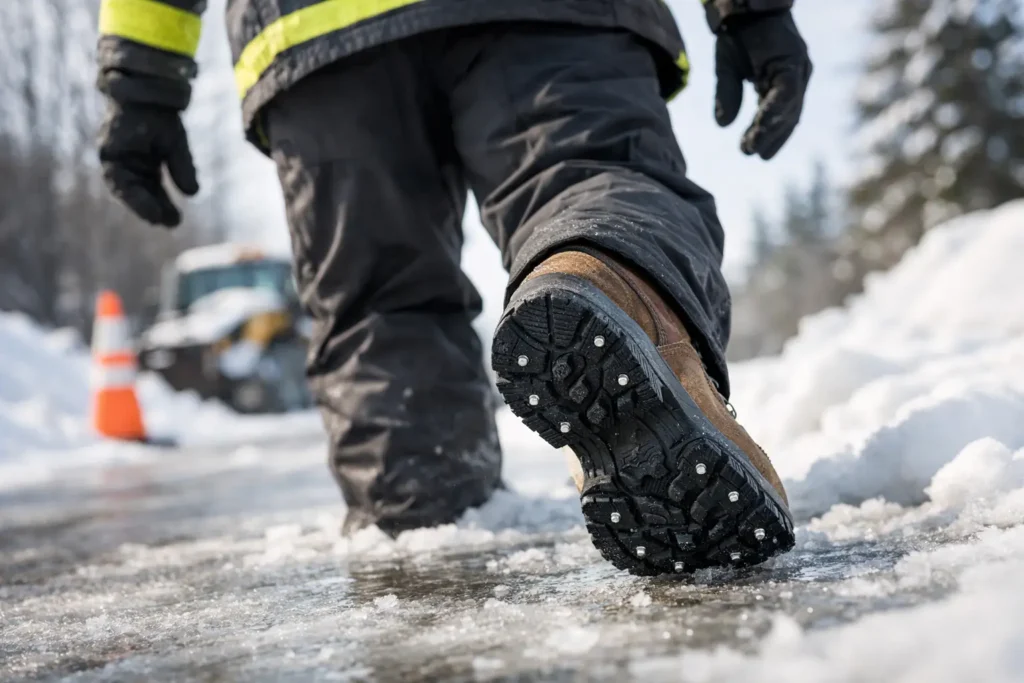
Direct-to-sole traction gives workers a more integrated option. Installable spikes such as ICESPIKE are designed to add grip directly to suitable footwear without the bulky over-shoe feel common with strap-on systems. For workers who move across changing terrain all day, that lower-profile connection can help preserve a more natural gait while delivering serious bite where the ground gives none.
No traction device is a reason to ignore hazards. Metal spikes can be slippery on smooth indoor floors, finished surfaces, and some metal grates. Know when to remove or avoid traction, and never assume that extra grip makes ladders, rooftops, or elevated platforms risk-free.
Build Secure Footing Into the Work Plan
Slip prevention works best when it is treated as a work process rather than a personal choice left to each employee. Clear walking paths before the crew arrives. Remove snow and standing water where possible. Apply appropriate de-icing materials, especially at entries, loading areas, stairs, ramps, and high-traffic routes.
Then keep those routes usable. A path cleared at 7 a.m. may be slick again by 10 a.m. after blowing snow, runoff, or a temperature swing. Assign checks during the shift, particularly after weather changes, deliveries, and equipment movement. If a surface cannot be made safe immediately, mark it clearly and direct workers around it.
Equipment placement matters too. Hoses, extension cords, straps, pallet wrap, hand tools, and scrap materials can become trip hazards that are far more dangerous on slippery ground. Keep travel lanes clean and give crews enough room to carry loads without stepping sideways around clutter.
Carry Loads Without Sacrificing Balance
Heavy or oversized loads change the equation. They block vision, pull the body forward, and make it harder to use handrails or catch yourself. On snow and ice, reduce load size when practical. Multiple controlled trips are often safer and faster than one unstable trip followed by an injury report.
Use carts, dollies, team lifts, and equipment designed for the load. Keep the path clear before the load starts moving, not halfway through. When hand-carrying is necessary, keep the load close to your body, take shorter steps, and avoid sudden turns. If you cannot see the surface ahead of your boots, you need a different carrying method or a spotter.
Move Differently on Slick Terrain
Good traction helps, but body position still decides whether a small slide becomes a fall. On slick surfaces, shorten your stride and place your whole foot down rather than striking hard with the heel. Keep your center of gravity over your feet. Bend slightly at the knees and let your arms stay free for balance when you are not carrying materials.
Avoid walking with your hands buried in jacket pockets. Do not jump from truck beds, curbs, or equipment onto surfaces you have not tested. Step down deliberately. The first foot should test the ground, and the second should follow only after you know it will hold.
Stairs, ramps, and slopes deserve their own level of caution. Use handrails. Face the direction of travel. Take one step at a time when conditions are questionable. On a slope, move across only when the ground and traction allow it. Sometimes the safer call is to take a longer route with flatter footing.
Train for Reporting, Not Toughing It Out
Outdoor workers are used to difficult conditions. That toughness is valuable, but it can become a problem when crews stop reporting hazards because they see ice, mud, and uneven terrain as part of the job. A hidden ice patch, leaking downspout, broken light, or worn stair tread needs to be reported early, before somebody gets hurt.
Make reporting simple and fast. Workers should know who to tell, what details matter, and what temporary action to take. A clear warning, a blocked-off route, or a quick cleanup can prevent the next person from walking into the same hazard. Supervisors should respond visibly. When crews see problems corrected, they are more likely to flag the next one.
Near misses deserve attention as well. If someone slips but recovers, the surface has already shown its weakness. Treat that moment as useful information, not a non-event. Check the area, assess footwear and traction needs, and correct the underlying issue before the next pass.
Check Your Gear Before the Weather Turns
Waiting for the first storm is how crews end up working with worn boot soles, missing traction gear, empty salt bins, and no clear plan for hazardous routes. Inspect footwear before winter or wet-season work ramps up. Replace what is worn. Confirm that traction systems fit the boots workers actually wear and that everyone knows how to use them safely.
The strongest slip prevention plan is practical enough to use on a dark morning, in freezing rain, with tools in hand and work waiting. Secure footing comes from a clean route, the right boot, purpose-built traction, and a crew that refuses to gamble on the ground beneath them. When the surface gets ugly, make every step earned.