
ICESPIKE® Is under construction for the next 6 weeks. So orders can be taken on the phone 877-677-3567 toll free for the next 6 weeks. Please call and we will fill your order directly through the office instead of the website. The new website will be a big surprise to most of you. Thanks for you understanding and support.
A thin glaze of black ice can turn a familiar sidewalk into a hard fall. A muddy jobsite can pull your feet out from under you. Slick roots, packed snow, wet rocks, and loose gravel create the same problem: the sole under your foot is not getting enough bite.
Knowing how to improve shoe grip starts with looking beyond the shoe itself. Tread design, rubber condition, surface type, and the traction system you choose all matter. The goal is not to make every shoe feel like a heavy mountaineering boot. It is to build dependable footing while keeping your natural stride, comfort, and freedom of movement.
Start With the Sole You Already Have
Before adding traction, inspect the bottom of your shoes or boots. Mud, snow, packed gravel, and small stones can fill the lugs and flatten the tread pattern. When that happens, even a quality outdoor sole loses its ability to channel water, grip uneven ground, and make contact where it counts.
Clean the outsole with a stiff brush and let it dry completely. Check for rounded-down lugs, smooth patches under the heel and forefoot, cracking rubber, or a sole that has started separating from the shoe. Worn tread is not just a cosmetic problem. It reduces the edges that catch loose terrain and the channels that move water away on wet ground.
A clean sole can restore some traction, but it cannot replace missing tread. If the rubber is badly worn, replacing the footwear may be the safest move. For a shoe that is still structurally sound but needs more bite, adding purpose-built traction is often the better answer.
Match Grip to the Surface, Not the Season
There is no single grip solution for every surface. The traction that feels aggressive and secure on glare ice may be unnecessary on dry pavement. A deep hiking tread can perform well in soft dirt yet skate across hard-packed snow. The right setup depends on where you walk, work, run, or hike most often.
On wet sidewalks and smooth indoor-outdoor surfaces, clean rubber and a flexible sole may be enough. On mud, loose soil, and gravel, pronounced lugs help the shoe dig in and resist sliding. On slick rock and wet roots, rubber compound and controlled foot placement matter as much as tread depth.
Ice is different. Ice does not give a rubber sole much to grab. Once conditions include hard-packed snow, refrozen slush, black ice, or frozen trails, you need sharp points that penetrate the surface. This is where basic shoe tread reaches its limit.
How to Improve Shoe Grip on Ice and Packed Snow
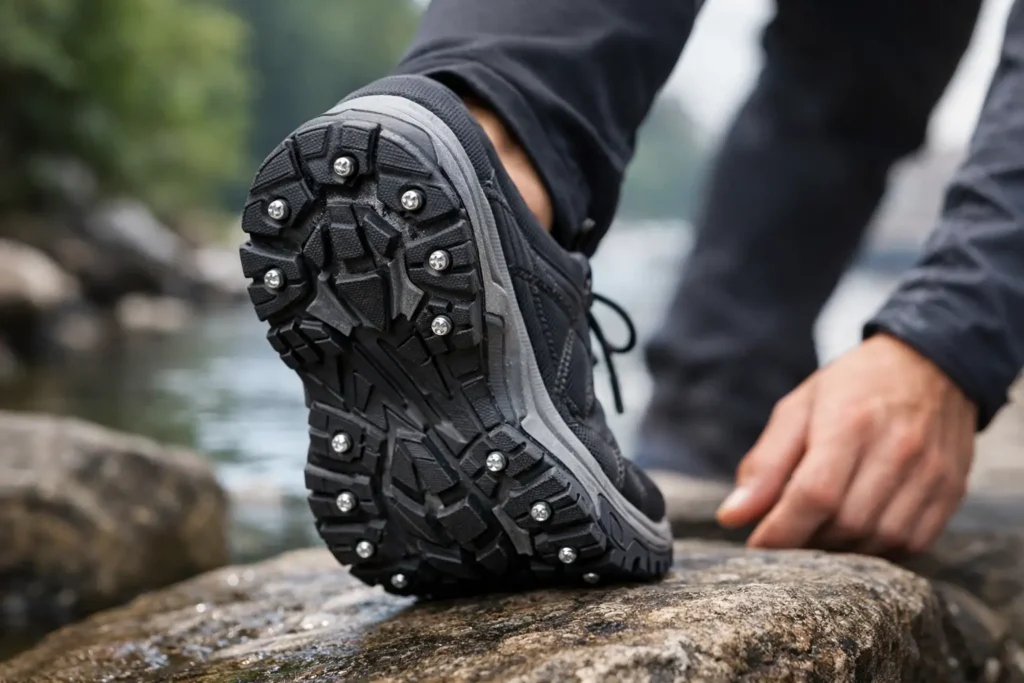
For icy conditions, traction needs to bite through the hard top layer rather than simply press against it. Installable spikes or cleats create contact points that can penetrate ice and help stabilize each step. They are especially valuable under the heel and forefoot, where slipping commonly starts during heel strike and push-off.
Placement matters. A spike system should be positioned to support the parts of the sole that carry load while walking or running. Too little coverage can leave you unstable during transitions. Too much bulky hardware can make a shoe feel awkward, change your gait, and create fatigue over longer distances.
That trade-off is why many outdoor users move away from oversized strap-on traction devices. Chains, coils, and harnesses can provide useful grip, but they may shift, collect snow, feel heavy, or interfere with the flex of the shoe. A direct-to-sole option, such as ICESPIKE, gives footwear a more integrated traction upgrade. The aim is simple: strong bite where you need it without making every step feel like you are wearing a cage around your shoe.
Keep Your Natural Gait in the Equation
More traction is not automatically better if it changes how you move. A system that adds excessive height or stiffness can alter ankle position, reduce sole flex, and make you work harder over distance. That matters for runners covering winter miles, workers moving across a jobsite all day, hikers carrying weight, and older adults who need steady, predictable footing.
Look for traction that stays close to the sole and allows the shoe to flex naturally. Lightweight components reduce the sense of drag and can help prevent the tiring, clunky stride associated with some over-shoe devices. A secure attachment also matters. If traction shifts underfoot, it can be as distracting as a loose bootlace and far more dangerous on uneven terrain.
For mixed surfaces, removable spikes offer another advantage. You can add bite for the frozen driveway, trail, fishing access, or icy work area, then remove it when conditions change. That makes traction a practical tool instead of a seasonal obstacle.
Improve Your Technique on Slick Ground
Even the best grip performs better with smart movement. When the surface is questionable, shorten your stride and keep your feet under your center of gravity. A long step increases the force that can send your foot sliding forward. A shorter, flatter step gives your traction more opportunity to engage.
Avoid sudden pivots, hard stops, and quick direction changes. On ice, turn your whole body rather than twisting aggressively through one planted foot. When walking downhill, slow down before the slope gets steep. When climbing, place your foot deliberately and let the traction points engage before shifting your full weight.
For runners, the adjustment is similar but more controlled. Reduce pace, increase cadence slightly, and avoid overstriding. Choose routes with consistent footing when possible. A clear patch of pavement can be more dangerous than it looks if it is bordered by refrozen runoff.
Do Not Rely on Improvised Fixes
People often try to improve shoe grip with temporary home fixes: screws driven into soles, glued-on materials, roughened rubber, or random hardware. Some of these ideas can create a little traction for a short time. They can also damage the sole, create uneven pressure points, pull loose, or leave sharp hardware exposed.
Improvised screw shoes are particularly risky when screw length, spacing, and placement are wrong. A point that is too long may affect comfort or damage the shoe from the inside. A point that is too short may not penetrate ice. Uneven placement can make the shoe feel unstable and can wear unpredictably.
Purpose-designed traction is built around the realities of foot movement, sole thickness, and repeated contact with hard ground. It is the difference between hoping a quick fix holds and stepping out with equipment designed to take punishment.
Maintain Traction So It Performs When It Matters
Grip is not a one-time upgrade. After trips through ice, mud, salt, sand, or gravel, inspect the sole and traction points. Remove packed debris, rinse away road salt, and dry the footwear before storing it. Salt and moisture can shorten the life of metal components and accelerate wear on leather, fabric, and adhesives.
Check that installed spikes remain secure and that none are excessively worn, bent, or missing. Replace damaged components before the next storm or trail day, not after a slip reminds you they were overdue. If you use the same boots for work and weekend recreation, make inspection part of your regular gear routine.
Also remember that traction has limits. Metal points can be slippery on polished indoor floors, tile, and some smooth stone. Use care when transitioning indoors, and remove or cover traction when the surface calls for it. Strong grip is about choosing the right tool for the ground beneath you.
Build Footing You Can Trust
The best way to improve shoe grip is to combine a sound shoe, clean tread, surface-specific traction, and deliberate movement. That combination protects more than your balance. It helps you keep working, running, hiking, and getting outside when poor footing would otherwise force you to stay in.
Do not wait for the first hard fall to take traction seriously. Set up your footwear before the driveway freezes, the trail turns slick, or the jobsite becomes a mess of snow and mud. Secure footing lets you move with confidence, and confidence is what keeps a tough day outdoors from becoming an avoidable injury.