
ICESPIKE Website is down for REPAIRS AND NEW CONTENT, If you need information or to place and order please call our toll free number: 877-677-3567 Thanks!
A frozen sidewalk at sunrise can turn into wet gravel by noon, then a muddy trail by the time you head home. That is exactly where shoe spikes for mixed terrain earn their place. You do not need traction that works only on perfect ice. You need grip that stays dependable when the ground changes under every step.
For runners, hikers, outdoor workers, anglers, and anyone walking through a real winter, mixed terrain is the rule. Ice is rarely the only problem. Slush packs into tread. Gravel rolls. Wet roots slide. Hard snow hides ruts. The right traction system gives you secure footing without turning your shoes into heavy, awkward gear.
Why Mixed Terrain Demands a Different Kind of Grip
A smooth sheet of ice has one clear answer: bite into it. Mixed terrain is harder because your footwear must move from hard, slick surfaces to soft, uneven ground without fighting your natural stride.
Traditional over-shoe cleats can provide aggressive ice traction, but they often come with a trade-off. Chains, coils, and bulky harnesses can shift underfoot, collect mud, change how your shoe flexes, and create a clumsy feel when you step onto pavement, dirt, or packed snow. That matters when you are covering distance or working on your feet for hours.
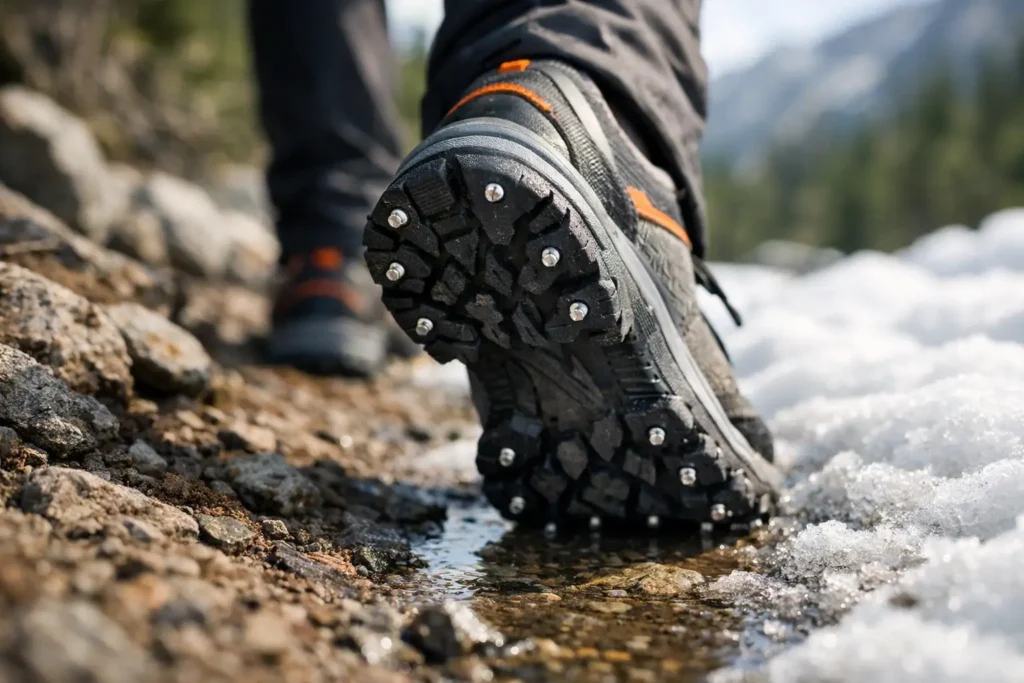
Integrated, screw-in spikes approach the problem differently. Rather than wrapping traction around the outside of the shoe, the spikes install directly into the outsole. The result is a lower-profile connection to the ground. Your shoe still feels like your shoe, but it has the bite to handle slick conditions when they show up.
That difference is not cosmetic. A stable, lightweight traction setup can reduce the fatigue that comes from constantly adjusting your stride for uncertain footing. It helps you walk, run, climb, and work with more confidence when conditions refuse to stay consistent.
Shoe Spikes for Mixed Terrain: What Matters Most
The best setup depends on where you go, how fast you move, and how much time you spend on each surface. Still, a few traits separate practical mixed-terrain traction from gear that only works in narrow conditions.
Direct-to-sole stability
Traction should move with the sole, not slide around it. If a device shifts every time your heel strikes or your forefoot flexes, it becomes one more thing to manage. Direct installation keeps the spike where it belongs and helps preserve a more natural gait.
This is especially valuable for trail runners and hikers moving over sidehills, uneven snow, roots, and loose rock. It also matters for workers carrying loads, where a small slip can become a serious injury. Secure attachment is not a luxury. It is a foundation for reliable footing.
Low-profile performance
More hardware does not always mean better traction. A bulky system can feel heavy, interfere with flex, and make normal walking unnecessarily awkward. Low-profile spikes provide a focused point of contact where you need it while allowing the shoe’s original tread to continue doing its job on dirt, snow, and rough ground.
That balance is what makes a spike system useful beyond a single icy driveway. It can support the shoe instead of overpowering it.
Tough materials and a purposeful bite
Mixed terrain punishes weak gear. Spikes encounter ice, rock, frozen soil, gravel, and hidden debris. They need to resist wear while retaining the ability to penetrate slick surfaces.
The point is not to create a boot that feels like a mountaineering crampon. Everyday runners, walkers, and workers need practical traction that is light enough to live with and tough enough to trust. A hardened, well-designed spike delivers grip without demanding a separate pair of specialty footwear.
Placement that matches how you move
Your heel and forefoot do different jobs. The heel helps manage braking and initial contact. The forefoot drives push-off, climbing, and direction changes. A thoughtful spike pattern supports both phases of movement rather than loading all traction into one small area.
For walking and work boots, balanced coverage can improve stability during a normal heel-to-toe stride. For running shoes, placement should preserve flexibility while providing bite at the points that contact slippery ground most often. The best configuration is not necessarily the maximum number of spikes. It is the one that matches your shoe, activity, and terrain.
Choose Your Footwear Before You Choose Your Spikes
Not every sole is equally suited to an installable traction system. Look for shoes or boots with enough outsole thickness to accept a spike securely. Trail shoes, hiking boots, work boots, and many sturdy running shoes are strong candidates. Thin, minimalist soles, heavily worn-out tread, and hollow or foam-dominant outsoles may not offer the same holding power.
The activity matters, too. A winter walker may prioritize heel security on frozen sidewalks and packed paths. A trail runner needs grip that will not interrupt cadence when the route shifts from snow to dirt. A utility worker may need dependable footing on icy lots, muddy job sites, and gravel access roads in the same shift.
Consider how much bare pavement you cross. Spikes are designed to provide traction in slippery and unstable conditions, not to make long stretches of clean indoor flooring or polished concrete more comfortable. If your route includes frequent transitions, a removable, direct-install system gives you more control. Take spikes out when conditions no longer call for them, then reinstall them when the weather turns.
Installation Is Part of Performance
A traction system is only as dependable as its installation. Take the time to inspect the sole and choose locations with solid rubber, clear of air pockets, thin edges, or overly flexible sections. Clean the outsole first so you can see the tread pattern and avoid placing spikes where they will compromise the shoe’s structure.
Install spikes evenly from left to right so both shoes feel balanced. Keep them in the durable rubber portions of the outsole and avoid the upper, midsole foam, or shallow lugs that cannot support a secure hold. Once installed, walk on a safe, controlled surface to get used to the new contact points before taking off on a run or heading into demanding conditions.
For people who spend weeks outside each winter, it is also smart to inspect the spikes regularly. Check for loosening, wear, or damage after hard use on rock and frozen ground. Traction gear is safety gear. A quick check before a shift, hike, or run is a simple habit with real value.
Where This Traction Setup Shines
Mixed-terrain spikes are built for the routes and workdays that refuse to fit a clean category. They are useful when a neighborhood walk includes icy sidewalks, dirty snowbanks, and wet grass. They make sense on forest trails where shaded ice alternates with mud and exposed roots. They can give outdoor crews more confidence moving from a plowed lot to a slippery job site.
They also solve a common problem for winter runners: stopping to strap on or remove bulky traction devices when conditions change. A direct-to-sole system stays close to the shoe and keeps the transition simple. ICESPIKE was built around that kind of practical, integrated traction – serious grip without the loose, overbuilt feel of strap-on gear.
There are limits, and knowing them makes you safer. Deep alpine ice, steep technical climbing, and specialized mountaineering objectives may require purpose-built equipment. Shoe spikes are not a substitute for crampons when the terrain demands a different class of protection. But for everyday winter travel, trail use, outdoor work, and changing ground conditions, they offer a powerful middle ground: more bite than standard tread, far less bulk than heavy traction systems.
Confidence Changes How You Move
Slippery ground forces hesitation. You shorten your stride, tense your shoulders, watch every step, and burn energy trying not to fall. Good traction gives some of that movement back. It lets you focus on the trail, the job, the dog walk, or the miles ahead instead of the next patch of hidden ice.
Choose shoe spikes for mixed terrain with the same seriousness you bring to good tires, a reliable headlamp, or weather-ready layers. The ground will keep changing. Your footing does not have to.