
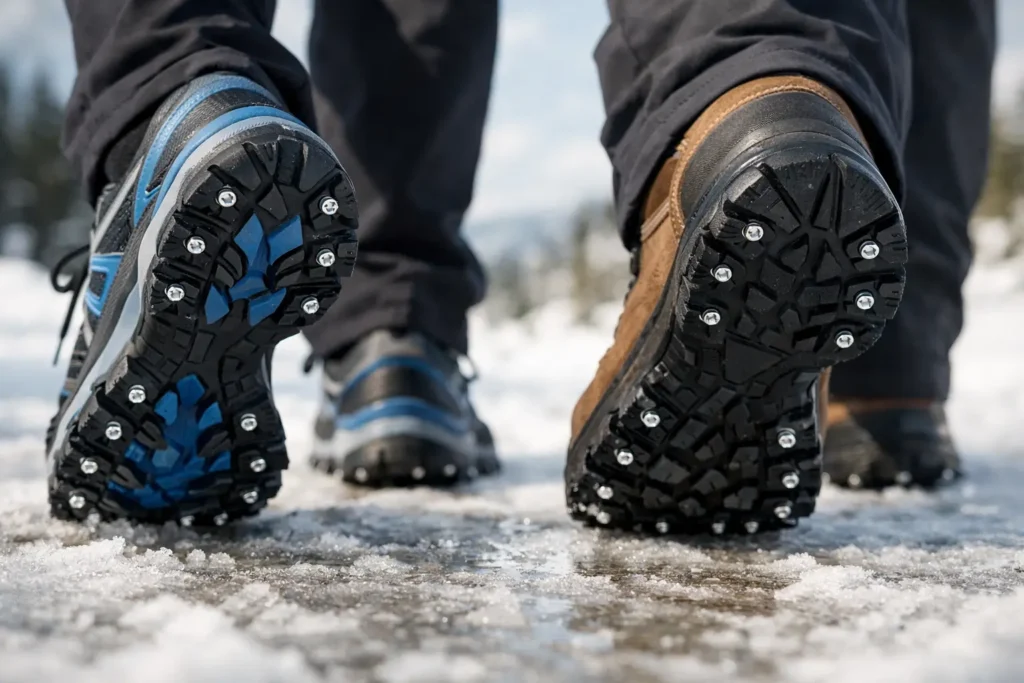
A glazed driveway can turn a routine walk to the mailbox into the hardest part of the day. A frozen trail can punish a runner who normally moves with total confidence. The right guide to ice cleats starts with one fact: winter footing is not a minor comfort issue. It is a safety and performance issue.
Ice cleats give shoes and boots a biting edge when rubber alone cannot hold slick ice, packed snow, frozen mud, or unstable ground. But not every traction system works the same way. The best choice depends on your footwear, your terrain, and whether you need occasional backup traction or dependable grip built into the sole.
What Ice Cleats Do and Why They Matter
Ice cleats create concentrated points of contact that penetrate or catch on slippery surfaces. Instead of relying only on the flat rubber lugs of a boot or running shoe, the cleat presses into the surface and resists the slide that causes a fall.
That difference matters most on hard, clear ice. Snow can sometimes provide texture for a lugged sole to grip, but smooth ice offers very little. A shoe that feels stable on a snow-covered sidewalk may become dangerous the moment the snow is compressed, melted, and refrozen.
Good traction also reduces the cautious, stiff-legged walking style people adopt when they do not trust the ground. When every step feels uncertain, you shorten your stride, tense your hips, and fatigue faster. Secure footing helps preserve a more natural gait, whether you are walking the dog, carrying tools, hiking a ridge, or covering winter miles on foot.
Types of Ice Cleats: Choose for How You Move
Most ice traction falls into three categories: strap-on devices, built-in winter outsoles, and installable screw-in spikes. Each has a place, but each comes with trade-offs.
Strap-On Cleats
Strap-on cleats stretch over the outside of a shoe or boot. Many use chains, coils, plates, or small spikes under the foot. They are widely available and easy to put on when conditions change suddenly.
Their weakness is that they add an extra layer between your foot and the ground. They can shift, collect snow, feel bulky underfoot, or alter how your shoe flexes. Harnesses can also be inconvenient when your route moves between ice, dry pavement, indoor floors, and vehicle pedals. For short, occasional use, they can be useful. For people who spend serious time outdoors, the repeated on-and-off routine is often the first thing to wear out.
Winter Boots With Aggressive Soles
A quality winter boot with deep rubber lugs is a strong choice for loose snow, slush, mud, and uneven ground. The boot supplies insulation, support, and weather protection in one package.
Still, deep lugs are not the same as ice traction. Rubber can harden in severe cold, and even an aggressive tread can slide on smooth, polished ice. A lugged boot works well as a foundation, but truly slick conditions may call for metal points that can engage the surface.
Installable Screw-In Spikes
Screw-in spikes attach directly to the sole of compatible footwear. This integrated approach keeps traction close to the shoe instead of hanging from an outer harness. The result is a lighter, more natural feel with less bulk around the foot.
Installable systems work especially well for runners, hikers, workers, anglers, and anyone who wants traction available without carrying a separate device. ICESPIKE uses a direct-to-sole design built for powerful grip across ice, snow, mud, gravel, and slick roots. The spikes can be removed when conditions change, making the same footwear more capable across seasons.
The key requirement is a suitable sole. You need enough rubber depth and a stable area for the spike to seat securely. Thin fashion soles, heavily worn-out treads, and hard leather dress soles are generally poor candidates.
How to Choose Ice Cleats for Your Footwear and Terrain
Start with the ground you actually cover, not the worst storm you can imagine. A person walking from a parking lot to an office needs a different setup than a trail runner moving over frozen dirt, ice, gravel, and exposed rock in the same outing.
For daily walking, look for low-profile traction that feels stable and does not make your footwear awkward. If you are buying for an older adult, focus on secure placement, ease of use, and footwear they already wear comfortably. A traction device is only useful if it is worn consistently.
For running, keep weight and gait high on the list. Bulky underfoot hardware can make a stride feel clumsy, particularly over mixed terrain. Low-profile, direct-to-sole spikes can provide grip while allowing the shoe to flex and move as intended. Placement matters because runners need traction through both the forefoot push-off and the heel strike.
For outdoor work, durability is often the deciding factor. Job sites, driveways, loading areas, farms, and utility routes may combine ice with mud, gravel, and rough concrete. Choose hardware designed to withstand repeated contact with demanding surfaces. Also consider whether you need to transition into buildings, vehicles, or finished floors throughout the day.
For hiking, hunting, and fishing, think about terrain changes. Frozen leaves, wet roots, stream banks, and compacted snow can be just as hazardous as a sheet of driveway ice. Traction that stays with your boot is often more practical than stopping repeatedly to fit and remove an overshoe device.
Installing Screw-In Ice Cleats Correctly
Direct-to-sole traction is only as reliable as its installation. Before adding spikes, inspect the outsole. The rubber should be in good condition with enough thickness to hold the hardware. Clean away mud, salt, and small stones so you can see the tread pattern clearly.
Choose placement on solid rubber sections rather than soft foam, hollow lugs, or areas where the sole is already cracking. Spread the spikes across the areas that contact the ground instead of clustering them in one spot. The heel needs stability for walking, while the forefoot needs grip for pushing off.
Install each spike straight and snug. Do not force a spike into a sole that is too thin or damaged, and do not over-tighten to the point that you compromise the rubber. Follow the specific installation instructions supplied with your traction system, then check every spike before the first outing.
After a few uses, inspect the placement again. If a spike has loosened, remove it, assess the sole, and reinstall or replace it according to the product instructions. This small maintenance habit protects the performance of the system and gives you confidence when conditions turn ugly.
Using Ice Cleats Without Creating New Problems
Ice cleats are built for slippery outdoor surfaces, not every surface you encounter. Metal points can damage hardwood, tile, finished floors, and some indoor surfaces. They may also feel unstable or noisy on smooth flooring. Remove or avoid using them indoors whenever possible.
The same caution applies to bare rock, metal grates, and hard polished concrete. Cleats can still help in certain conditions, but traction changes from surface to surface. Take shorter, deliberate steps during transitions, especially when moving from snow to exposed pavement or entering a building.
Keep your expectations realistic. Ice cleats greatly improve grip, but they do not make a reckless pace safe. Black ice, steep side slopes, high winds, and heavy loads still demand careful movement. Use handrails where available, keep your hands free when possible, and give yourself room to react.
Care That Keeps Traction Ready
Salt, grit, and wet debris work their way into every piece of winter gear. After use, knock off packed snow and rinse away road salt if needed. Let shoes and boots dry naturally away from direct high heat, which can damage adhesives, rubber, and synthetic materials.
Inspect spikes for wear, bending, or loosening before heading into serious conditions. A quick check takes seconds and is far better than discovering a missing traction point halfway down an icy hill. If you remove screw-in spikes for warm-weather use, store them clean and dry so they are ready for the next freeze.
Winter does not wait for you to find a safer route. Build traction into the footwear you trust, check it before you step outside, and move through ice with the confidence your day demands.